
13 min read
'%3e%3cg%20clip-path='url(%23b6dc094121)'%3e%3cpath%20fill='%230066cc'%20d='M%2012.707031%205.710938%20L%2012.707031%2035.761719%20L%2037.007812%2035.761719%20L%2037.007812%205.710938%20Z%20M%2012.707031%205.710938%20'%20fill-opacity='1'%20fill-rule='nonzero'/%3e%3c/g%3e%3c/g%3e%3cg%20clip-path='url(%23cd2e57bbdf)'%3e%3cg%20clip-path='url(%23cc31bb2a50)'%3e%3cpath%20fill='%230066cc'%20d='M%2026.734375%201.035156%20L%2026.734375%2035.761719%20L%2036.882812%2035.761719%20L%2036.882812%201.035156%20Z%20M%2026.734375%201.035156%20'%20fill-opacity='1'%20fill-rule='nonzero'/%3e%3c/g%3e%3c/g%3e%3cg%20clip-path='url(%23ab469c456a)'%3e%3cg%20clip-path='url(%23fb318aa8dc)'%3e%3cpath%20fill='%230066cc'%20d='M%200.0546875%201.035156%20L%200.0546875%2035.761719%20L%2010.203125%2035.761719%20L%2010.203125%201.035156%20Z%20M%200.0546875%201.035156%20'%20fill-opacity='1'%20fill-rule='nonzero'/%3e%3c/g%3e%3c/g%3e%3cg%20clip-path='url(%238fe1ac7b9f)'%3e%3cg%20clip-path='url(%23f68e7172d0)'%3e%3cpath%20fill='%230066cc'%20d='M%200%205.710938%20L%200%2035.761719%20L%2024.269531%2035.761719%20L%2024.269531%205.710938%20Z%20M%200%205.710938%20'%20fill-opacity='1'%20fill-rule='nonzero'/%3e%3c/g%3e%3c/g%3e%3c/svg%3e)
Do you ever wonder where your money truly goes each month? Many of us sign up for various services, from streaming to software, only to forget the cumulative impact of these recurring payments. This article delves into the psychological and practical reasons why people consistently underestimate the

Yağız Gürbüz
Founder & CEO


🎧 En iyi deneyim için kulaklık kullanmanızı öneririz
Do you ever wonder where your money truly goes each month? Many of us sign up for various services, from streaming to software, only to forget the cumulative impact of these recurring payments. This article delves into the psychological and practical reasons why people consistently underestimate these ongoing expenses and, more importantly, how you can regain control of your financial flow.

In today's digital age, subscriptions have become ubiquitous. From your favorite streaming services like Netflix and Spotify to productivity software, gym memberships, cloud storage, and even niche apps, the options are endless. Each promises convenience, entertainment, or efficiency for a seemingly small monthly or annual fee. Individually, these charges often appear negligible, easily absorbed into our monthly budget without much thought. However, the true financial impact lies in their accumulation. What starts as a convenient £9.99 here and a £15.00 there can quickly snowball into a significant drain on your finances, often without you even realizing it.
The insidious nature of recurring payments stems from their "set it and forget it" design. Once you've entered your payment details and agreed to the terms, the money quietly leaves your account each billing cycle. This automation, while convenient, also creates a financial blind spot. Many people are genuinely surprised when they tally up their total recurring expenses, discovering that a substantial portion of their income is allocated to services they might barely use or have completely forgotten about. This underestimation isn't merely an oversight; it's a systemic issue rooted in human psychology and the logistical complexities of modern consumption. Understanding this sneaky reality is the first step towards reclaiming your financial clarity and ensuring your money works for you, not against you.
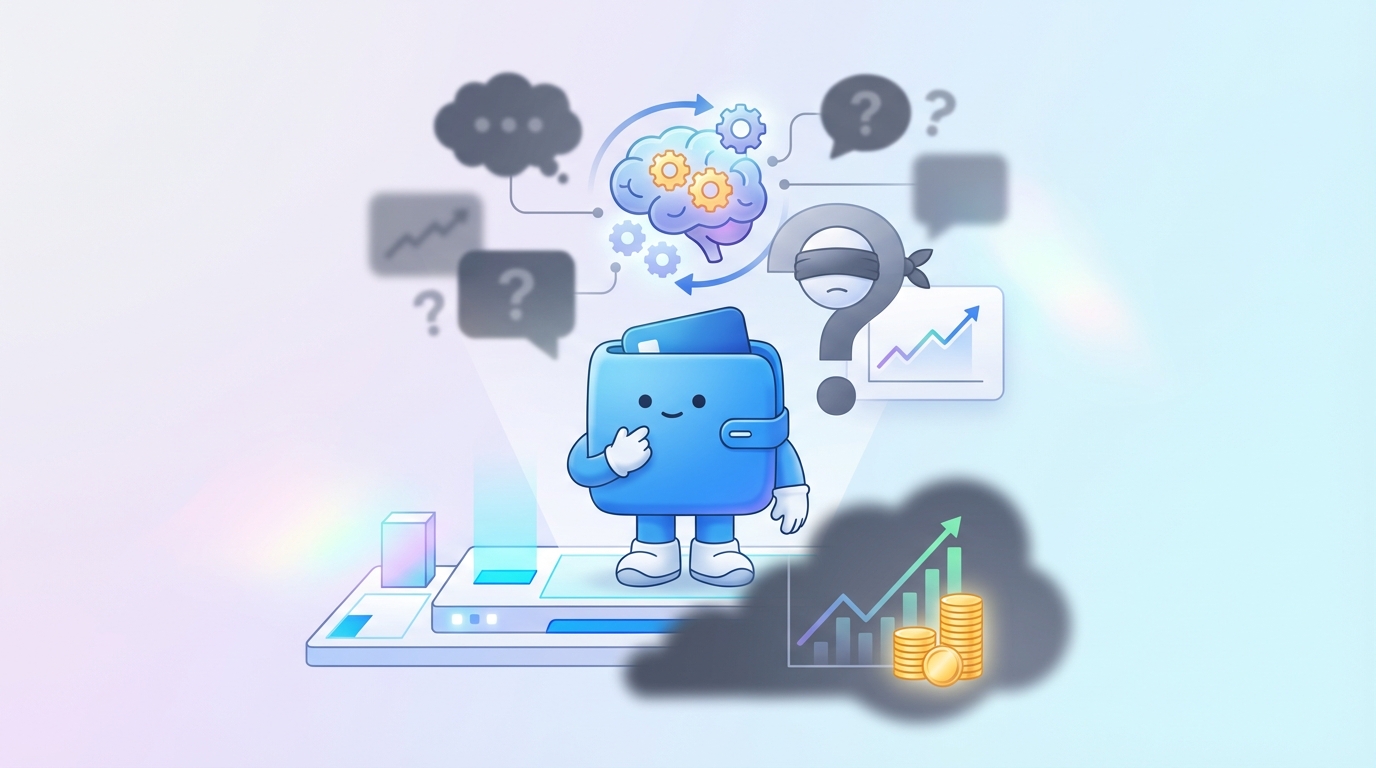
Our brains are wired to simplify complex information, and while this is often efficient, it can lead to significant financial blind spots, especially concerning recurring payments. Several cognitive biases contribute to our tendency to underestimate these ongoing costs.
The convenience of automatic payments is a double-edged sword. While it prevents missed payments and late fees, it also removes the direct act of parting with money, which is a powerful psychological deterrent. When money is automatically debited from an account, there's no conscious decision-making or physical exchange. This lack of interaction means the payment becomes invisible, fading into the background of our financial awareness. We don't feel the "pain of paying," a concept coined by behavioral economists, which usually occurs when we hand over cash or swipe a card. Without this emotional signal, the cumulative effect of many small automatic payments goes unnoticed, making it easy to forget how many subscriptions we actually have running.
Individually, many recurring payments seem inconsequential: £5 for an app, £10 for a streaming service, £12 for a software license. Our brains tend to evaluate these amounts in isolation, concluding that they are "small" and therefore negligible. We reason that £5 won't break the bank, so we sign up. However, this fallacy ignores the power of aggregation. Ten "small" £5 subscriptions don't just add up to £50; they represent ten distinct commitments that collectively drain a significant portion of disposable income. This mental shortcut prevents us from seeing the forest for the trees, focusing on the minor cost of each individual service rather than their collective impact on our overall budget.
Mental accounting is a cognitive bias where people treat money differently depending on its source or intended use. For instance, we might have a "fun money" mental account, a "bills" account, and a "savings" account. Recurring payments often get mentally categorized into nebulous "entertainment" or "convenience" buckets, separate from "essential" bills like rent or utilities. This categorization can lead us to rationalize these expenses, viewing them as distinct and therefore less impactful on our core financial health. We might tell ourselves that the £15 streaming service comes from our "entertainment budget" and therefore doesn't affect our "savings goals," even if that entertainment budget is already stretched thin. This mental compartmentalization prevents a holistic view of our financial outflow.
The anchoring effect describes our tendency to rely too heavily on the first piece of information offered (the "anchor") when making decisions. When signing up for a service, the initial price – often presented as a low monthly fee or a discounted introductory offer – becomes our anchor. We evaluate the value of the service against this initial, relatively small number. What we often fail to do is continuously re-evaluate that cost over time, especially as our usage patterns change or alternative, cheaper services emerge. The initial "anchor" of £9.99 for a service might feel perfectly reasonable, but after six months of sporadic use, that £9.99 might represent poor value for money, a fact our anchored perception struggles to acknowledge.
Loss aversion is the psychological phenomenon where the pain of losing something is psychologically more powerful than the pleasure of gaining an equivalent item. When it comes to recurring payments, cancelling a subscription can feel like a "loss" – the loss of access to a service, even if we rarely use it. This perceived loss often outweighs the gain of saving a relatively small amount of money. Furthermore, we might attribute an inflated "perceived value" to a service simply because we already have it. The effort required to cancel (the "friction of cancellation," which we'll discuss later) combined with loss aversion and the perceived value of retaining access, makes the decision to cut ties surprisingly difficult, even when financially prudent.
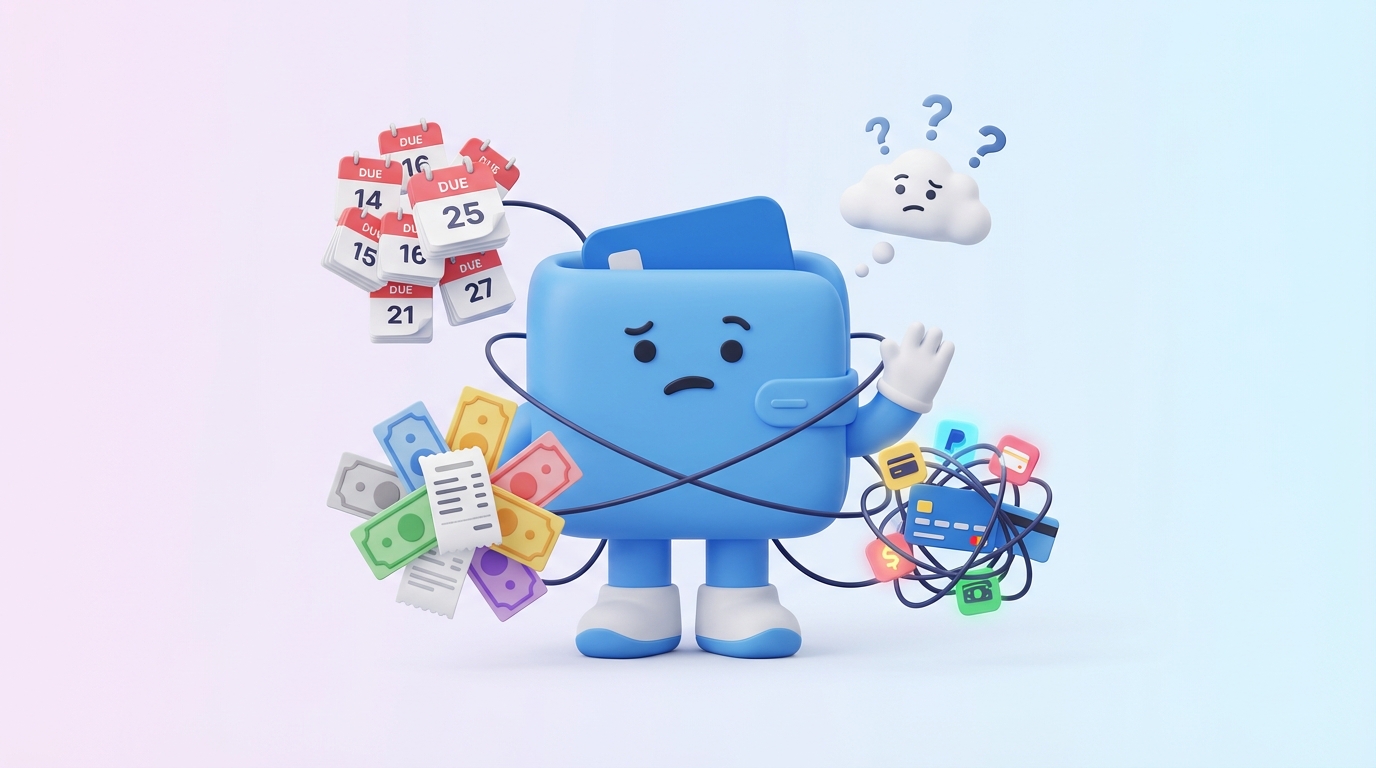
Beyond the psychological hurdles, there are significant practical and logistical challenges that make tracking recurring payments an arduous task for the average consumer.
The modern consumer economy thrives on subscriptions. From software as a service (SaaS) tools for work, to multiple streaming platforms for entertainment, gaming subscriptions, fitness apps, news subscriptions, cloud storage, meal kit deliveries, and even pet food auto-shipments – the list is seemingly endless. It's not uncommon for individuals to have 10, 15, or even 20+ active subscriptions. Keeping a mental tab on this sheer volume of services becomes virtually impossible. Each service feels distinct, and remembering every single one, along with its specific details, is a cognitive burden few are equipped to handle without dedicated systems.
Many services offer enticing free trials – a week, a month, or even three months – designed to get you hooked. The catch? Most require you to input payment details upfront and automatically convert to a paid subscription unless actively cancelled before the trial period ends. This mechanism is a major contributor to forgotten recurring payments. People sign up with good intentions to cancel, but life gets in the way, the trial period ends, and suddenly, they're paying for a service they barely used. Automatic renewals for annual subscriptions are another culprit, often catching consumers by surprise when a larger lump sum unexpectedly leaves their account.
Unlike a single utility bill, recurring payments are rarely consolidated. They come from various vendors, each with its own billing system, payment processor, and customer portal. One might be linked to a credit card, another to a PayPal account, and yet another directly to a bank account. This scattering across multiple financial instruments and platforms means there's no single, easy way to see all recurring payments at a glance. You have to log into numerous accounts, check different statements, and manually piece together the puzzle, a task most people simply don't have the time or inclination to do regularly.
Adding to the complexity is the variability in payment dates and billing cycles. Some services charge on the 1st of the month, others on the 15th, some on the anniversary of your sign-up date, and still others annually. This lack of synchronization makes it difficult to get a clear picture of monthly outgoings. A payment for one service might hit at the beginning of the month, while another might appear at the end, making it challenging to track the cumulative impact within a single budgeting period. Annual payments, in particular, are easy to forget until they unexpectedly appear on a bank statement, sometimes months after the initial sign-up.
Businesses know that retaining subscribers is crucial. Therefore, many intentionally introduce "friction" into the cancellation process. This can range from requiring phone calls during specific business hours, navigating convoluted online menus, being subjected to multiple "Are you sure?" prompts, or even needing to email customer service and wait for a response. This deliberate complexity discourages consumers from cancelling, even if they no longer wish to pay for the service. The perceived effort and hassle often outweigh the relatively small monthly saving, leading people to simply let the subscription continue rather than endure the cancellation process.
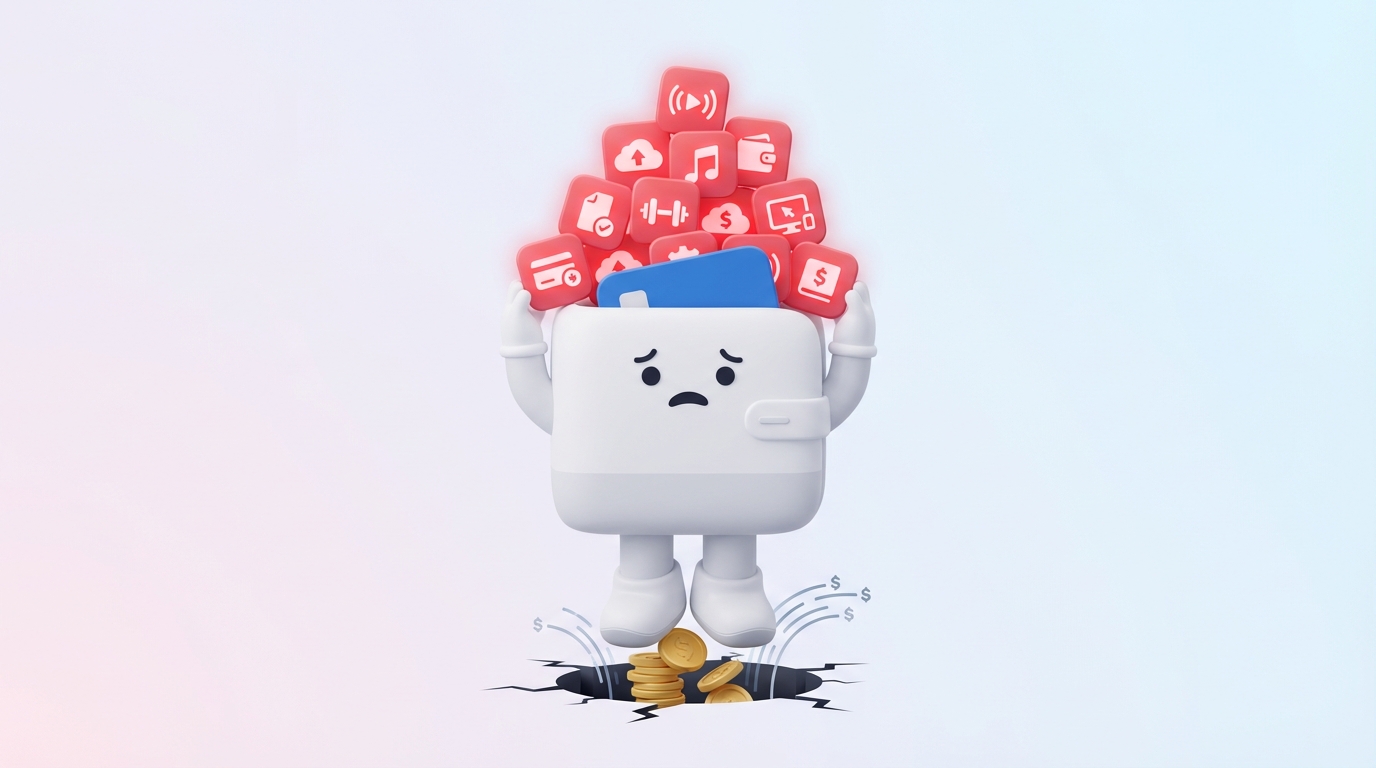
The seemingly small oversight of underestimating recurring payments can have profound and far-reaching negative consequences on an individual's financial health and overall well-being.
One of the most immediate impacts of underestimated recurring payments is the derailment of a carefully planned budget. When a significant chunk of money is leaving your account each month for forgotten subscriptions, it creates an unexpected shortfall in funds you thought were available for other expenses or savings. This can lead to overspending in other categories, reliance on credit cards to cover gaps, or simply running out of disposable income sooner than anticipated. A budget is only effective if it's accurate, and hidden recurring costs undermine its very foundation, leading to constant financial surprises and stress.
Perhaps the most insidious cost of overlooked subscriptions is the opportunity cost. Every pound spent on an unused or undervalued service is a pound that could have been saved, invested, or used to pay down high-interest debt. Imagine if that £50 per month going towards forgotten subscriptions was instead directed into an emergency fund, a retirement account, or a high-yield savings account. Over years, the compound interest on that seemingly small amount could grow into a substantial sum. By allowing these payments to continue unchecked, you are actively sacrificing potential future wealth and delaying your financial independence.
Living with financial blind spots inevitably leads to increased stress and anxiety. Not knowing exactly where your money is going creates a feeling of being out of control. Unexpected debits, unexplained shortfalls, and the constant nagging suspicion that you're paying for things you don't need can contribute to chronic financial worry. This stress can impact mental health, relationships, and overall quality of life, far beyond the monetary value of the subscriptions themselves. The psychological burden of financial uncertainty is a heavy one.
Whether your goal is to save for a down payment on a house, pay off student loans, fund a dream vacation, or retire early, underestimated recurring payments can significantly impede your progress. Each forgotten subscription acts as a tiny anchor, holding back your financial ship. The cumulative effect of these small drains means it takes longer to reach savings targets, debt repayment plans are extended, and major life goals feel further out of reach. This delay can be discouraging, leading to a sense of stagnation and frustration in your financial journey.
Ultimately, underestimating recurring payments erodes your overall financial control and awareness. When you don't have a clear picture of your regular outflows, you lose the ability to make informed decisions about your spending and saving. This lack of awareness can lead to a general feeling of helplessness or apathy towards money management, creating a vicious cycle where it becomes even harder to engage with your finances. Regaining control starts with understanding every pound that leaves your account, and recurring payments are often the largest unseen leakage in many people's budgets.
Regaining control over recurring payments requires a proactive approach and a combination of awareness, organization, and consistent action. Here are effective strategies to help you overcome underestimation and cultivate a healthier financial flow.
The first and most crucial step is to create a comprehensive, centralized master list of all your recurring payments. This needs to be a dedicated document – whether a spreadsheet, a notebook, or a digital tool. Go through every bank statement and credit card statement for the past 12-18 months. Look for any recurring charges, even small ones. For each entry, record the service name, the monthly/annual cost, the payment date, and the payment method used (e.g., Visa ending in 1234, PayPal, direct debit). Don't forget to check any direct debits from your bank account as well. This exercise can be eye-opening and is the foundation for all subsequent actions.
Creating a master list is a great start, but it's not a one-time event. Make it a habit to regularly audit your subscriptions. A monthly or quarterly review is ideal. During this audit, compare your master list against your current bank and credit card statements. Look for new subscriptions that have appeared, old ones that might have changed price, or services you no longer use. This regular check-up helps you catch unwanted renewals and new sign-ups before they become forgotten expenses. Set a specific date in your calendar for these audits to ensure they happen consistently.
Modern technology offers powerful tools to help manage recurring payments. Many budgeting apps, such as Mint, YNAB (You Need A Budget), Personal Capital, or Simplifi, automatically categorize transactions and can identify recurring payments. Some even have dedicated subscription tracking features that list all your regular outgoings in one place. Additionally, specific subscription management apps like Trim or Truebill can not only track but also help negotiate bills or even cancel subscriptions on your behalf. Explore these options to find a tool that integrates well with your existing financial habits and provides the level of automation and insight you need.
For subscriptions with free trials or annual renewals, proactive reminders are invaluable. When you sign up for a free trial, immediately set a calendar reminder a few days before the trial period ends, giving you ample time to decide whether to continue or cancel. For annual subscriptions, set a reminder a month before the renewal date. This allows you to re-evaluate the service's value, compare prices, or plan for the larger annual expense. Use your phone's calendar, a dedicated reminder app, or even a simple note on your physical calendar.
Once you have a clear picture of all your recurring payments, it's time to take action. Go through your master list and critically assess each service:
Integrate recurring payments into your overall budget by creating a dedicated "Subscriptions" category. This allows you to allocate a specific amount of money each month or year for these services. By giving it its own line item, you bring these expenses out of the shadows and make them a conscious part of your financial planning. If you find yourself consistently over budget in this category, it's a clear signal that it's time to review and cut down. This approach helps you maintain awareness and ensures that your recurring payments align with your financial priorities.
Underestimating recurring payments is a pervasive financial blind spot, rooted in both the intricacies of human psychology and the practical challenges of modern consumption. From cognitive biases like the 'small amount' fallacy and mental accounting to the logistical nightmare of subscription overload and difficult cancellation processes, it's easy to see why so many people struggle to maintain control. However, the cumulative impact of these overlooked expenses is significant, leading to budget derailment, lost opportunity for savings, increased financial stress, and a general erosion of financial awareness. Reclaiming control over your recurring payments is not just about saving money; it's about empowering yourself with clarity and confidence in your financial decisions. By diligently creating a master list, conducting regular audits, leveraging technology, setting proactive reminders, and taking decisive action to negotiate, downgrade, or cancel, you can transform a source of hidden drain into an area of conscious financial management. Cultivating this heightened awareness ensures that every pound you spend is intentional, aligning your outflow with your true priorities and ultimately paving the way for a healthier, more robust financial future.
Written by
Founder & CEO
Sharing knowledge on personal finance, budget management, and investment strategies to help you achieve financial freedom.