
13 min read
'%3e%3cg%20clip-path='url(%23b6dc094121)'%3e%3cpath%20fill='%230066cc'%20d='M%2012.707031%205.710938%20L%2012.707031%2035.761719%20L%2037.007812%2035.761719%20L%2037.007812%205.710938%20Z%20M%2012.707031%205.710938%20'%20fill-opacity='1'%20fill-rule='nonzero'/%3e%3c/g%3e%3c/g%3e%3cg%20clip-path='url(%23cd2e57bbdf)'%3e%3cg%20clip-path='url(%23cc31bb2a50)'%3e%3cpath%20fill='%230066cc'%20d='M%2026.734375%201.035156%20L%2026.734375%2035.761719%20L%2036.882812%2035.761719%20L%2036.882812%201.035156%20Z%20M%2026.734375%201.035156%20'%20fill-opacity='1'%20fill-rule='nonzero'/%3e%3c/g%3e%3c/g%3e%3cg%20clip-path='url(%23ab469c456a)'%3e%3cg%20clip-path='url(%23fb318aa8dc)'%3e%3cpath%20fill='%230066cc'%20d='M%200.0546875%201.035156%20L%200.0546875%2035.761719%20L%2010.203125%2035.761719%20L%2010.203125%201.035156%20Z%20M%200.0546875%201.035156%20'%20fill-opacity='1'%20fill-rule='nonzero'/%3e%3c/g%3e%3c/g%3e%3cg%20clip-path='url(%238fe1ac7b9f)'%3e%3cg%20clip-path='url(%23f68e7172d0)'%3e%3cpath%20fill='%230066cc'%20d='M%200%205.710938%20L%200%2035.761719%20L%2024.269531%2035.761719%20L%2024.269531%205.710938%20Z%20M%200%205.710938%20'%20fill-opacity='1'%20fill-rule='nonzero'/%3e%3c/g%3e%3c/g%3e%3c/svg%3e)
In an era dominated by convenience, subscription services have become an integral part of our daily lives, from streaming entertainment to productivity tools. Yet, many of us consistently underestimate just how much we're actually spending on these recurring payments. This financial blind spot isn't

Yağız Gürbüz
Founder & CEO


🎧 En iyi deneyim için kulaklık kullanmanızı öneririz
In an era dominated by convenience, subscription services have become an integral part of our daily lives, from streaming entertainment to productivity tools. Yet, many of us consistently underestimate just how much we're actually spending on these recurring payments. This financial blind spot isn't just a minor oversight; it's a significant drain on personal budgets, often fueled by subtle psychological traps and the sheer ease of signing up.
The 21st century has witnessed an explosion in the subscription economy, fundamentally altering how consumers access goods and services. What began with magazines and newspapers has expanded exponentially to encompass virtually every aspect of modern living. From your morning coffee club to your evening entertainment streaming, your professional software, and even your pet's monthly treat delivery, subscriptions have woven themselves into the fabric of daily existence. This pervasive model offers undeniable benefits, such as predictable access, convenience, and often, a lower upfront cost than outright ownership. Businesses, too, benefit from recurring revenue streams and deeper customer relationships, creating a powerful incentive for this economic shift.
The sheer volume of available subscription services means that consumers are constantly presented with new opportunities to sign up. Marketing campaigns emphasize the ease of access, the curated experience, and the sense of belonging that comes with being a subscriber. This widespread adoption has normalized the concept of paying for access rather than ownership, subtly shifting our perception of value and expenditure. As a result, accumulating multiple subscriptions across various categories has become an almost inevitable consequence of engaging with the modern digital and physical marketplace.
The primary allure of the subscription model is convenience. Instant access to vast libraries of content, automated delivery of essential goods, and always-up-to-date software are powerful draws. This convenience extends beyond just product access; it simplifies decision-making, as choices are often curated or personalized, reducing the cognitive load on the consumer. The ease of signing up—often just a few clicks or a quick biometric scan—further lowers the barrier to entry. This frictionless process means that what might have once been a considered purchase is now a casual click, making it effortless to add another recurring charge to your monthly statements without much conscious thought.
A significant driver of the subscription economy's growth is the shift from physical ownership to digital access. Historically, consumers would buy physical copies of movies, music, software, or even books. Today, the dominant model is to subscribe to services that provide access to vast, ever-updating libraries of digital content. This transition has several implications: it eliminates the need for physical storage, reduces waste, and often provides a much broader selection than any individual could realistically own. However, it also means that our spending shifts from one-time, tangible purchases to ongoing, less visible recurring payments. We no longer "own" our entertainment or tools; we rent access to them, and that rental fee is perpetual, often leading to a higher lifetime cost without the corresponding asset.

Our brains are not perfectly rational financial calculators. Instead, they operate with a complex interplay of heuristics, biases, and emotional responses that significantly influence how we perceive and manage money. When it comes to subscriptions, several psychological mechanisms conspire to make us consistently underestimate our spending, creating a financial blind spot that can be difficult to overcome without conscious effort.
The insidious nature of subscription spending lies in its ability to exploit these cognitive shortcuts. Unlike a large, one-time purchase that demands immediate attention and careful consideration, subscriptions often sneak under our financial radar. Understanding these psychological underpinnings is the first step toward recognizing and rectifying the hidden drain on our budgets.
Individually, many subscription payments seem negligible. A $9.99 streaming service, a $4.99 app, or a $15 monthly box often feels like a small, justifiable expense. Our brains tend to downplay these small figures, especially when compared to larger, one-time purchases like a new appliance or a car payment. This 'small amount' illusion makes it easy to rationalize each new subscription as "just a few dollars." However, the cumulative effect is often ignored. What seems like a trivial expense in isolation becomes a significant sum when dozens of these "small amounts" are added together, month after month. We fail to aggregate these costs mentally, treating each one as a distinct, minor decision rather than a part of a larger financial picture.
One of the greatest conveniences of subscriptions—automated billing—is also one of its biggest psychological traps. Once you set up recurring payments, the money leaves your account without any active decision or interaction from you. There's no physical exchange of money, no reminder of the transaction at the point of sale. This automation removes the friction associated with spending, making it incredibly easy to forget about these ongoing costs. They become invisible deductions, simply part of the background noise of your bank statement, until you proactively audit your accounts. This lack of conscious engagement means that services you no longer use or value can continue to drain your finances for months, or even years, unnoticed.
Social influence plays a significant role in subscription accumulation. When friends, family, or social media influencers rave about a new streaming show, a productivity app, or a meal kit service, the Fear of Missing Out (FOMO) can be a powerful motivator to subscribe. We want to be part of the conversation, to have access to the same experiences as our peers. This social pressure, often subtle, can lead to subscribing to services primarily to avoid feeling excluded, rather than because of a genuine, deeply felt need or frequent usage. The perceived social cost of not having a service can sometimes outweigh the financial cost of having it, leading to subscriptions that are more about fitting in than fulfilling a personal utility.
Modern life presents us with an overwhelming number of choices, from what to eat for dinner to which mobile plan to pick. This constant decision-making leads to decision fatigue, a phenomenon where our ability to make good choices deteriorates after making too many decisions. When confronted with a vast array of subscription options, each with different tiers, features, and pricing structures, it can be exhausting to compare them all thoroughly. Instead of making an optimal choice, we might default to the easiest option, or simply add another service without proper evaluation. The paradox of choice suggests that while more options might seem better, an excessive number can lead to anxiety, regret, and ultimately, inaction or suboptimal choices, including the accumulation of unnecessary subscriptions.
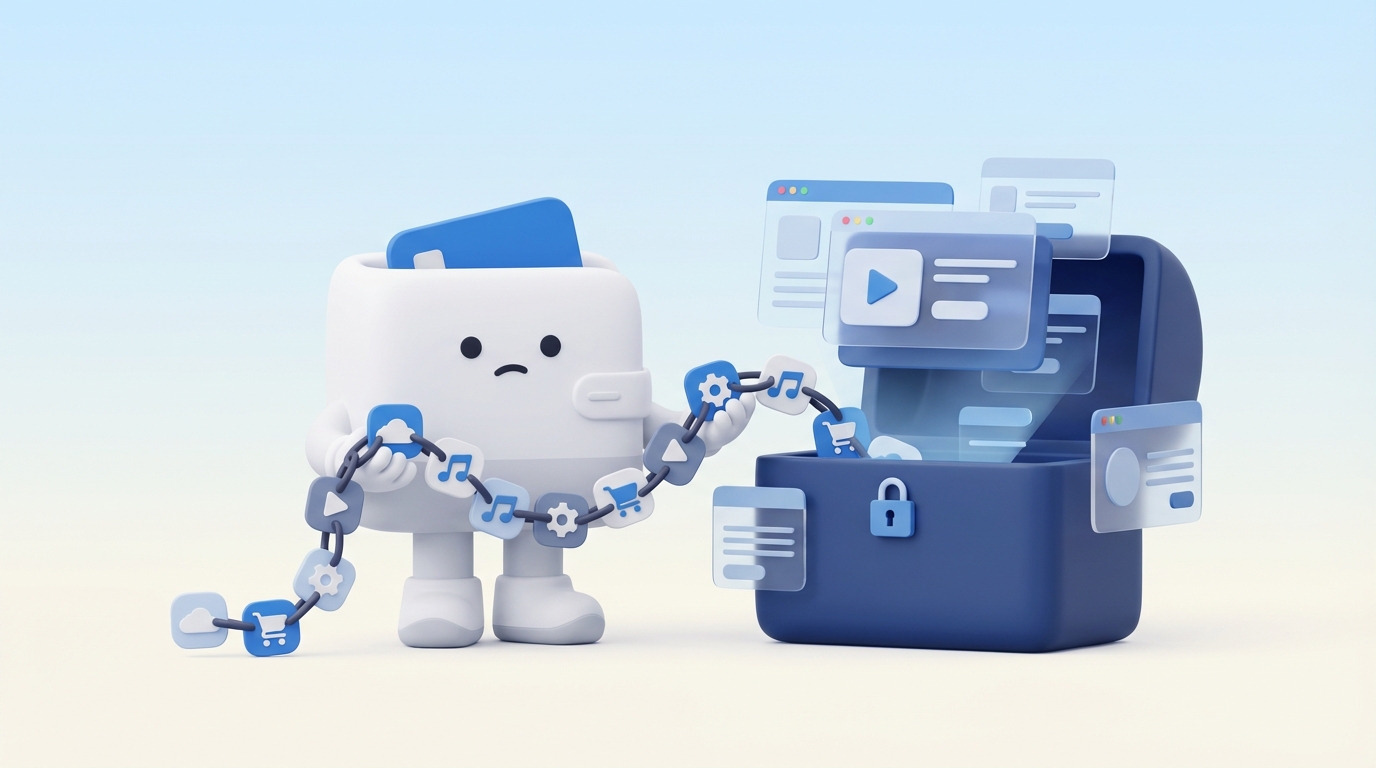
Beyond the psychological tricks our minds play on us, the subscription economy is also designed in ways that practically obscure the true cost of these services. From opaque pricing structures to sneaky free trial conversions, the industry employs various tactics that make it challenging for consumers to accurately track and manage their recurring expenses. These practical hurdles contribute significantly to the phenomenon of underestimated subscription spending, making it harder to maintain a clear financial picture.
Understanding these practical challenges is crucial for developing effective strategies to regain control. It’s not just about our flawed psychology; it’s also about the inherent complexities and design choices of the subscription model itself that make financial oversight so difficult.
Subscription services frequently employ complex pricing strategies that make direct cost comparison and value assessment difficult. Bundling, where multiple services are offered together at a "discounted" price, can make it seem like you're getting a great deal, even if you only use one or two components of the bundle. Tiered pricing (e.g., basic, standard, premium) often involves subtle differences in features or ad presence, making it hard to decide which tier truly provides the best value for your usage, or if you're overpaying for features you don't need. Furthermore, introductory offers, limited-time promotions, and dynamic pricing models can create a moving target, making it nearly impossible to keep track of what you're actually paying month-to-month, especially if prices change after an initial period.
One of the most common ways consumers accrue unwanted subscriptions is through the "free trial" mechanism. Companies offer a period of free access, often requiring credit card details upfront, with the promise that you can cancel anytime before the trial ends. The hope, from the company's perspective, is that you'll either forget to cancel, or the service will become indispensable during the trial period. Many people sign up for free trials with every intention of canceling, but life gets in the way. Without a clear reminder system, these trials seamlessly convert into paid subscriptions, often unnoticed until a bank statement review reveals a new recurring charge, months later. This frictionless conversion capitalizes on human forgetfulness and inertia.
As the number of subscriptions grows, so does the complexity of tracking them. Subscriptions are paid to different companies, often on different dates, using different payment methods (e.g., direct debit, credit card, PayPal). There's no single dashboard or consolidated statement for all your subscriptions. This fragmentation makes it incredibly difficult to get a holistic view of your total recurring spending. Manually sifting through bank statements, credit card bills, and email receipts to identify every single subscription and its billing date is a tedious and time-consuming task, leading many to simply give up or ignore the problem until it becomes too large to overlook.
The individual cost of a single subscription might be minor, but the cumulative effect of many small subscriptions can be staggering. A $5 app, a $10 streaming service, a $15 fitness program, and a $20 software tool might not seem like much on their own. But when you add them up, they quickly amount to $50, $100, or even several hundred dollars per month. This "death by a thousand cuts" scenario is a core reason for underestimated spending. Each small payment feels inconsequential, but collectively, they represent a significant portion of disposable income that could be used for savings, investments, or other financial goals. The disconnect between the perceived individual cost and the actual collective impact is a major practical hurdle.
Subscriptions don't all bill on the same day. Some might be monthly, others quarterly, semi-annually, or annually. Some might bill at the beginning of the month, others mid-month, or on the anniversary of your sign-up date. This asynchronous billing, combined with the use of different payment methods (e.g., a specific credit card for entertainment, another for productivity tools, PayPal for online services), further complicates tracking. A subscription might go unnoticed for several months if it's an annual charge that hits when you're not actively reviewing your statements. The lack of a uniform billing cycle across all services makes a comprehensive, real-time overview extremely difficult for the average consumer.

The consistent underestimation of subscription spending isn't just an academic exercise in financial literacy; it has tangible, often severe, real-world consequences on personal finances and overall well-being. What might seem like a minor oversight can accumulate into a significant drain, impacting everything from daily budget adherence to long-term financial security. Recognizing these impacts is crucial for motivating a change in behavior and proactively managing recurring expenses.
When subscriptions go unchecked, they silently erode financial health, creating a ripple effect that touches various aspects of life, from stress levels to the realization of deeply held financial aspirations. The hidden drain eventually surfaces, often at inconvenient or critical junctures.
Perhaps the most immediate impact of underestimated subscription spending is the strain it puts on monthly budgets. What was planned as disposable income often gets silently siphoned off by forgotten or underused services. This can lead to a feeling of constantly being short on cash, even if income seems sufficient. When actual spending consistently exceeds planned spending, it can necessitate cutting back on essentials, relying on credit cards, or dipping into savings. The unpredictability and invisibility of these costs contribute to increased financial stress, anxiety, and a persistent feeling of not being in control of one's money. This stress can impact mental health, relationships, and overall quality of life.
Every dollar spent on an unnecessary subscription is a dollar not saved, invested, or used to pay down high-interest debt. Consistently underestimated subscription spending can significantly delay or even derail important financial goals. Whether it's saving for a down payment on a house, building an emergency fund, contributing to a retirement account, or aggressively paying off student loans or credit card debt, these goals require consistent allocation of funds. When a substantial portion of income is unknowingly diverted to recurring payments, progress on these critical objectives slows down dramatically, pushing back timelines and potentially increasing the total cost of debt due to prolonged interest accumulation.
The concept of compound interest highlights the power of investing early and consistently. Even small amounts, when invested regularly over time, can grow into substantial wealth. However, when those small amounts are instead spent on subscriptions that provide diminishing returns, the opportunity to benefit from compounding is lost. For example, if $50 per month is consistently spent on unused subscriptions instead of being invested, over 20 years at an average 7% annual return, that could amount to over $26,000. This represents a significant missed opportunity for wealth building and financial security, especially for younger individuals who have the benefit of time on their side.
Beyond the direct financial implications, the awareness (or subconscious dread) of unmanaged subscriptions contributes to a significant mental load. The nagging feeling that you're probably paying for things you don't need, or the anxiety when reviewing bank statements, can be exhausting. This mental burden consumes cognitive energy that could be better spent elsewhere. It can lead to procrastination in tackling financial tasks, avoidance of budget reviews, and a general sense of disorganization regarding personal finances. The effort required to constantly worry about or ignore these hidden costs, and the eventual need to confront them, adds an invisible weight to daily life.

The good news is that overcoming subscription blind spots is entirely achievable with a proactive approach and the right tools. By systematically addressing the psychological and practical challenges, individuals can regain control over their recurring expenses, free up significant funds, and redirect them towards their financial goals. It requires a shift from passive acceptance to active management, but the financial benefits are often substantial.
Implementing these strategies can transform a feeling of financial helplessness into one of empowerment, providing clarity and purpose to spending habits. It's about being intentional with every dollar, especially those that silently leave your account each month.
The first and most crucial step is to identify every single recurring payment. Dedicate time to a "subscription audit." This involves:
As you identify each subscription, list it down, noting the service name, monthly/annual cost, and renewal date. This creates a clear, undeniable picture of your total recurring expenditure.
Modern technology offers powerful solutions for managing subscriptions. Budgeting apps like Mint, YNAB (You Need A Budget), Personal Capital, or specific subscription tracking apps (e.g., Bobby, Truebill, Rocket Money) can automatically scan your accounts, identify recurring charges, and categorize them. These tools provide a consolidated view of all your subscriptions, often highlighting their cumulative cost and upcoming renewal dates. They can also send alerts for price changes or trial expirations, making it much easier to stay on top of your recurring expenses without manual effort.
Even with tracking tools, setting aside dedicated time for regular review is vital. Schedule a monthly or quarterly calendar reminder to review your subscription list and financial statements. This ensures that new subscriptions don't go unnoticed and gives you an opportunity to re-evaluate existing ones. For annual subscriptions, set a reminder before the renewal date, giving you ample time to decide whether to continue or cancel without being caught by surprise.
Approach free trials with caution. Before signing up, decide if you genuinely intend to use the service beyond the trial period. If you're just trying it out, immediately set a calendar reminder a few days before the trial ends to cancel it. Some people even use virtual credit card numbers or services that allow you to generate single-use cards or block recurring charges after a certain period, ensuring you're not inadvertently charged.
Once you have a comprehensive list, critically evaluate each subscription. Categorize them into "essential" (e.g., internet, phone, necessary work software) and "nice-to-have" (e.g., multiple streaming services, niche content platforms, lifestyle boxes). For the "nice-to-have" items, ask yourself:
Be ruthless in your evaluation. It's often surprising how many "nice-to-have" subscriptions are rarely used.
Don't assume subscription prices are fixed. For some services, especially larger ones like internet or cable bundles, you might be able to negotiate a better deal by calling customer service and asking for current promotions or threatening to cancel. Consider downgrading to a lower tier if you're not using all the premium features. Many family plans for streaming or software services allow sharing with multiple users, which can significantly reduce individual costs if you split the expense with trusted friends or family members (where permitted by terms of service). Rotating streaming services, where you subscribe to one for a few months, cancel, and then subscribe to another, can also be an effective strategy to enjoy variety without accumulating multiple simultaneous bills.
Beyond the practical strategies, truly gaining control over subscription spending requires a fundamental shift in mindset. It's about moving from unconscious consumption to intentional, mindful spending, where every dollar spent is a conscious choice aligned with your values and financial goals. This involves challenging long-held assumptions about convenience, value, and necessity in the digital age.
Cultivating a mindful approach to subscriptions means asking deeper questions about what truly enriches your life versus what merely adds noise or expense. It's an ongoing process of self-reflection and re-evaluation, ultimately leading to greater financial clarity and peace of mind.
The core of mindful spending on subscriptions lies in consistently re-evaluating the value proposition. Instead of simply accepting a recurring charge, ask yourself: "Am I genuinely deriving significant value from this service that justifies its ongoing cost, especially when considering alternative uses for that money?" This means looking beyond the initial excitement or convenience and assessing actual usage and benefit. For example, if you subscribe to three streaming services but only regularly watch content on one, the value proposition for the other two is likely low. If you're paying for a premium version of an app but only use its basic features, you're overpaying. This critical assessment helps you distinguish between true utility and mere habit or inertia. It encourages you to think about the opportunity cost of each subscription—what else could that money be doing for you?
In a world saturated with digital content and tools, embracing a 'less is more' philosophy can be incredibly liberating. This doesn't necessarily mean living without any subscriptions, but rather being selective and minimalist in your approach. Instead of accumulating every popular service, aim for a curated collection that genuinely enhances your life without overwhelming your budget or attention. This philosophy extends beyond just financial savings; it also reduces decision fatigue, minimizes digital clutter, and helps you focus on what truly matters. It encourages intentional consumption over passive accumulation, leading to a more streamlined and purposeful digital life. By choosing quality over quantity, and actively pruning unused services, you reclaim not just financial resources, but also mental bandwidth and focus, aligning your digital consumption with your broader life goals.
The hidden drain of underestimated subscription spending is a pervasive challenge in our modern economy, fueled by psychological biases, clever marketing, and the sheer convenience of automated payments. From the 'small amount' illusion to the seamless conversion of free trials, countless factors conspire to make us unknowingly spend more than we intend. However, recognizing this financial blind spot is the first and most crucial step toward reclaiming your financial power.
By conducting a thorough subscription audit, leveraging financial tracking tools, setting proactive reminders, and adopting a mindful approach to spending, you can transform a landscape of overlooked charges into a clear, manageable financial picture. Shifting your mindset to critically evaluate value and embrace a 'less is more' philosophy empowers you to make intentional choices that align with your true needs and financial aspirations. Taking control of your subscriptions isn't just about saving money; it's about reducing financial stress, accelerating your progress towards savings and investment goals, and fostering a deeper sense of financial awareness and empowerment. Reclaim your budget, one subscription at a time, and unlock the hidden potential within your finances.
Written by
Founder & CEO
Sharing knowledge on personal finance, budget management, and investment strategies to help you achieve financial freedom.