
13 min read
'%3e%3cg%20clip-path='url(%23b6dc094121)'%3e%3cpath%20fill='%230066cc'%20d='M%2012.707031%205.710938%20L%2012.707031%2035.761719%20L%2037.007812%2035.761719%20L%2037.007812%205.710938%20Z%20M%2012.707031%205.710938%20'%20fill-opacity='1'%20fill-rule='nonzero'/%3e%3c/g%3e%3c/g%3e%3cg%20clip-path='url(%23cd2e57bbdf)'%3e%3cg%20clip-path='url(%23cc31bb2a50)'%3e%3cpath%20fill='%230066cc'%20d='M%2026.734375%201.035156%20L%2026.734375%2035.761719%20L%2036.882812%2035.761719%20L%2036.882812%201.035156%20Z%20M%2026.734375%201.035156%20'%20fill-opacity='1'%20fill-rule='nonzero'/%3e%3c/g%3e%3c/g%3e%3cg%20clip-path='url(%23ab469c456a)'%3e%3cg%20clip-path='url(%23fb318aa8dc)'%3e%3cpath%20fill='%230066cc'%20d='M%200.0546875%201.035156%20L%200.0546875%2035.761719%20L%2010.203125%2035.761719%20L%2010.203125%201.035156%20Z%20M%200.0546875%201.035156%20'%20fill-opacity='1'%20fill-rule='nonzero'/%3e%3c/g%3e%3c/g%3e%3cg%20clip-path='url(%238fe1ac7b9f)'%3e%3cg%20clip-path='url(%23f68e7172d0)'%3e%3cpath%20fill='%230066cc'%20d='M%200%205.710938%20L%200%2035.761719%20L%2024.269531%2035.761719%20L%2024.269531%205.710938%20Z%20M%200%205.710938%20'%20fill-opacity='1'%20fill-rule='nonzero'/%3e%3c/g%3e%3c/g%3e%3c/svg%3e)
In the world of finance, traditional budgeting has long been the cornerstone for managing money. However, a new paradigm, financial visibility, is emerging as a far more powerful tool for sustainable growth and strategic decision-making. This article explores why understanding your complete financia

Yağız Gürbüz
Founder & CEO


🎧 En iyi deneyim için kulaklık kullanmanızı öneririz
In the world of finance, traditional budgeting has long been the cornerstone for managing money. However, a new paradigm, financial visibility, is emerging as a far more powerful tool for sustainable growth and strategic decision-making. This article explores why understanding your complete financial landscape in real-time offers greater advantages than simply adhering to a fixed budget, revolutionizing how businesses and individuals approach their financial health.
Traditional budgeting, at its core, involves creating a detailed plan for how you will spend and save your money over a specific period, typically a month, quarter, or year. This method has been a fundamental practice for individuals and organizations for decades, providing a structured framework for financial management. It's about allocating resources, setting limits, and forecasting income and expenses based on historical data and future expectations. While seemingly straightforward, its application and effectiveness can vary widely depending on the context and the discipline of its implementers.
Historically, budgeting emerged as a necessary tool to bring order and control to financial affairs. For businesses, it helped in resource allocation, performance measurement, and strategic planning. For individuals, it offered a path to debt reduction, savings accumulation, and goal achievement, such as buying a house or funding retirement. The very act of creating a budget forces a degree of introspection into spending habits and income sources, which can be a valuable exercise in itself, revealing areas of potential waste or opportunities for saving.
A budget is essentially a financial roadmap. It itemizes expected income against projected expenses, aiming to ensure that outflows do not exceed inflows. For a household, this might involve categorizing spending on groceries, utilities, housing, and entertainment against salaries or other income sources. In a business context, it could detail revenue forecasts, operational costs, marketing expenditures, and capital investments. The foundation of financial planning often starts here, providing a baseline against which actual performance can be measured. It’s a snapshot of anticipated financial activity, designed to guide future decisions.
The primary purpose of budgeting is multi-faceted. Firstly, it sets clear financial boundaries, preventing overspending and promoting fiscal discipline. By allocating specific amounts to different categories, it helps individuals and organizations live within their means. Secondly, budgeting is intrinsically linked to goal setting. Whether it’s saving for a down payment, expanding a business, or retiring comfortably, a budget translates these aspirations into actionable financial targets. It quantifies what needs to be saved or earned to achieve these objectives, making abstract goals tangible and measurable.
Despite its benefits, traditional budgeting is not without its limitations. One of the most significant challenges is its inherent rigidity. Budgets are often set annually and are based on a snapshot of assumptions that can quickly become outdated. Economic shifts, unexpected expenses, market changes, or sudden opportunities can render a carefully constructed budget irrelevant within weeks or months. This rigidity often leads to frustration and a tendency to abandon the budget when real-world circumstances deviate from the plan.
Furthermore, traditional budgeting tends to be reactive and backward-looking. It often relies heavily on historical data to project future performance, which may not always be an accurate predictor, especially in dynamic environments. When discrepancies arise, the typical response is to adjust the budget, but this usually happens after the fact, meaning the budget isn't proactively guiding decisions but rather reacting to past events. This backward-looking nature means budgets often tell you what happened, rather than helping you anticipate what will happen or what could happen with different choices.
It's important to clarify that traditional budgeting isn't entirely obsolete. It still plays a valuable, albeit complementary, role within a broader financial strategy. For instance, initial goal setting and high-level resource allocation can still benefit from a budgeting approach. A budget can serve as a baseline for understanding where resources are currently directed and can provide a starting point for discussions about future spending priorities. When integrated with more dynamic tools, a budget can provide structure and discipline without becoming an unyielding constraint. It can inform the initial "what if" scenarios that financial visibility then explores in greater depth.

Moving beyond the static constraints of traditional budgeting, financial visibility offers a dynamic, comprehensive, and real-time understanding of an entity's financial state. It’s not just about knowing your numbers; it's about understanding the intricate connections between them, the trends they reveal, and the implications for future decisions. Financial visibility provides a holistic, up-to-the-minute view of all financial transactions, assets, liabilities, and overall financial health, enabling stakeholders to make informed, timely decisions.
This paradigm shift emphasizes transparency and accessibility of financial data across all levels of an organization or for an individual. It transforms raw data into actionable insights, allowing for a deeper understanding of financial flows, potential bottlenecks, and emerging opportunities. Rather than periodically reviewing static reports, financial visibility means having a dashboard that continuously updates, reflecting the current reality and projecting potential outcomes.
Financial visibility can be defined as the ability to see and understand all aspects of your financial position, from the micro-level of individual transactions to the macro-level of overall solvency and profitability, in a clear, accessible, and timely manner. It means having a single, unified source of truth for all financial data, allowing for immediate insights into cash flow, expenses, income, investments, and debts. This comprehensive insight extends beyond mere accounting records to include operational data that impacts financial performance, such as sales pipelines, inventory levels, and project timelines.
Achieving true financial visibility requires monitoring and integrating several key components:
The true power of financial visibility lies in its reliance on real-time data and advanced analytics. Unlike traditional methods that process data retrospectively, real-time systems continuously feed information into a centralized platform. This means that as soon as a transaction occurs, an invoice is paid, or revenue is received, the financial picture updates. This immediacy allows for:
Financial visibility transcends mere number crunching. It enables a deeper understanding of the "why" behind financial performance and facilitates "what if" scenario planning. Why did sales drop in a particular region? Why did a specific expense category suddenly spike? By integrating operational data with financial figures, businesses can pinpoint root causes and develop targeted solutions. Furthermore, powerful analytical tools allow users to model different scenarios: What if we invest in new equipment? What if interest rates rise? What if a major client leaves? This proactive modeling capability is a cornerstone of strategic decision-making, allowing for future outcomes to be anticipated and planned for, rather than merely reacted to.
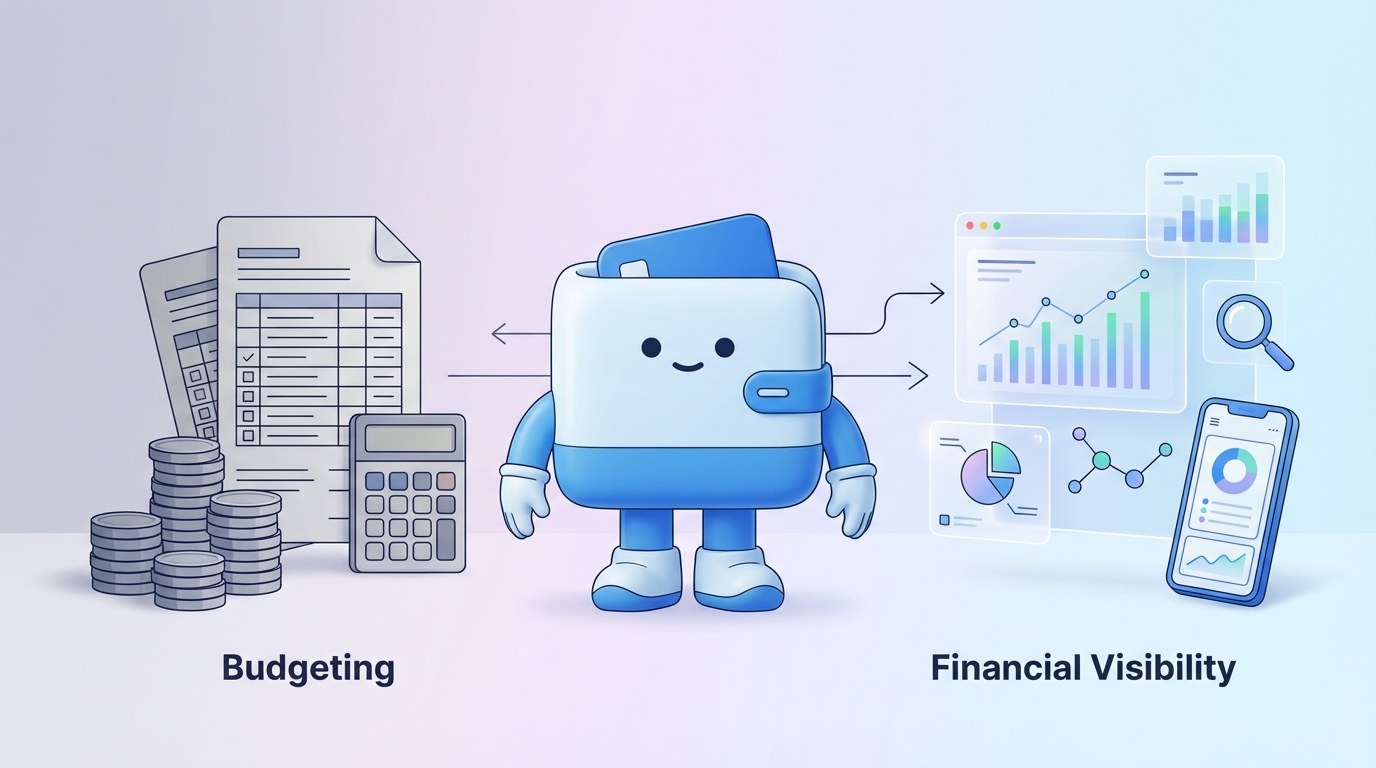
The distinction between traditional budgeting and financial visibility represents more than just a difference in tools; it's a fundamental shift in mindset and approach to financial management. While both aim to bring order to finances, their methodologies, scope, and ultimate impacts diverge significantly. Understanding these core differences is crucial for appreciating why visibility is increasingly becoming the preferred approach in dynamic economic environments.
Traditional budgeting is inherently static. Once established, often for a fiscal year, it functions as a fixed blueprint. While adjustments can be made, they are typically infrequent and often involve cumbersome revision processes. This rigidity makes traditional budgets less effective in environments characterized by rapid change, unexpected events, or evolving market conditions. They struggle to adapt to new opportunities or unforeseen challenges without becoming obsolete or irrelevant.
Financial visibility, conversely, is dynamic. It operates on a continuous feedback loop, constantly updating with new data. It's like comparing a paper map, which is fixed at the time of printing, to a real-time GPS system that updates with traffic, road closures, and alternative routes as you drive. This dynamic nature allows individuals and businesses to pivot quickly, reallocate resources, and adjust strategies in response to the latest information, ensuring their financial management remains relevant and effective, regardless of external shifts.
Traditional budgeting is predominantly reactive. It often serves as a benchmark against which past performance is measured. Variances from the budget are identified retrospectively, prompting a reaction or an explanation for why targets were missed or exceeded. This backward-looking orientation means that problems are often discovered after they have occurred, limiting the ability to prevent them.
Financial visibility fosters a proactive stance. By providing real-time data and predictive analytics, it enables the anticipation of future outcomes. Instead of reacting to a cash flow shortage after it happens, visibility tools can alert you to potential shortfalls weeks or months in advance, allowing for proactive measures like accelerating receivables or delaying non-essential expenditures. It transforms financial management from an exercise in damage control to one of strategic foresight and opportunity capture.
As mentioned, traditional budgeting heavily relies on historical data to project future performance. While historical trends offer some guidance, they are not always accurate predictors, especially in volatile markets or during periods of significant change. The focus remains largely on what has already happened and how well actuals align with past predictions.
Financial visibility is fundamentally future-oriented. While it uses historical data for context, its primary aim is to illuminate the path forward. Through advanced analytics, it helps in identifying emerging trends, forecasting future scenarios, and assessing the potential impact of various decisions. This strategic foresight allows for more informed long-term planning, helping businesses identify growth opportunities, assess investment risks, and build resilience against future disruptions. It shifts the focus from merely tracking performance to actively shaping it.
Control vs. Understanding: Deeper Insights for Better DecisionsBudgeting often emphasizes control – controlling spending, controlling deviations from the plan. It's about adherence to predefined limits, and often, the success of a budget is measured by how closely actuals match the planned figures. While control is important, it can sometimes be achieved at the expense of deeper understanding. Simply cutting costs to meet a budget might overlook the strategic value of certain expenditures or the long-term implications of such cuts.
Financial visibility, on the other hand, prioritizes understanding. It provides the context, the "why," and the interdependencies behind the numbers. It allows for a nuanced appreciation of financial health, identifying not just where money is going, but why, and what impact it's having. This deeper understanding empowers stakeholders to make genuinely better decisions, moving beyond mere adherence to a plan towards optimizing performance and achieving strategic objectives. It’s about insightful management rather than just restrictive control, fostering a culture of informed choice.

In today's fast-paced and often unpredictable economic landscape, financial visibility offers a distinct competitive edge over traditional budgeting. Its ability to provide real-time, comprehensive, and actionable insights translates into a multitude of advantages that drive better outcomes for both businesses and individuals.
One of the paramount benefits of financial visibility is its profound impact on decision-making. With access to real-time data and sophisticated analytics, decisions move from being gut-instinct or historically-driven to truly data-driven. Whether it’s a business deciding on a new product launch, a marketing campaign, or a capital investment, or an individual choosing between investment options or major purchases, visibility provides the full financial context. This allows for a more accurate assessment of potential returns, risks, and resource implications, leading to more strategic and effective choices. It reduces uncertainty and increases the likelihood of favorable outcomes.
Cash flow is the lifeblood of any entity. Financial visibility dramatically improves cash flow management by providing continuous insight into inflows and outflows. Businesses can accurately forecast cash positions, identify potential shortfalls before they occur, and take proactive measures such as optimizing accounts receivable collection, managing payables more strategically, or securing short-term financing if necessary. For individuals, it means avoiding overdrafts, managing recurring bills efficiently, and ensuring funds are available for unexpected expenses or planned savings goals. This proactive management optimizes liquidity, ensuring funds are available when needed and preventing costly financial crises.
Traditional budgeting often highlights risks only after they've materialized. Financial visibility, through its real-time monitoring and predictive capabilities, allows for the early identification of potential financial risks. This could include detecting unusual spending patterns, flagging overdue receivables, identifying excessive debt accumulation, or noticing trends that could lead to future revenue dips. Early detection means there's ample time to implement mitigation strategies, such as adjusting spending, renegotiating terms, diversifying investments, or seeking expert advice, thereby minimizing the impact of adverse events.
Beyond risk mitigation, financial visibility is a powerful engine for growth. By providing a clear picture of available capital, profitability by product line, or customer segment profitability, businesses can identify and prioritize the most promising growth opportunities. It enables strategic investments by accurately assessing the financial capacity for expansion, mergers, acquisitions, or R&D. For individuals, it helps identify surplus funds that can be strategically invested for long-term wealth creation, such as retirement accounts, real estate, or educational funds, aligning financial decisions with personal growth aspirations.
In an increasingly volatile global economy, adaptability and resilience are paramount. Financial visibility equips entities with the agility to respond effectively to market fluctuations, economic downturns, or unexpected global events. When economic conditions shift, real-time data allows for immediate reassessment of financial strategies, enabling rapid adjustments to spending, pricing, or operational models. This responsiveness helps businesses weather storms more effectively and allows individuals to quickly rebalance their portfolios or adjust their savings plans, building greater financial resilience against external shocks.
For businesses, financial visibility empowers all stakeholders – from executives and department heads to investors and employees – with a transparent and unified understanding of the company's financial health. This fosters greater accountability, collaboration, and alignment towards common financial goals. Department managers can see the financial impact of their operations, leading to more responsible resource utilization. For individuals, it empowers them to take full ownership of their personal finances, providing a clear roadmap to achieving their financial dreams and reducing financial stress through informed control. This widespread understanding ensures everyone is working from the same accurate information, leading to better collective outcomes.

Transitioning from traditional budgeting to a state of robust financial visibility requires deliberate action and the adoption of modern tools and practices. It's not an overnight transformation but a journey that yields significant long-term benefits.
The foundation of financial visibility lies in leveraging appropriate financial technology. Modern accounting software (e.g., QuickBooks, Xero, Sage) provides automated transaction categorization, bank reconciliation, and report generation. Beyond basic accounting, specialized financial analytics dashboards (e.g., Power BI, Tableau, specific financial planning and analysis software like Adaptive Planning) aggregate data from various sources, presenting it in intuitive, customizable visualizations. These tools can track KPIs, generate forecasts, and offer drill-down capabilities to examine the underlying data. For individuals, personal finance apps (e.g., Mint, Personal Capital, YNAB) offer similar real-time tracking, categorization, and goal-setting features.
To achieve true real-time visibility, manual data entry and periodic updates must be minimized. This involves implementing automated data integration across all financial systems. Connecting bank accounts, credit card accounts, payment processors, payroll systems, and CRM/ERP systems directly to your accounting software or analytics dashboard ensures that data flows continuously and automatically. This reduces human error, saves time, and most importantly, ensures that the financial picture presented is always current. Automated expense tracking and revenue recognition are key components here, moving away from monthly reconciliations to continuous monitoring.
While automation provides the data, regular review and analysis transform that data into insight. This goes beyond simply glancing at monthly bank statements or quarterly profit and loss reports. It involves scheduled, in-depth analysis of trends, variances, and key performance indicators. For businesses, this might mean weekly executive dashboards, monthly departmental reviews, and quarterly strategic deep dives. For individuals, it could be a weekly check-in with a personal finance app, a monthly review of investment performance, and an annual comprehensive financial health check. The goal is to consistently ask "why" behind the numbers and understand their implications.
Technology alone is insufficient; a supportive organizational culture is crucial. Businesses need to foster an environment where financial awareness is encouraged across all departments. This means educating employees on how their roles impact financial outcomes, providing access to relevant financial data (where appropriate), and encouraging open discussion about financial performance and challenges. For individuals, it means making personal finance a regular topic of discussion with partners or family members, ensuring everyone is aligned on financial goals and practices. Transparency builds trust and encourages proactive engagement with financial health.
To effectively leverage financial visibility, it's essential to define clear Key Performance Indicators (KPIs) that align with strategic objectives. These aren't just generic metrics but specific, measurable indicators that provide insight into critical aspects of financial performance. Examples include cash conversion cycle, customer acquisition cost, gross profit margin, debt-to-equity ratio, monthly recurring revenue, or personal savings rate. By tracking these KPIs in real-time dashboards, individuals and organizations can quickly assess their progress, identify areas needing attention, and make informed adjustments to their strategies.
The theoretical advantages of financial visibility translate into tangible benefits in both the corporate and personal realms. Observing how this paradigm shift plays out in real-world scenarios underscores its transformative power.
Consider a rapidly growing e-commerce startup. Initially, their finance team relied on traditional quarterly budgets and monthly reports. As sales surged, they frequently found themselves with unexpected cash flow crunch periods, struggling to pay suppliers on time despite high revenue. They lacked real-time insight into product-level profitability, inventory turns, and customer acquisition costs across various marketing channels. By implementing a financial visibility platform that integrated their sales data, marketing spend, inventory system, and bank accounts, they gained immediate insights.
For example, the dashboard revealed that while a particular product line generated high revenue, its return rate was also exceptionally high, making it unprofitable after factoring in shipping and handling. They also discovered that a specific advertising campaign was generating leads but with an unsustainable cost per acquisition. With this real-time visibility, they were able to:
This shift allowed the startup to not only avoid potential financial distress but also to strategically allocate resources, leading to sustainable growth and improved profitability. Their decisions became proactive and data-backed, rather than reactive and guesswork-driven.
Let's look at an individual, Sarah, who wanted to save for a down payment on a house within two years. She started with a traditional budget, allocating specific amounts to housing, food, entertainment, and savings. However, life happened: unexpected car repairs, a spontaneous weekend trip, and a few more restaurant meals than planned derailed her budget repeatedly. She felt frustrated and constantly behind on her savings goal.
Sarah then adopted a financial visibility approach using a personal finance app that linked all her bank accounts and credit cards. The app categorized her spending in real-time and provided a daily snapshot of her cash flow and progress towards her housing down payment goal. It also included forecasting tools.
Through this enhanced visibility, Sarah quickly realized:
Armed with this continuous, immediate feedback, Sarah didn't just 'stick to a budget'; she gained a deep understanding of her financial habits and their direct impact on her goals. She proactively adjusted her spending, found creative ways to save, and even identified areas where she could generate extra income. This enhanced control and understanding kept her motivated and allowed her to reach her down payment goal ahead of schedule, feeling confident and empowered about her financial future.
Given the compelling advantages of financial visibility, does this mean traditional budgeting is obsolete? Not entirely. Rather, the most effective approach to modern financial management often involves a holistic strategy that integrates the foundational principles of budgeting with the dynamic power of financial visibility. Instead of being competing methodologies, they can be complementary tools within a broader framework, each enhancing the other's effectiveness.
Traditional budgets, despite their limitations, still serve a valuable initial purpose. They provide a structured starting point for financial planning. A budget can define the initial financial goals, allocate resources based on strategic priorities, and set baseline expectations for income and expenses. This initial framework, though static, offers a reference point. For instance, a company's annual operating budget can establish the expected revenue targets and expenditure limits for various departments. These budgeted figures can then be fed into the financial visibility system as targets or benchmarks. The visibility system then tracks actual performance against these targets in real-time, immediately highlighting any deviations. This means the budget provides the "plan," and visibility provides the "current status" and "early warning system."
Furthermore, budgets help in disciplined resource allocation. Before diving into real-time data, having a high-level budget can help define the categories of spending and income that need to be tracked. It can inform which KPIs are most relevant to monitor based on the strategic priorities outlined in the budget. Thus, a budget acts as the initial hypothesis or the blueprint, which financial visibility then continuously tests, refines, and provides insights on.
The relationship is not one-sided. Financial visibility can significantly enhance and optimize the budgeting process itself. Instead of relying on guesswork or outdated historical averages, future budgets can be informed by the rich, real-time data and predictive analytics generated through continuous visibility. For example, if real-time visibility shows that a particular expense category consistently exceeds its budgeted amount due to unforeseen operational complexities, future budgets can be adjusted more accurately to reflect these realities. Conversely, if a revenue stream is consistently outperforming, future targets can be set more ambitiously.
Visibility also enables rolling forecasts, a more agile form of budgeting where financial projections are updated regularly (e.g., quarterly or monthly) based on the latest actual performance and market conditions. This iterative process, driven by real-time data, makes the budgeting process far more dynamic, relevant, and responsive, overcoming the rigidity often associated with traditional annual budgets. It moves budgeting from a burdensome, once-a-year exercise to a continuous, informed process of strategic adjustment.
Ultimately, the most powerful approach to financial management emerges from the synergy between planning (budgeting) and insight (visibility). A well-defined budget provides the initial direction and discipline, setting the strategic parameters. Financial visibility then provides the intelligence layer, offering real-time feedback, predictive capabilities, and a deep understanding of financial flows. It's the difference between having a meticulously drawn map (budget) and a real-time GPS system with traffic updates and alternative routes (visibility). While the map gives you the destination and the general path, the GPS guides you through the journey with dynamic adjustments.
This integrated approach allows entities to maintain disciplined financial management while remaining agile and responsive to changing circumstances. Budgets define "what we intend to do," and visibility tracks "what is actually happening" and "what might happen next," providing the necessary feedback loop to refine intentions and actions for optimal financial health and strategic success. It’s about building a robust financial framework that is both stable and flexible, capable of navigating complexity with confidence and foresight.
While traditional budgeting has served as a foundational pillar in financial management for generations, its limitations in a world characterized by rapid change and increasing complexity are becoming increasingly apparent. Its static nature, reactive stance, and backward-looking focus often hinder agility and strategic decision-making. In contrast, financial visibility emerges as a superior and indispensable tool for modern finance.
By providing real-time, comprehensive, and actionable insights into every facet of an entity's financial landscape, financial visibility empowers stakeholders with unparalleled clarity. It transforms financial management from a periodic reconciliation exercise into a dynamic, proactive process. The core advantages, including enhanced decision-making, optimized cash flow, proactive risk mitigation, and the ability to unlock growth opportunities, underscore why visibility is paramount for navigating today's economic environment successfully.
Achieving true financial visibility involves leveraging modern technology, implementing automated data integration, fostering a culture of financial awareness, and meticulously tracking key performance indicators. While budgeting still holds value as an initial planning tool, its role is best integrated within a broader visibility framework, where it can inform and be continuously refined by real-time insights. The synergy between disciplined planning and dynamic insight creates a holistic approach that not only ensures financial stability but also drives strategic growth and resilience. Embracing financial visibility is no longer a luxury but a necessity for sustainable success in both personal and corporate finance, moving us beyond mere control to profound understanding and proactive mastery of our financial destinies.
Written by
Founder & CEO
Sharing knowledge on personal finance, budget management, and investment strategies to help you achieve financial freedom.