13 min read
'%3e%3cg%20clip-path='url(%23b6dc094121)'%3e%3cpath%20fill='%230066cc'%20d='M%2012.707031%205.710938%20L%2012.707031%2035.761719%20L%2037.007812%2035.761719%20L%2037.007812%205.710938%20Z%20M%2012.707031%205.710938%20'%20fill-opacity='1'%20fill-rule='nonzero'/%3e%3c/g%3e%3c/g%3e%3cg%20clip-path='url(%23cd2e57bbdf)'%3e%3cg%20clip-path='url(%23cc31bb2a50)'%3e%3cpath%20fill='%230066cc'%20d='M%2026.734375%201.035156%20L%2026.734375%2035.761719%20L%2036.882812%2035.761719%20L%2036.882812%201.035156%20Z%20M%2026.734375%201.035156%20'%20fill-opacity='1'%20fill-rule='nonzero'/%3e%3c/g%3e%3c/g%3e%3cg%20clip-path='url(%23ab469c456a)'%3e%3cg%20clip-path='url(%23fb318aa8dc)'%3e%3cpath%20fill='%230066cc'%20d='M%200.0546875%201.035156%20L%200.0546875%2035.761719%20L%2010.203125%2035.761719%20L%2010.203125%201.035156%20Z%20M%200.0546875%201.035156%20'%20fill-opacity='1'%20fill-rule='nonzero'/%3e%3c/g%3e%3c/g%3e%3cg%20clip-path='url(%238fe1ac7b9f)'%3e%3cg%20clip-path='url(%23f68e7172d0)'%3e%3cpath%20fill='%230066cc'%20d='M%200%205.710938%20L%200%2035.761719%20L%2024.269531%2035.761719%20L%2024.269531%205.710938%20Z%20M%200%205.710938%20'%20fill-opacity='1'%20fill-rule='nonzero'/%3e%3c/g%3e%3c/g%3e%3c/svg%3e)
Struggling to keep track of all your monthly subscriptions, hidden fees, and recurring bills? You're not alone. Discover the best software solutions that seamlessly integrate with your bank accounts, offering an effortless way to monitor every recurring payment and take absolute control of your fina

Yağız Gürbüz
Founder & CEO

🎧 En iyi deneyim için kulaklık kullanmanızı öneririz
Struggling to keep track of all your monthly subscriptions, hidden fees, and recurring bills? You're not alone. Discover the best software solutions that seamlessly integrate with your bank accounts, offering an effortless way to monitor every recurring payment and take absolute control of your finances.
In today's subscription-heavy world, managing finances can feel like a constant battle against an invisible enemy of recurring charges. From streaming services and gym memberships to utility bills and loan repayments, these automatic deductions can quickly add up and even lead to financial stress if not properly monitored. Bank-integrated software provides a powerful solution, offering real-time insights and automated tracking that manual methods simply cannot match.
The primary benefit of using such software is the unparalleled visibility it offers. Instead of sifting through bank statements or trying to remember every single due date, these tools automatically pull and categorize transactions directly from your bank accounts. This eliminates human error, saves time, and ensures that no payment slips through the cracks, giving you a comprehensive overview of your financial commitments at any given moment.
Recurring payments encompass a wide array of financial obligations that occur at regular intervals. They are not just your typical monthly utility bills. They include subscriptions to services like Netflix, Spotify, Amazon Prime, and SaaS tools; memberships to gyms, clubs, or professional organizations; insurance premiums (health, auto, home); loan repayments (mortgage, auto, student); credit card minimum payments; and even less obvious automatic renewals for software licenses or domain names. Some might even include regular charitable donations or scheduled transfers to savings accounts.
The insidious nature of many recurring payments lies in their "set it and forget it" convenience. While convenient, this can often lead to paying for services you no longer use or forgetting about price increases. A robust tracking system helps you differentiate between essential recurring expenses and those that might be considered discretionary or even unnecessary, empowering you to make informed decisions about your spending.
Automated tracking of recurring payments with bank-integrated software brings a multitude of financial benefits. Firstly, it significantly improves budgeting accuracy. By knowing exactly when and how much money will leave your account, you can create a more realistic budget, allocate funds appropriately, and avoid the dreaded feeling of being caught off guard by an unexpected charge. This proactive approach helps prevent overdraft fees and keeps your bank balance healthy.
Secondly, these tools are excellent for identifying forgotten subscriptions or services you no longer need. It's surprisingly common for people to continue paying for old gym memberships or streaming services they stopped using months ago. Automated tracking quickly flags these payments, allowing you to cancel them and free up valuable funds. This optimization of spending can lead to substantial savings over time, contributing directly to your financial goals.
Furthermore, bank-integrated trackers foster greater financial awareness. Seeing all your recurring commitments laid out clearly helps you understand where your money is truly going. This deeper insight can motivate you to adjust spending habits, negotiate better rates on services, or re-evaluate the necessity of certain subscriptions, ultimately leading to better financial health and peace of mind.
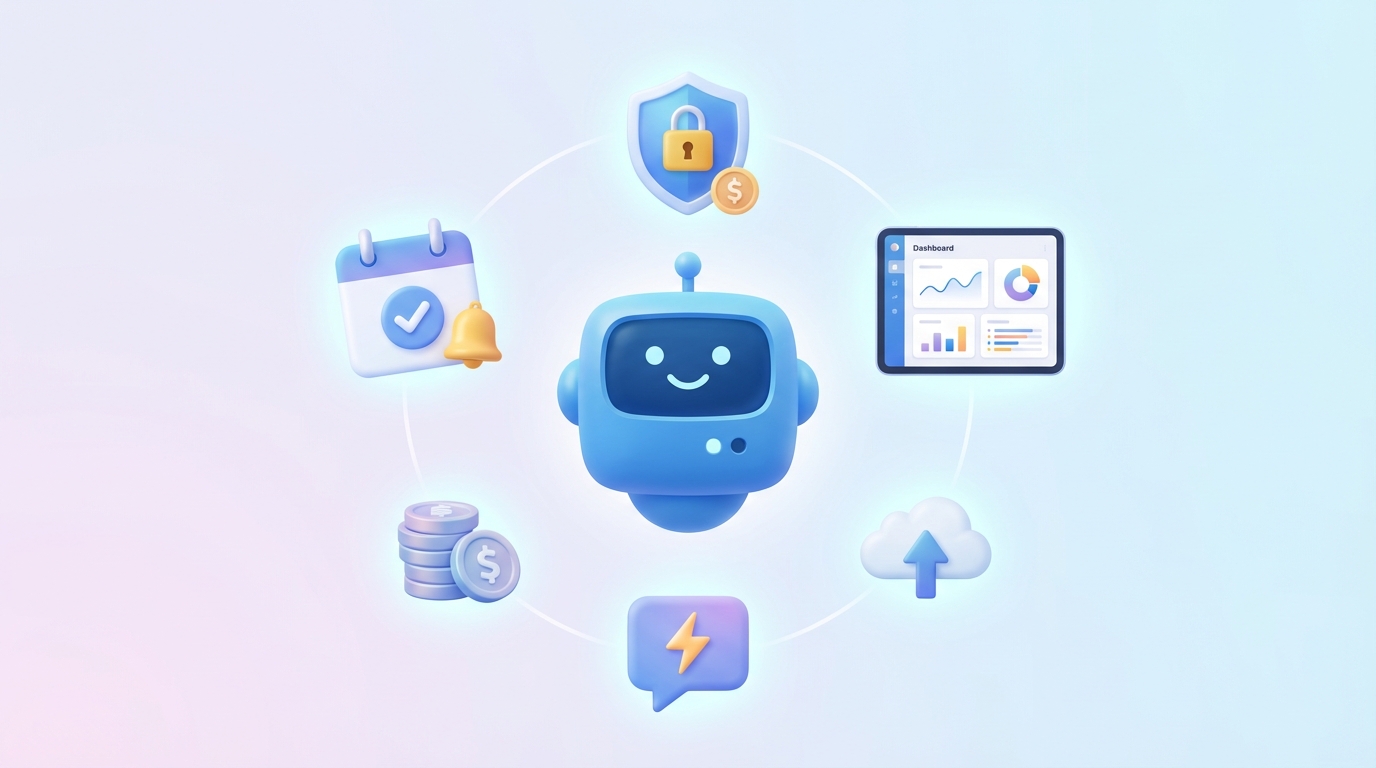
When selecting software to manage your recurring payments, certain features are paramount for ensuring effectiveness and ease of use. The best tools go beyond simple listing, offering advanced functionalities that truly empower users to take control of their finances. Understanding these key features will help you choose the right solution for your specific needs.
This is arguably the most critical feature. The software must offer secure, reliable integration with a wide range of financial institutions, including major banks, credit unions, and even investment accounts. Seamless data synchronization means that once connected, the software automatically pulls transaction data in real-time or on a regular schedule. This eliminates manual data entry, reduces errors, and ensures your financial overview is always up-to-date. The integration should be robust enough to handle various transaction types and categorize them intelligently.
Manual categorization is tedious and time-consuming. Top-tier recurring payment trackers use intelligent algorithms to automatically categorize your transactions (e.g., "Netflix" as Entertainment, "Electricity Bill" as Utilities). The best systems also allow for custom categories and tagging, enabling you to refine the categorization to fit your unique budgeting style. This feature provides immediate clarity on where your money is going without any extra effort on your part.
Staying ahead of your payments is crucial. Effective software offers customizable alerts for various scenarios. This includes notifications for upcoming bills, ensuring you have sufficient funds and avoid late fees. Alerts for price changes in subscriptions are also invaluable, helping you spot unexpected increases and decide whether to continue the service. Some tools even notify you of unusual spending patterns or potential duplicate charges, acting as an extra layer of financial vigilance.
While the primary focus is recurring payments, the best tools integrate these insights into broader budgeting and spending analysis functionalities. They allow you to set spending limits for various categories, track your progress against those limits, and visualize your spending patterns through charts and graphs. This holistic view helps you understand the impact of your recurring payments on your overall budget and identify areas for potential savings.
A standout feature for recurring payment trackers is dedicated subscription management. This often includes a dashboard that lists all identified subscriptions, their amounts, and renewal dates. Some advanced tools even offer direct assistance or guidance on how to cancel unwanted subscriptions, sometimes even contacting providers on your behalf. This significantly reduces the friction involved in cutting ties with services you no longer use.
Understanding past financial behavior is key to planning for the future. The software should store historical transaction data, allowing you to review spending trends over months or years. Robust reporting analytics enable you to generate custom reports, compare spending periods, and gain deeper insights into your financial health. This feature is crucial for long-term financial planning and identifying recurring expenses that have grown over time.
Given that these tools connect directly to your bank accounts, security is non-negotiable. Look for software that employs bank-level encryption (e.g., 256-bit AES), multi-factor authentication (MFA), and strict privacy policies. They should clearly state how your data is used and never store your bank login credentials directly. Compliance with industry standards like SOC 2 is also a strong indicator of a secure platform. Your financial data is sensitive, so ensuring its protection is paramount.
The market offers several excellent software solutions designed to help you track recurring payments effectively. While they share core functionalities, each has its unique strengths, ideal for different user needs and financial goals. Here's a look at some of the top contenders:
Mint, by Intuit, is a well-established and widely used free financial management tool that excels at providing a holistic view of your finances. It connects to virtually all bank accounts, credit cards, loans, and investment accounts, automatically categorizing transactions, including recurring payments. Mint's strength lies in its ability to consolidate all your financial data into one intuitive dashboard.
YNAB is a powerful, paid budgeting software built on a "zero-based budgeting" philosophy, meaning every dollar is assigned a job. While not solely a recurring payment tracker, its robust budgeting system inherently makes it excellent for managing recurring expenses. YNAB encourages proactive financial planning and decision-making.
Rocket Money is specifically designed to help users identify, manage, and cancel subscriptions, making it a powerful tool for recurring payment tracking. It integrates with your bank accounts and credit cards to automatically detect all recurring charges and offers services to help you cancel them or even negotiate bills.
Simplifi is Quicken's modern, cloud-based solution aimed at helping users manage their money with less effort. It connects to your accounts, tracks spending, and provides a clear picture of your cash flow and upcoming bills, making it an efficient tool for recurring payment management.
Personal Capital (now Empower) focuses on wealth management and investment tracking, but it also offers robust tools for expense tracking and budgeting, making it an excellent option for those with more complex financial portfolios who also want to monitor recurring payments.
Selecting the ideal recurring payment tracking software is a personal decision that hinges on your unique financial situation, goals, and preferences. With so many excellent options available, it's crucial to evaluate them against specific criteria to find the perfect fit.
Are you a hands-on budgeter who wants to assign every dollar a job (like YNAB users), or do you prefer a more passive approach that simply categorizes spending and offers an overview (like Mint)? Your budgeting style will dictate which software's philosophy aligns best with your habits. Similarly, consider your financial goals. Are you primarily trying to cut down on subscriptions (Rocket Money), manage overall wealth (Personal Capital), or simply keep track of bills and spending (Simplifi)? Aligning the software's core purpose with your goals will lead to greater satisfaction and effectiveness.
The "bank integration" aspect is non-negotiable for effective recurring payment tracking. Before committing, verify that the software supports all your financial institutions – not just your primary checking account, but also savings accounts, credit cards, loans, and investment platforms. Check user reviews for common integration issues or delays with specific banks. A tool is only as good as its ability to seamlessly and reliably pull all your relevant transaction data.
You are entrusting these applications with highly sensitive financial information. Therefore, robust security and a transparent privacy policy are paramount. Look for features like 256-bit AES encryption, multi-factor authentication (MFA), and read the privacy policy carefully to understand how your data is collected, used, and protected. Ensure the company doesn't sell your data to third parties. A strong track record of data security and adherence to industry standards should be a major deciding factor.
Real-world user experiences can provide invaluable insights. Read reviews on independent platforms, app stores, and financial forums to understand common praises and complaints. Pay attention to comments regarding customer support, reliability of bank syncing, and overall user experience. Many software options offer free trials or basic free versions. Take advantage of these to test the interface, integration capabilities, and core features with your own accounts before committing to a paid subscription.
Even the best software can encounter issues. Responsive and helpful customer support can make a significant difference when you need assistance. Check if they offer various support channels (email, chat, phone) and what their typical response times are. Equally important is the user interface (UI). An intuitive, clean, and easy-to-navigate interface will encourage consistent use. If the software is confusing or clunky, you're less likely to stick with it, no matter how powerful its features are.

Simply downloading and connecting a recurring payment tracker is just the first step. To truly harness its power and gain control over your finances, consistent engagement and strategic use of its features are essential. Here are some tips to help you get the most out of your chosen software:
While automated categorization is a major convenience, it's not always perfect. Periodically review your transactions, especially in the first few weeks, to ensure they are categorized correctly. The more accurately your transactions are categorized, the more precise your insights and reports will be. Correcting miscategorized recurring payments helps the software learn your habits and improve its accuracy over time.
Default categories are a good starting point, but custom categories allow for a much more granular view of your spending. For example, instead of just "Entertainment," you might create "Streaming Services," "Gaming Subscriptions," and "Concert Tickets." This level of detail can reveal exactly where your money is going and help you identify specific areas for potential savings or adjustments to your recurring expenses.
Don't just set alerts and ignore them. Configure notifications for upcoming bills, unusual spending, or price changes, and then act on them. An alert for an upcoming bill can prompt you to ensure sufficient funds are in your account, preventing overdrafts. A notification about a subscription price increase gives you the opportunity to re-evaluate if the service is still worth the cost or if a competitor offers a better deal. Leverage these alerts as proactive financial management tools.
Some recurring payment trackers can integrate with other financial tools or services you use, such as investment platforms, tax software, or even specific budgeting apps if they offer API connections. This can create a more cohesive and automated financial ecosystem, reducing manual data entry and providing an even broader view of your financial health. Check if your chosen software offers such integrations and how they might benefit you.
Your financial situation is not static, and neither should your budget be. Make it a habit to review your budget and recurring payment commitments at least quarterly, or whenever there's a significant life change (new job, moving, new family member). This ensures your budget remains realistic and reflects your current income, expenses, and financial goals. You might discover new recurring payments, identify services you can cancel, or adjust spending limits based on your updated circumstances.
Most reputable recurring payment tracking apps use bank-level security measures, including 256-bit encryption, read-only access to your financial data (meaning they can't move money), and multi-factor authentication. They typically use third-party aggregators (like Plaid or Finicity) to connect to your bank, which act as a secure intermediary and never store your actual bank login credentials on their servers. Always check the app's security page and privacy policy to ensure you're comfortable with their practices.
Yes, several apps are specifically designed to help with subscription management and cancellation. Rocket Money (formerly Truebill) is a prime example, often identifying recurring subscriptions you might have forgotten about and offering assistance, or even acting on your behalf, to cancel them. Others, like Mint or Simplifi, will clearly list your recurring payments, making it easier for you to identify and manually cancel unwanted services.
Yes, Mint is a prominent example of a free app that offers comprehensive financial tracking, including recurring payment identification and budgeting tools. Personal Capital also provides its core financial tracking features, including expense tracking, for free. However, "free" often means the app is ad-supported or offers premium features for a fee. Evaluate what you need and if the free version meets those requirements.
Recurring payment tracking software primarily focuses on identifying, listing, and monitoring your regular, automatic expenses. Budgeting software, on the other hand, is a more comprehensive tool that helps you plan and allocate all your income across various spending categories (including recurring payments) to meet financial goals. Many modern financial apps combine both functionalities, offering recurring payment tracking as a key component within a broader budgeting framework.
Ideally, you should review your recurring payments at least once a month, perhaps during your regular financial check-in or budgeting session. This allows you to catch any new subscriptions, price changes, or payments you might want to cancel before they accumulate. Setting up alerts within the software for upcoming bills and unusual charges can also help you stay on top of things in real-time without constant manual checks.
Taking control of your recurring payments is a fundamental step towards achieving financial peace of mind and optimizing your budget. Bank-integrated software offers an indispensable solution, transforming the daunting task of tracking endless subscriptions and bills into an effortless, automated process. By leveraging the power of these tools, you gain unparalleled visibility into your spending, identify opportunities for savings, and proactively manage your financial commitments. Whether you opt for a comprehensive financial manager like Mint, a proactive budgeting wizard like YNAB, or a subscription-focused assistant like Rocket Money, the key is to choose a solution that aligns with your personal financial goals and commitment level. Embrace the technology, stay vigilant with your reviews, and watch as these intelligent trackers empower you to master your money and build a more secure financial future.
Written by
Founder & CEO
Sharing knowledge on personal finance, budget management, and investment strategies to help you achieve financial freedom.