
13 min read
'%3e%3cg%20clip-path='url(%23b6dc094121)'%3e%3cpath%20fill='%230066cc'%20d='M%2012.707031%205.710938%20L%2012.707031%2035.761719%20L%2037.007812%2035.761719%20L%2037.007812%205.710938%20Z%20M%2012.707031%205.710938%20'%20fill-opacity='1'%20fill-rule='nonzero'/%3e%3c/g%3e%3c/g%3e%3cg%20clip-path='url(%23cd2e57bbdf)'%3e%3cg%20clip-path='url(%23cc31bb2a50)'%3e%3cpath%20fill='%230066cc'%20d='M%2026.734375%201.035156%20L%2026.734375%2035.761719%20L%2036.882812%2035.761719%20L%2036.882812%201.035156%20Z%20M%2026.734375%201.035156%20'%20fill-opacity='1'%20fill-rule='nonzero'/%3e%3c/g%3e%3c/g%3e%3cg%20clip-path='url(%23ab469c456a)'%3e%3cg%20clip-path='url(%23fb318aa8dc)'%3e%3cpath%20fill='%230066cc'%20d='M%200.0546875%201.035156%20L%200.0546875%2035.761719%20L%2010.203125%2035.761719%20L%2010.203125%201.035156%20Z%20M%200.0546875%201.035156%20'%20fill-opacity='1'%20fill-rule='nonzero'/%3e%3c/g%3e%3c/g%3e%3cg%20clip-path='url(%238fe1ac7b9f)'%3e%3cg%20clip-path='url(%23f68e7172d0)'%3e%3cpath%20fill='%230066cc'%20d='M%200%205.710938%20L%200%2035.761719%20L%2024.269531%2035.761719%20L%2024.269531%205.710938%20Z%20M%200%205.710938%20'%20fill-opacity='1'%20fill-rule='nonzero'/%3e%3c/g%3e%3c/g%3e%3c/svg%3e)
In an era of rapid technological advancement, many wonder if traditional methods still hold up. As we approach 2026, the question arises: Is relying on spreadsheets for income tracking still a viable and smart financial strategy? This article delves into the evolving landscape of financial managemen

Yağız Gürbüz
Founder & CEO


🎧 En iyi deneyim için kulaklık kullanmanızı öneririz
In an era of rapid technological advancement, many wonder if traditional methods still hold up. As we approach 2026, the question arises: Is relying on spreadsheets for income tracking still a viable and smart financial strategy? This article delves into the evolving landscape of financial management, examining the enduring appeal of spreadsheets against the backdrop of modern challenges and innovative alternatives.
Despite the proliferation of sophisticated financial software and apps, spreadsheets continue to hold a significant place in many individuals' and small businesses' financial management routines. Their enduring appeal stems from a combination of factors that resonate with users seeking control, flexibility, and cost-effectiveness. The perceived simplicity and directness of inputting data into rows and columns offer a tangible sense of understanding and ownership over one's financial figures, which can be less apparent in automated systems.
For many, the journey into financial tracking often begins with a spreadsheet. It's a familiar tool, widely available, and requires no initial financial investment beyond the software itself, which is often bundled with operating systems or available as free online versions. This low barrier to entry makes it an accessible starting point for anyone looking to organize their finances, from a college student managing their budget to a freelancer tracking project payments. The ability to structure data exactly as one sees fit, without being confined by predefined categories or report formats, is a powerful draw that specialized software often struggles to replicate in its default settings.
One of the primary reasons for the sustained popularity of spreadsheets is their inherent cost-effectiveness. Tools like Microsoft Excel, Google Sheets, or LibreOffice Calc are either included with existing software packages, available as free web-based applications, or come at a relatively low one-time cost. This contrasts sharply with many dedicated financial tracking software solutions that often operate on a subscription model, accumulating costs over time. For individuals and nascent businesses operating on tight budgets, avoiding recurring expenses for financial management can be a significant advantage. Furthermore, spreadsheets are universally accessible, requiring only basic computer literacy to get started, and their file formats are widely compatible, making it easy to share and collaborate (albeit with some limitations, as discussed later).
The unparalleled customization offered by spreadsheets is another critical factor in their enduring appeal. Unlike rigid software applications, a spreadsheet can be tailored precisely to an individual's or business's specific income streams, expense categories, and reporting preferences. Users can design their own layouts, create custom formulas for unique calculations, and build dashboards that highlight the metrics most relevant to them. This level of flexibility is particularly valuable for those with non-standard income sources, complex personal financial goals, or niche business models that off-the-shelf software might not adequately support without extensive workarounds or expensive add-ons. It empowers users to mold the tool to their exact needs, rather than adapting their needs to the tool.
For many, spreadsheets represent a familiar and trusted tool. The interface, with its rows and columns, is intuitive for anyone who has ever used a computer for basic data entry. This familiarity reduces the learning curve often associated with new software, making it a comfortable choice. Beyond familiarity, spreadsheets offer an unparalleled sense of control and ownership over one's financial data. Every entry is manual, every calculation is visible (if desired), and every sum can be traced back to its source. This transparency fosters a deep understanding of one's financial position, eliminating the "black box" feeling that some automated systems can evoke. Users feel directly connected to their numbers, which can be empowering and instill greater confidence in their financial decisions.

As we march towards 2026, the environment surrounding financial management is undergoing profound transformations. These shifts are not merely incremental improvements but rather fundamental changes driven by technological advancements, increasing regulatory scrutiny, and evolving user expectations. These factors collectively challenge the traditional efficacy of spreadsheet-based income tracking, pushing the boundaries of what constitutes a "good idea" in financial management. The definition of efficiency, accuracy, and security has expanded significantly, placing new demands on tracking methods.
The digital age has ushered in an era where real-time data, instant insights, and robust security are no longer luxuries but expectations. Financial processes are becoming increasingly interconnected, automated, and subject to more stringent oversight. This evolving landscape means that methods that were perfectly adequate a decade ago might now present significant vulnerabilities or simply fail to keep pace with modern operational requirements. Understanding these changes is crucial for evaluating whether spreadsheets can still hold their own.
One of the most significant disruptors is the rapid rise of Artificial Intelligence (AI) and automation. By 2026, AI is not just a buzzword; it's an integrated component of many financial tools. AI-powered platforms can automatically categorize transactions, reconcile accounts, identify spending patterns, and even predict future cash flow with remarkable accuracy. This level of automation drastically reduces manual data entry, minimizes human error, and frees up valuable time for strategic analysis rather than laborious data compilation. Spreadsheets, by their very nature, are manual tools. While they can incorporate some automation through macros, they cannot compete with the sophisticated machine learning algorithms that drive modern financial software, which learn and adapt over time, offering predictive insights far beyond what a static spreadsheet can provide.
The regulatory landscape is becoming increasingly complex, particularly for businesses. Governments worldwide are implementing more stringent reporting requirements for taxes, anti-money laundering (AML), and data privacy (e.g., GDPR, CCPA). For businesses, maintaining compliance requires meticulous record-keeping, audit trails, and the ability to generate specific reports quickly and accurately. Spreadsheet-based systems often struggle to meet these demands. They lack built-in compliance checks, audit logging, and standardized reporting formats required by regulatory bodies. Manually ensuring compliance across multiple spreadsheets, each potentially handled by different individuals, becomes an arduous and error-prone task, significantly increasing the risk of penalties or legal issues. Dedicated financial software, conversely, often includes features designed specifically to aid compliance, keeping up-to-date with changing regulations.
In 2026, the expectation for cloud integration and real-time data access is pervasive. Businesses and individuals alike want to access their financial information from anywhere, at any time, on any device. They expect instant updates as transactions occur and a consolidated view of their financial position. Cloud-based financial software and apps deliver this seamlessly, linking directly to bank accounts, credit cards, and other financial institutions to pull data automatically and continuously. While cloud-based spreadsheets like Google Sheets exist, they still fundamentally rely on manual data input or complex integrations for real-time updates. They often fall short of providing the dynamic, automatically refreshed dashboard views and consolidated financial pictures that modern cloud-native solutions offer, leaving users potentially working with outdated information.
Data security is a paramount concern in 2026. With the increasing sophistication of cyber threats, storing sensitive financial information in local spreadsheets or even basic cloud storage presents significant vulnerabilities. Spreadsheets are susceptible to loss through hard drive failure, unauthorized access if not properly secured, and corruption. They typically lack the enterprise-grade encryption, multi-factor authentication, and robust backup protocols that dedicated financial software employs. Modern financial platforms invest heavily in security infrastructure, undergoing regular audits and employing advanced threat detection systems to protect user data. Relying solely on a spreadsheet means an individual or business takes on the full burden of securing their highly sensitive financial information, a task that is increasingly difficult and risky for non-experts.
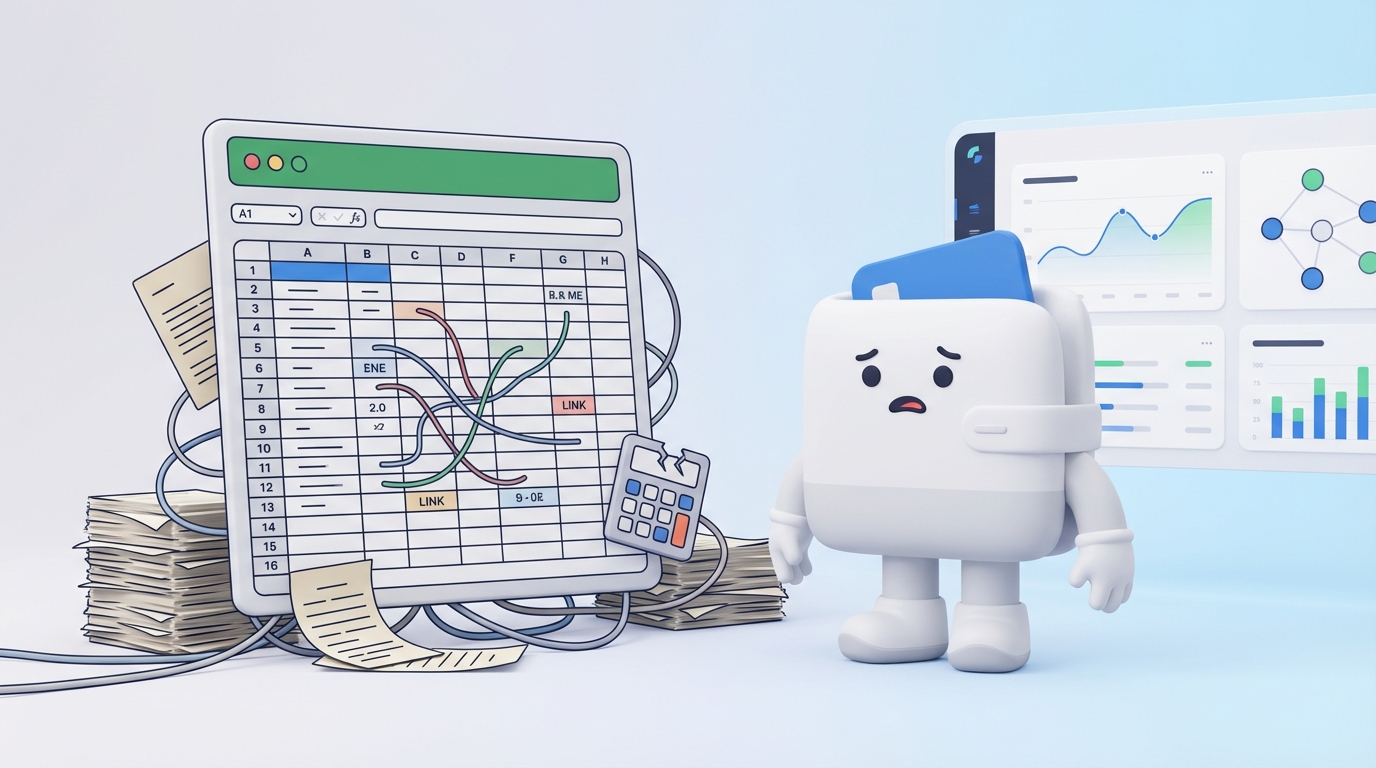
While spreadsheets offer undeniable advantages in terms of cost and flexibility, their limitations become glaringly apparent when viewed through the lens of modern financial management needs. In an environment that demands speed, accuracy, and robust security, relying solely on spreadsheets can introduce significant inefficiencies and risks. The very aspects that make them appealing for simple tasks – manual control and customization – become their Achilles' heel when complexity grows.
The drawbacks are not merely inconveniences; they can lead to serious financial missteps, wasted time, and a lack of critical insights. As businesses scale or personal finances become more intricate, the foundational weaknesses of spreadsheet-only tracking become more pronounced, often requiring significant manual effort to compensate for their inherent limitations. This section details these crucial shortcomings.
One of the most significant drawbacks of spreadsheet-based income tracking is its susceptibility to human error. Every piece of data, from transaction amounts to dates and categories, typically requires manual entry. This repetitive task is not only tedious, leading to manual entry fatigue, but also highly prone to mistakes. A single typo can throw off an entire set of calculations, leading to incorrect financial reports, skewed budgets, and poor decision-making. Unlike dedicated software that can import data directly from banks or automatically categorize transactions using AI, spreadsheets offer minimal safeguards against these common human errors. Debugging complex spreadsheets to find a misplaced decimal or an incorrect formula range can consume hours, far outweighing any initial cost savings.
Spreadsheets are excellent for simple, low-volume tracking, but they quickly encounter scalability issues as finances grow in complexity. For a small business with increasing transactions, multiple income streams, different currencies, inventory management, or payroll, managing everything within a single or even multiple linked spreadsheets becomes an organizational nightmare. The volume of data makes navigation cumbersome, and the risk of data integrity issues rises exponentially. Similarly, for individuals with diverse investment portfolios, rental properties, or complex tax situations, a basic spreadsheet struggles to provide a consolidated, manageable view without becoming overwhelmingly complex and difficult to maintain. Specialized software is designed from the ground up to handle scaling data volumes and intricate financial structures effortlessly.
A core deficiency of traditional spreadsheets in 2026 is their inherent lack of automation and seamless integration. Modern financial management thrives on automated data feeds from bank accounts, credit cards, and payment processors, providing real-time updates. Spreadsheets, by contrast, require manual data import or painstaking copy-pasting, which is time-consuming and immediately renders the data outdated. They also struggle to integrate with other essential business tools like CRM systems, e-commerce platforms, or payroll services, creating data silos and requiring duplicate entry. This absence of real-time connectivity and integration means users are often making decisions based on historical data rather than the most current financial picture, which can be detrimental in fast-paced environments.
While spreadsheets can generate basic charts and sum totals, their capabilities for sophisticated reporting, in-depth analytics, and accurate forecasting are severely limited compared to dedicated financial software. Specialized tools offer pre-built reports (profit & loss, balance sheets, cash flow statements), customizable dashboards, and advanced analytical features that can identify trends, highlight anomalies, and provide predictive insights. To achieve similar results in a spreadsheet would require expert-level knowledge of complex formulas, pivot tables, and macros, and even then, the output might lack the dynamic interactivity and professional presentation of software-generated reports. This limitation means users might miss critical financial insights or struggle to make data-driven strategic decisions without additional manual analysis.
Collaboration on spreadsheets, especially traditional desktop versions, is notoriously difficult. Sharing files via email often leads to "version control nightmares," where multiple users make changes to different copies, making it challenging to merge updates and ensure everyone is working from the latest, most accurate data. Even with cloud-based spreadsheets like Google Sheets, simultaneous editing can lead to accidental overwrites or confusion without strict protocols. Dedicated financial software, particularly cloud-based solutions, is built for collaborative environments, allowing multiple users to access and update information concurrently with robust user permissions, audit trails, and seamless version management, ensuring data integrity and efficient teamwork.

The limitations of spreadsheets in a modern financial context have fueled the innovation and growth of a diverse ecosystem of financial tracking alternatives. These solutions leverage technology to address the shortcomings of manual systems, offering greater automation, integration, security, and analytical power. Choosing the right alternative depends heavily on individual or business needs, complexity, budget, and desired level of automation.
It's no longer a question of whether alternatives exist, but rather which one best fits a particular scenario. From comprehensive accounting suites for businesses to intuitive personal finance apps for individuals, and even hybrid solutions that blend the best of both worlds, the options are varied and increasingly sophisticated. Understanding these categories is key to making an informed decision about financial management in 2026.
For small to medium-sized businesses, dedicated accounting software like QuickBooks, Xero, or FreshBooks represents a significant upgrade from spreadsheets. These platforms are designed to handle every aspect of business finances, including invoicing, expense tracking, payroll, inventory, and comprehensive financial reporting (profit & loss, balance sheets, cash flow statements). They offer robust automation features, such as bank feed integration for automatic transaction import and categorization, automated reconciliation, and recurring invoice generation. Key benefits include error reduction, improved compliance, professional financial reporting, and seamless integration with other business tools. While these typically come with a monthly subscription fee, the time saved, accuracy gained, and insights provided often justify the investment for growing businesses.
Individuals looking for more sophisticated personal income and expense tracking beyond a basic spreadsheet have a wealth of personal finance apps at their disposal. Apps like Mint, You Need A Budget (YNAB), Rocket Money, or Personal Capital connect directly to bank accounts, credit cards, and investment portfolios to automatically pull and categorize transactions. They offer features such as budgeting tools, spending analysis, debt tracking, net worth calculation, and even investment monitoring. Mint is popular for its free access and comprehensive overview, YNAB for its rigorous "zero-based budgeting" philosophy, and Rocket Money for subscription management and bill negotiation. These apps provide real-time insights, customizable dashboards, and mobile access, making financial management convenient and proactive for personal users.
For those who appreciate the flexibility of spreadsheets but desire more advanced features, hybrid solutions offer a middle ground. Cloud-based spreadsheets like Google Sheets or Microsoft Excel Online provide some advantages over desktop versions, such as easier collaboration and automatic saving. Furthermore, these platforms can be significantly enhanced with add-ons, extensions, and scripting (e.g., Google Apps Script in Google Sheets). Users can build custom automation, integrate with external APIs (Application Programming Interfaces) to pull financial data, or create more dynamic reporting dashboards. While this requires a higher level of technical proficiency, it allows for a highly customized solution that retains the spreadsheet interface while gaining some automation and integration capabilities often found in dedicated software. This approach is particularly appealing to tech-savvy individuals or small operations that have unique requirements not fully met by off-the-shelf software.
The forefront of financial tracking in 2026 includes AI-powered tools and platforms offering predictive analytics. These advanced solutions go beyond simply tracking past transactions; they leverage machine learning algorithms to identify patterns, forecast future cash flow, flag unusual spending, and even suggest optimized financial strategies. For businesses, AI can assist in fraud detection, optimize inventory, and predict sales trends. For individuals, it can provide proactive advice on saving, debt management, and investment opportunities. While some features are integrated into broader accounting or personal finance apps, dedicated AI-first platforms are emerging, aiming to provide deeper, more actionable insights. These tools represent the future of financial intelligence, offering a level of foresight and strategic guidance that is entirely unattainable with manual spreadsheet tracking.

Despite the undeniable advancements in financial technology, it would be a mistake to issue a blanket dismissal of spreadsheets for income tracking in 2026. There remain specific niches and scenarios where a spreadsheet, either on its own or as a complementary tool, can still be a reasonable, and sometimes even optimal, choice. The key lies in understanding the limitations and ensuring that the user's needs align with the capabilities of a spreadsheet, rather than pushing it beyond its effective scope.
The "good idea" metric is highly subjective and depends on factors like financial complexity, budget constraints, technical comfort, and the desired level of control. For certain user profiles, the simplicity and low cost of spreadsheets continue to offer a compelling value proposition that more sophisticated, and often more expensive, alternatives cannot always match. It's about finding the right tool for the right job, not necessarily the most advanced tool for every job.
For individuals with extremely straightforward financial situations – perhaps a single income source, minimal expenses, and no investments or debt – a spreadsheet can still be perfectly adequate. Think of a college student tracking their part-time job income and basic living expenses, or a retiree living on a fixed pension with predictable outgoings. In these low-volume, low-complexity scenarios, the overhead of learning and maintaining a dedicated financial app or software might outweigh the benefits. A simple spreadsheet can effectively capture all necessary data points without requiring extensive setup or ongoing management, providing sufficient insight for basic budgeting and financial oversight.
For entrepreneurs just starting a side hustle or a very small business, especially those with minimal transactions and a "lean startup" mentality, spreadsheets can serve as an excellent initial tracking solution. A new freelancer, a crafter selling goods online, or a consultant with only a few clients might find a spreadsheet sufficient for tracking income from sales, project payments, and basic business expenses. The advantage here is the immediate accessibility and zero upfront cost, allowing the business owner to focus resources on growth rather than expensive software licenses. As the business scales, the transition to dedicated accounting software will likely become necessary, but for initial proof-of-concept and early operations, a well-structured spreadsheet can certainly get the job done.
Some individuals or business owners prioritize absolute control over their data and wish to avoid any recurring software subscription fees at all costs. For them, the manual nature of spreadsheets is not a bug but a feature. They prefer to see every calculation, understand every formula, and have their data stored in a format they fully comprehend and can manipulate without relying on proprietary software interfaces. This user group often has a higher degree of technical comfort with spreadsheets and is willing to invest the manual effort to maintain their system. The aversion to subscription models and the desire for full data ownership can make spreadsheets an attractive choice, especially when combined with a robust backup strategy.
Perhaps the most common and effective use of spreadsheets in 2026 for many will be as a complementary tool rather than a standalone solution. Even users of sophisticated accounting software or personal finance apps might employ spreadsheets for specific, highly customized analyses or projections. For example, a business might use QuickBooks for daily accounting but export data to Excel for complex "what-if" scenario planning, detailed budget variance analysis, or specific KPI tracking not easily generated within the primary software. Individuals might use Mint for overall financial health but maintain a separate spreadsheet for tracking a very specific savings goal with unique calculation methodologies. In this hybrid approach, spreadsheets leverage their flexibility to fill gaps or provide deeper dives where automated systems might be too rigid.
If, after careful consideration, you decide that spreadsheet-based income tracking remains the most suitable option for your specific needs in 2026, it's crucial to implement best practices to mitigate its inherent risks and maximize its efficiency. Simply creating a basic spreadsheet without structure or safeguards will almost certainly lead to frustration and inaccuracies. By adopting a disciplined approach, users can significantly enhance the reliability, maintainability, and usefulness of their spreadsheet-based financial system. These practices aim to professionalize a DIY solution, making it as robust as possible given the constraints of the tool.
The goal is to proactively address the common pitfalls of spreadsheets – errors, lack of standardization, and security vulnerabilities – through diligent design and ongoing management. Investing time upfront in setting up a robust system and adhering to consistent maintenance routines will pay dividends in accuracy and peace of mind.
Do not start from scratch every time. Instead, leverage pre-built templates or create your own standardized template for income and expense tracking. A good template should include consistent columns for date, description, income source/category, amount, and payment method. Use consistent naming conventions for categories and accounts to ensure data can be aggregated and analyzed accurately. Standardization reduces the likelihood of errors, makes data entry faster, and simplifies analysis. For instance, always using "Salary" instead of "Paycheck," "Wages," or "Income" for employment earnings. This consistency is vital for filtering, sorting, and summarizing data effectively over time. Consider separate sheets for different types of income or different months, but ensure they all follow the same column structure.
Manual systems demand rigorous verification. Implement a schedule for regular audits and reconciliation. At least weekly or bi-weekly, compare your spreadsheet entries against your bank statements, credit card statements, and payment processor reports. This process helps catch discrepancies, missing transactions, or data entry errors early before they compound. Use conditional formatting in your spreadsheet to highlight variances or incomplete data. Regularly sum up categories and cross-check totals with expected figures. Consider building a simple reconciliation tab within your spreadsheet where you can mark transactions as "reconciled" and calculate the difference between your spreadsheet balance and your actual bank balance. This proactive error checking is non-negotiable for maintaining accuracy.
Financial data is sensitive, so security and data integrity are paramount. If storing spreadsheets locally, ensure your computer is protected with strong passwords, up-to-date antivirus software, and a firewall. Use password protection on the spreadsheet files themselves, especially if they contain highly sensitive details. More importantly, implement a robust backup strategy. Store copies of your spreadsheets in multiple locations: locally on an external drive, and crucially, in a secure cloud storage service (e.g., Google Drive, OneDrive, Dropbox) that offers version history. Schedule automatic backups if possible. This protects against hard drive failure, accidental deletion, or ransomware attacks. For cloud-based spreadsheets, leverage the platform's native security features, such as two-factor authentication for your account and restricting sharing permissions.
To maximize efficiency and insights, don't just use your spreadsheet as a static ledger. Leverage its advanced features. Use formulas (e.g., SUM, AVERAGE, IF, SUMIF, VLOOKUP) to automate calculations, categorize income, and perform basic analysis. Implement conditional formatting to visually highlight important data, such as income exceeding a certain threshold, overdue invoices, or budget overruns. Explore pivot tables for powerful data summarization and reporting, allowing you to quickly analyze income by source, month, or client. For repetitive tasks, consider learning to create simple macros (VBA in Excel, Apps Script in Google Sheets) to automate actions like data formatting, report generation, or importing data from specific files. While this requires a learning curve, it can significantly enhance the power and reduce the manual effort involved in spreadsheet management.
The choice between sticking with spreadsheets or transitioning to dedicated financial software in 2026 is a significant one, with implications for efficiency, accuracy, and peace of mind. There's no universal "best" answer; the optimal solution is highly individualized. Making this decision requires a thoughtful assessment of your current circumstances, future aspirations, and personal preferences. It's about weighing the trade-offs between cost, control, automation, and complexity, and aligning your financial tracking method with your overarching financial goals.
This decision framework aims to guide you through the critical questions you need to ask yourself. By systematically evaluating your needs, budget, technical comfort, and long-term vision, you can confidently determine whether spreadsheets still serve you effectively or if it's time to embrace a more modern approach to financial management.
Start by honestly evaluating your current financial situation. How complex are your income streams? How many transactions do you process monthly? Are you tracking personal finances, a side hustle, or a growing business? If your finances are very simple and low-volume, a spreadsheet might still suffice. However, if you have multiple income sources, significant expenses, investments, or are managing a business with employees, inventory, or numerous clients, the limitations of a spreadsheet will quickly become apparent. Crucially, consider your future growth projections. Are you planning to scale your business, diversify investments, or acquire new assets? If your financial complexity is expected to increase, it's often more prudent to adopt a scalable software solution now rather than face a painful migration later. A spreadsheet that works for 10 transactions a month will likely crumble under 100 or 1000.
Budget is a critical factor. Dedicated financial software typically involves a recurring subscription fee, which can range from a few dollars a month for personal finance apps to hundreds for enterprise-grade accounting solutions. Compare this against the "free" or low-cost nature of spreadsheets. However, also factor in your technical comfort level. Are you proficient in advanced spreadsheet functions (formulas, pivot tables, macros) or would you prefer a user-friendly interface that automates most tasks? Your time commitment is equally important. While software has a learning curve, it often saves significant time in the long run through automation, integration, and streamlined reporting. Spreadsheets, though initially simple, can become massive time sinks for manual data entry, error checking, and custom report generation as complexity increases. Weigh the monetary cost against the "cost" of your time and effort.
Finally, think about future-proofing your financial system. In 2026 and beyond, the trend is towards greater automation, integration, and AI-driven insights. A system that can adapt to these advancements will serve you better in the long term. Dedicated financial software often updates automatically, incorporates new features, and stays compliant with evolving regulations. Spreadsheets, conversely, require manual updates and customization to keep pace, which may become unsustainable. Consider the value of robust security, real-time data, and comprehensive reporting capabilities that modern software offers. A financially robust future requires a tracking system that not only meets today's needs but also anticipates tomorrow's challenges and opportunities. Investing in a scalable, secure, and intelligent system now can prevent significant headaches and provide invaluable insights for long-term financial success.
As we navigate the technological landscape of 2026, the question of whether spreadsheet-based income tracking remains a good idea elicits a nuanced answer. It is clear that while spreadsheets retain an enduring appeal rooted in their cost-effectiveness, accessibility, and unparalleled flexibility for simple tasks, their efficacy is increasingly challenged by the demands of a modern financial world. The rise of AI and automation, coupled with growing regulatory complexity, expectations for real-time data, and heightened security concerns, has fundamentally shifted the definition of efficient and robust financial management.
Spreadsheets inherently fall short in areas like error prevention, scalability, automation, integration with other systems, and sophisticated reporting. These limitations become critical vulnerabilities for growing businesses and individuals with complex finances, potentially leading to wasted time, inaccuracies, and missed opportunities for strategic insight. Modern alternatives, including dedicated accounting software, personal finance apps, and even hybrid cloud-based spreadsheet solutions with advanced scripting, offer superior capabilities in these areas, leveraging technology to provide automation, security, and deeper analytical power.
However, a blanket dismissal of spreadsheets would be premature. For individuals with very simple, low-volume finances, or nascent small businesses taking their first steps, spreadsheets can still serve as a perfectly adequate and cost-efficient starting point. They also continue to be invaluable as a complementary tool, used alongside more sophisticated software for highly customized analysis or specific project tracking. For those who prioritize absolute control and minimal cost, and possess the technical comfort to manage them diligently, spreadsheets can remain a viable, albeit demanding, option.
Ultimately, the decision to use a spreadsheet versus dedicated software in 2026 hinges on a careful assessment of individual or business needs, future growth projections, budget, and technical comfort. While spreadsheets still have a place, their role is evolving from a primary, standalone tracking solution to a more specialized or supplementary tool. The modern financial landscape increasingly favors systems that are automated, integrated, secure, and capable of providing real-time, actionable insights, pushing the traditional spreadsheet into a more defined, often secondary, niche.
Written by
Founder & CEO
Sharing knowledge on personal finance, budget management, and investment strategies to help you achieve financial freedom.