
13 min read
'%3e%3cg%20clip-path='url(%23b6dc094121)'%3e%3cpath%20fill='%230066cc'%20d='M%2012.707031%205.710938%20L%2012.707031%2035.761719%20L%2037.007812%2035.761719%20L%2037.007812%205.710938%20Z%20M%2012.707031%205.710938%20'%20fill-opacity='1'%20fill-rule='nonzero'/%3e%3c/g%3e%3c/g%3e%3cg%20clip-path='url(%23cd2e57bbdf)'%3e%3cg%20clip-path='url(%23cc31bb2a50)'%3e%3cpath%20fill='%230066cc'%20d='M%2026.734375%201.035156%20L%2026.734375%2035.761719%20L%2036.882812%2035.761719%20L%2036.882812%201.035156%20Z%20M%2026.734375%201.035156%20'%20fill-opacity='1'%20fill-rule='nonzero'/%3e%3c/g%3e%3c/g%3e%3cg%20clip-path='url(%23ab469c456a)'%3e%3cg%20clip-path='url(%23fb318aa8dc)'%3e%3cpath%20fill='%230066cc'%20d='M%200.0546875%201.035156%20L%200.0546875%2035.761719%20L%2010.203125%2035.761719%20L%2010.203125%201.035156%20Z%20M%200.0546875%201.035156%20'%20fill-opacity='1'%20fill-rule='nonzero'/%3e%3c/g%3e%3c/g%3e%3cg%20clip-path='url(%238fe1ac7b9f)'%3e%3cg%20clip-path='url(%23f68e7172d0)'%3e%3cpath%20fill='%230066cc'%20d='M%200%205.710938%20L%200%2035.761719%20L%2024.269531%2035.761719%20L%2024.269531%205.710938%20Z%20M%200%205.710938%20'%20fill-opacity='1'%20fill-rule='nonzero'/%3e%3c/g%3e%3c/g%3e%3c/svg%3e)
In an ever-changing world, your personal finances need a tracking system that's as resilient as you are. This comprehensive guide will walk you through the essential strategies and modern tools to future-proof your personal finance tracking, ensuring clarity and control no matter what tomorrow bring

Yağız Gürbüz
Founder & CEO


🎧 En iyi deneyim için kulaklık kullanmanızı öneririz
In an ever-changing world, your personal finances need a tracking system that's as resilient as you are. This comprehensive guide will walk you through the essential strategies and modern tools to future-proof your personal finance tracking, ensuring clarity and control no matter what tomorrow brings. Discover how to build a flexible, secure, and automated system that truly stands the test of time and adapts to your evolving financial landscape.
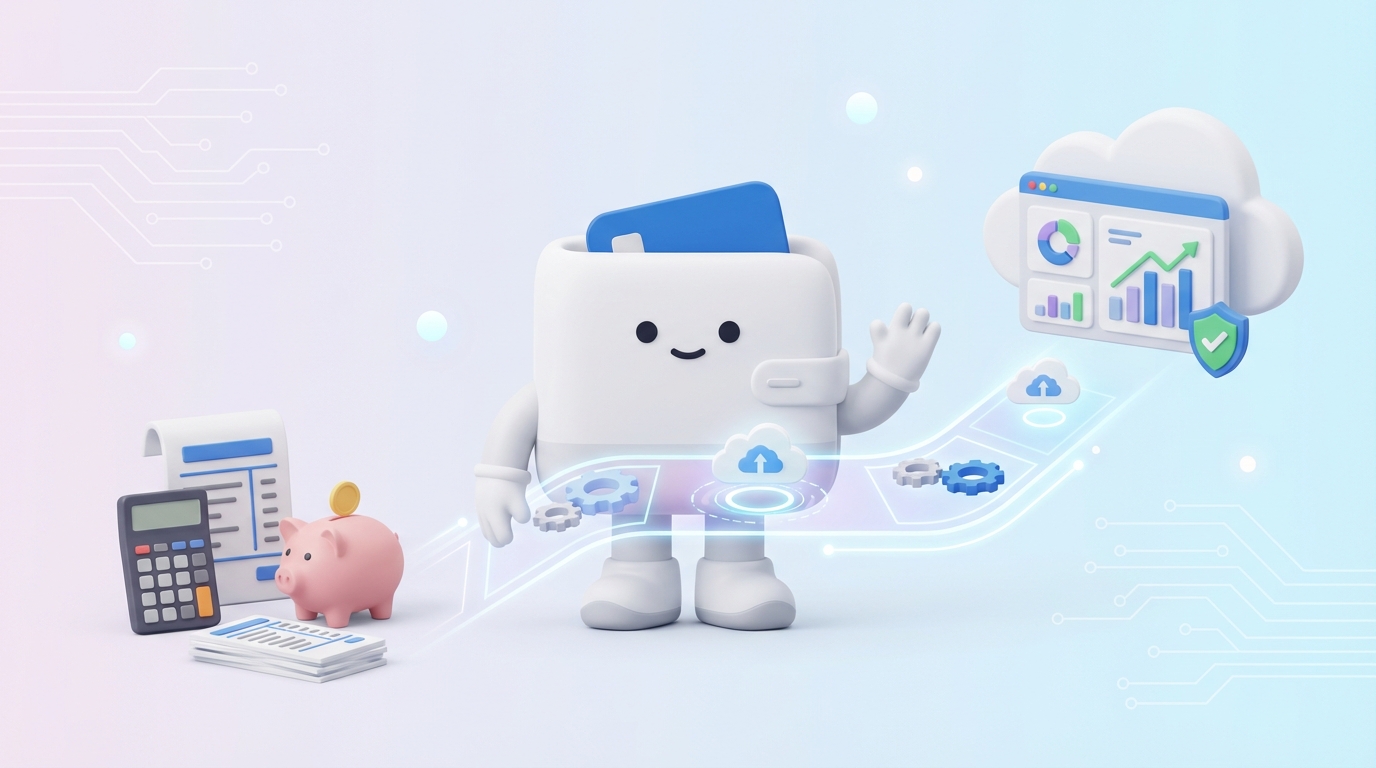
Future-proofing your personal finance tracking isn't just about choosing the latest app; it's about building a system that remains relevant, secure, and effective regardless of economic shifts, technological advancements, or personal life changes. It means establishing a framework that can absorb shocks, adapt to new realities, and continue to provide accurate, actionable insights into your financial health for years, even decades, to come. This proactive approach safeguards your financial well-being, moving beyond mere record-keeping to strategic preparedness.
The benefits of future-proofing are immense. It minimizes the stress associated with financial uncertainty, allows for quicker adaptation to unforeseen circumstances like job loss or market volatility, and ensures that your long-term goals remain in sight and achievable. Without a future-proof system, you risk stagnation, making reactive rather than proactive decisions, and potentially missing out on opportunities for growth and stability. It's an investment in your peace of mind and financial longevity.
Traditional methods of personal finance tracking, such as manual spreadsheets updated sporadically or relying solely on paper statements, often fall short in today's dynamic financial environment. These methods are prone to human error, time-consuming, and lack the real-time insights necessary for agile decision-making. They struggle to integrate data from multiple accounts, making it difficult to get a holistic view of one's finances. Furthermore, manual systems offer little in the way of automation for categorizing expenses, setting budgets, or flagging unusual activity, leaving individuals vulnerable to oversight and inefficiency.
Moreover, traditional tracking often lacks adequate security measures. Paper records can be lost or stolen, and basic spreadsheets on a single device are susceptible to data corruption or hardware failure without proper backup protocols. The static nature of these systems means they don't easily adapt to new financial products, evolving investment strategies, or significant life events, forcing a complete overhaul rather than a smooth transition. This rigidity makes them ill-equipped for the complexities of modern personal finance.
Long-term financial resilience is the ultimate goal of future-proofing your tracking system. It's the ability of your financial structure to withstand and recover from adverse financial events, adapt to changing economic landscapes, and continue progressing towards your wealth-building objectives. A resilient system isn't just about tracking; it's about understanding the underlying trends, anticipating potential challenges, and having the data readily available to make informed decisions that protect and grow your assets.
Achieving this resilience requires a system that is not only robust but also flexible enough to incorporate new income streams, adjust to fluctuating expenses, and align with evolving life goals, such as buying a home, funding education, or planning for retirement. It's about building a financial ecosystem that supports continuous learning and adjustment, ensuring that your financial journey remains on track, no matter what surprises life throws your way. This proactive stance is invaluable for achieving enduring financial security and freedom.

Building a future-proof personal finance tracking system relies on several foundational pillars that ensure its robustness and longevity. These principles aren't just about the tools you use, but the underlying philosophy of how you approach managing your money. By consciously integrating these pillars, you create a system that can stand the test of time and adapt to any circumstance.
Each pillar contributes uniquely to the overall strength and effectiveness of your financial tracking. Neglecting even one can introduce vulnerabilities that compromise the system's ability to provide accurate insights, secure data, or adapt to future needs. Understanding and implementing these core tenets is paramount for anyone serious about long-term financial stability.
Automation is the cornerstone of an efficient and future-proof tracking system. It minimizes manual data entry, reduces the likelihood of human error, and frees up valuable time that can be better spent on analyzing data rather than inputting it. This involves linking bank accounts, credit cards, and investment portfolios to financial software that automatically categorizes transactions, updates balances, and provides real-time snapshots of your financial health.
Efficiency also means that your system provides clear, concise reports and visualizations, allowing you to quickly grasp complex financial information. An efficient system should be easy to use, intuitive, and require minimal effort to maintain. By automating routine tasks, you ensure consistency and accuracy, which are vital for reliable long-term tracking and planning.
A future-proof system must be inherently adaptable and flexible. Life is unpredictable, and your financial situation will undoubtedly change over time due to career shifts, family growth, economic downturns, or personal goals. Your tracking system must be able to accommodate these changes without requiring a complete overhaul.
This means choosing tools and strategies that allow for easy adjustments to budgets, the addition of new accounts or financial products, and the re-prioritization of goals. It should be able to integrate new technologies as they emerge and scale up or down based on your financial complexity. A flexible system ensures that your tracking remains relevant and useful through every phase of your life.
In an increasingly digital world, data security and privacy are non-negotiable pillars. Your financial tracking system will house highly sensitive personal and financial information, making it a prime target for cyber threats. Future-proofing in this context means employing robust security measures to protect your data from unauthorized access, breaches, and loss.
This includes using strong encryption, two-factor authentication (2FA), and choosing financial tools from reputable providers with a proven track record of security. It also involves understanding data sharing policies and being proactive about protecting your privacy. A secure system instills confidence and peace of mind, knowing that your financial information is safe from malicious actors.
The final pillar emphasizes a long-term vision and scalability. Your tracking system shouldn't just meet your current needs but anticipate future ones. As your wealth grows and your financial life becomes more complex, your system should be able to scale accordingly, handling more accounts, diverse investments, and intricate financial strategies without becoming unwieldy.
This includes the ability to track long-term goals like retirement savings, college funds, and large purchases, integrating them seamlessly into your daily and monthly tracking. A scalable system ensures that as you evolve financially, your tracking capabilities evolve with you, continuing to provide valuable insights and support for your journey towards enduring financial clarity.

The digital age has revolutionized personal finance tracking, offering a plethora of tools and software designed to streamline the process, enhance accuracy, and provide deeper insights. Leveraging these technologies is crucial for building a future-proof system that can handle the complexities of modern financial life.
From comprehensive budgeting platforms to specialized investment trackers, the right technological solutions can transform your approach to money management. Understanding the landscape of available tools and how they integrate can empower you to create a truly robust and efficient financial tracking ecosystem.
Automated budgeting apps are at the forefront of modern finance tracking. Platforms like You Need A Budget (YNAB) emphasize zero-based budgeting, helping users assign every dollar a job and gain complete control over their spending. Mint offers a comprehensive overview of all accounts, tracks spending, categorizes transactions, and provides budgeting tools, often free of charge.
Personal Capital goes beyond basic budgeting, offering robust investment tracking, net worth calculations, and retirement planning tools, making it ideal for those with more complex financial portfolios. These apps automatically pull transaction data from linked accounts, categorize expenses, and often provide visual reports, significantly reducing manual effort and improving accuracy. Their ability to integrate multiple financial institutions into one dashboard provides a holistic view that manual methods simply cannot match.
For investors, specialized platforms are indispensable. Many brokerage firms offer sophisticated tracking tools that allow you to monitor portfolio performance, analyze asset allocation, and track returns. Beyond brokerage-specific tools, platforms like Personal Capital (mentioned above) offer a consolidated view of all investment accounts, regardless of where they are held.
Robo-advisors, such as Betterment and Wealthfront, not only manage investments based on your risk tolerance and goals but also provide performance tracking, rebalancing, and tax-loss harvesting capabilities. These platforms automate many aspects of investment management and tracking, ensuring your portfolio remains aligned with your long-term objectives and is future-proofed against market fluctuations through disciplined, algorithmic management.
The choice between spreadsheets and dedicated financial software is a key decision. Spreadsheets (e.g., Excel, Google Sheets) offer unparalleled customization and are often free. They provide complete control over data organization and calculations, making them suitable for those who enjoy a hands-on approach and have specific, perhaps niche, tracking needs. However, they require significant manual data entry, are prone to error, lack automation features, and often demand a higher level of financial literacy to set up and maintain effectively.
Dedicated financial software, on the other hand, excels in automation, integration, and user-friendliness. They automatically pull data, categorize transactions, generate reports, and often include advanced features like goal tracking, bill reminders, and investment analysis. While many come with a subscription fee, the time saved, reduced errors, and comprehensive insights often justify the cost. For future-proofing, dedicated software generally offers more robust security, scalability, and adaptability to new financial trends and technologies, making it the superior choice for most users aiming for long-term resilience.
Regardless of whether you use spreadsheets or dedicated software, secure cloud storage and backup solutions are critical for future-proofing your financial data. Services like Google Drive, Dropbox, OneDrive, or specialized backup services ensure that your financial records are safe from local hardware failures, accidental deletion, or physical damage. It's not enough to just store your data; it needs to be accessible and recoverable.
When choosing a cloud solution, prioritize providers that offer strong encryption both in transit and at rest, alongside robust privacy policies. Regularly backing up your data, whether it's an export from your financial app or a spreadsheet, to a secure cloud service provides an essential layer of disaster recovery. This ensures that even in the face of unforeseen events, your meticulously tracked financial history remains intact and available for future reference and analysis, safeguarding your long-term financial clarity.

A truly future-proof financial tracking system isn't just about the tools you use; it's about the strategies you employ to ensure it remains dynamic, responsive, and aligned with your evolving financial life. Building adaptability into your system is key to its longevity and effectiveness, allowing it to bend without breaking when circumstances change.
These strategies focus on creating a proactive and flexible framework that can seamlessly integrate new information, adjust to different priorities, and support your financial goals through every stage of life. Implementation of these practices ensures your system remains a living, breathing component of your financial success.
One of the most powerful strategies for adaptability is automating the categorization of your income and expenses. Modern financial apps and software allow you to set up rules that automatically assign transactions to predefined categories based on keywords, merchants, or amounts. For example, all transactions from your grocery store can be tagged "Groceries," and your paycheck can be labeled "Income: Salary."
This automation significantly reduces manual effort and ensures consistency in your data, which is crucial for accurate analysis. Furthermore, these systems often learn from your manual adjustments, improving their categorization over time. By automating this core function, you free up time to focus on analyzing trends and making informed financial decisions, rather than getting bogged down in data entry.
An adaptable system keeps you informed and proactive. Setting up alerts and reminders for key financial events ensures you never miss a bill payment, subscription renewal, or investment opportunity. Most financial apps allow you to customize notifications for low account balances, approaching bill due dates, unusual spending activity, or when you exceed a budget category.
These timely prompts help prevent late fees, overdrafts, and missed opportunities. For investments, alerts can notify you of significant market movements or when a particular stock reaches a target price. By staying on top of these events, you maintain control over your finances and can respond quickly to any changes, making your system inherently more resilient.
A budget is not a static document; it's a living guide that requires regular review and adjustment. Life changes – a new job, a raise, unexpected expenses, or shifting priorities – necessitate a flexible budget. Schedule monthly or quarterly review cycles to assess your spending habits against your budget, identify areas for improvement, and make necessary modifications.
During these reviews, consider if your categories are still relevant, if your spending limits are realistic, and if your budget aligns with your current financial goals. An adaptable system embraces these adjustments, allowing you to fine-tune your financial plan as your circumstances evolve, ensuring your budget remains a relevant and effective tool for achieving your objectives.
Major life events significantly impact personal finances and demand an adaptable tracking system. Whether it's the financial planning for a wedding, the costs associated with having children, navigating a career change with potential income fluctuations, or the complex planning required for retirement, your system needs to accommodate these shifts.
This involves creating specific savings goals within your tracking software, adjusting budget categories to reflect new expenses, and potentially integrating new accounts or investment vehicles. A future-proof system allows you to model different scenarios for these events, helping you understand their financial implications and make proactive adjustments to your tracking and planning, rather than being caught off guard.
For a truly holistic and future-proof system, your long-term retirement and investment goals must be integrated into your daily and monthly financial tracking. It's not enough to just track your spending; you need to see how that spending impacts your ability to reach your broader wealth-building objectives. Many financial apps allow you to set specific goals for retirement savings, investment growth, or large purchases, and then track your progress towards them.
This integration helps you visualize the impact of your current financial decisions on your future. By regularly seeing how your contributions to retirement accounts or investment portfolios are growing, and how your spending habits affect those contributions, you gain a powerful motivator and a clearer understanding of your financial trajectory. This seamless connection ensures that your everyday financial actions are always aligned with your long-term aspirations.
In an age where data breaches are increasingly common, ensuring the security and privacy of your financial information is paramount. A future-proof personal finance tracking system must prioritize robust protection against cyber threats and unauthorized access. Neglecting this aspect undermines all other efforts to build a reliable and resilient financial framework.
This section outlines critical measures and best practices to safeguard your sensitive data, empowering you to manage your finances with confidence and peace of mind. User responsibility plays a significant role here, complementing the security features offered by financial tools.
The foundation of digital security lies in strong, unique passwords. Avoid easily guessable combinations and use a mix of uppercase and lowercase letters, numbers, and symbols. Ideally, use a password manager to generate and store complex passwords for each of your financial accounts and apps. Reusing passwords across different services is a major security vulnerability.
Even more critical is enabling Two-Factor Authentication (2FA) wherever available. 2FA adds an extra layer of security by requiring a second verification method (e.g., a code sent to your phone, a fingerprint, or a hardware token) in addition to your password. This dramatically reduces the risk of unauthorized access, even if your password is compromised. Always prioritize financial tools that offer robust 2FA options.
Data encryption is the process of converting information into a code to prevent unauthorized access. When you use financial software or online banking, your data should be encrypted both in transit (as it moves between your device and the server) and at rest (when it's stored on the server). Look for financial tools that explicitly state their use of industry-standard encryption protocols.
Secure Sockets Layer (SSL) and its successor, Transport Layer Security (TLS), are cryptographic protocols designed to provide communication security over a computer network. When you visit a website, look for "https://" in the URL and a padlock icon in your browser's address bar. This indicates a secure connection, meaning your data is encrypted as it travels. Always ensure your financial interactions occur over secure, encrypted connections to protect against eavesdropping and data interception.
The security of your financial tracking system largely depends on the trustworthiness of the tools you choose. Opt for established financial apps and software providers with a strong reputation for security and privacy. Research their security measures, data handling policies, and compliance with relevant regulations (e.g., GDPR, CCPA). Read user reviews and professional assessments regarding their security track record.
Reputable providers typically employ bank-level encryption, regular security audits, intrusion detection systems, and dedicated security teams. Be wary of lesser-known or free tools that don't clearly outline their security protocols, as they might compromise your data for convenience or other means. Your due diligence in selecting tools is a critical step in future-proofing your data's safety.
Even with the most secure systems, data loss can occur due to unforeseen circumstances like hardware failure, software glitches, or human error. Therefore, a robust future-proof system includes regular data backups and a disaster recovery plan. For cloud-based financial software, data is usually backed up by the provider, but it's wise to periodically export your data (if the option is available) and store it securely offline or in a separate, encrypted cloud storage service.
If you use spreadsheets or local software, implement a routine for backing up your financial files to multiple locations, including an external hard drive and a secure cloud service. Test your backups periodically to ensure they are accessible and recoverable. A disaster recovery plan ensures that even if your primary data source becomes unavailable, you have a recent, secure copy that allows you to restore your financial history and continue tracking without significant interruption, preserving your financial narrative for the long term.
The true power of a future-proof personal finance tracking system extends far beyond merely recording transactions. It transforms raw data into actionable insights, enabling you to move from reactive budgeting to proactive financial planning. This strategic use of your financial data is what truly sets a resilient system apart, allowing you to build wealth and achieve long-term financial stability.
By leveraging the rich data collected over time, you can make smarter decisions about spending, saving, investing, and debt management. This section explores how to harness your tracked data to forecast, strategize, and optimize your financial future.
Consistent tracking generates a wealth of data that, when analyzed, reveals invaluable financial trends and patterns. By reviewing your spending over several months or years, you can identify recurring expenses, seasonal fluctuations, and areas where spending consistently exceeds your budget. For example, you might discover that your dining out expenses are significantly higher on weekends or that utility bills spike during certain months.
Understanding these patterns allows for more accurate budgeting and informed decision-making. You can identify opportunities to cut unnecessary costs, negotiate better deals, or allocate resources more effectively. This data-driven insight empowers you to make strategic adjustments that align your spending with your financial goals, rather than simply reacting to monthly statements.
With historical financial data, you can begin to forecast your future financial health. Many advanced financial tracking tools offer features that allow you to project your cash flow, savings growth, and net worth based on your current income, expenses, and savings rates. This provides a clear picture of where you are headed financially if current trends continue.
Even more powerful is scenario planning. What if you get a raise? What if you take a pay cut? What if you decide to buy a house or have children? By inputting different variables into your financial projections, you can visualize the potential impact of major life events or economic changes on your finances. This proactive approach allows you to prepare for various outcomes, adjust your strategies in advance, and maintain control over your financial destiny.
Your financial tracking data is a critical resource for making informed investment decisions. By understanding your cash flow, discretionary income, and existing debt obligations, you can determine how much you can realistically allocate to investments without jeopardizing your emergency fund or daily expenses. Tracking your current investments within the same system provides a consolidated view of your overall portfolio performance, asset allocation, and risk exposure.
This comprehensive insight allows you to make data-backed decisions about where to invest, how to diversify, and when to rebalance your portfolio. For instance, if your data shows you're consistently saving more than anticipated, you might increase your investment contributions. Conversely, if unexpected expenses arise, you can adjust your investment strategy temporarily without derailing your long-term goals, ensuring your investment approach is always grounded in your real financial capacity.
Finally, your tracked data provides the ammunition to optimize debt repayment strategies and accelerate savings goals. By clearly seeing all your debts (credit cards, loans, mortgage) and their interest rates, you can implement strategies like the debt snowball or debt avalanche more effectively. Your tracking system can help you identify extra funds available each month that can be directed towards high-interest debts, significantly reducing interest paid and accelerating your path to becoming debt-free.
Similarly, for savings goals, whether it's for a down payment, a child's education, or retirement, your data helps you establish realistic targets and monitor your progress. You can identify periods when you have surplus cash to boost savings or adjust your spending to meet a critical savings milestone. By constantly analyzing and acting on your financial data, you transform your tracking system into a dynamic engine for achieving financial freedom and securing your future.
While the goal of future-proofing your personal finance tracking is to build resilience, there are several common pitfalls that can undermine your efforts. Being aware of these traps allows you to proactively circumvent them, ensuring your system remains effective and doesn't become a source of frustration or inaccuracy.
Avoiding these mistakes is as crucial as implementing the right strategies. It reinforces the longevity and reliability of your financial tracking system, making it a sustainable tool for your financial journey.
One of the biggest traps is over-complicating your tracking system. While detailed insights are valuable, trying to track every single penny in minute detail, or using overly complex spreadsheets with dozens of categories, can lead to burnout and analysis paralysis. When the system becomes too cumbersome, it's easy to fall behind, leading to incomplete data and ultimately, abandonment.
Strive for simplicity and practicality. Start with essential categories and expand only if necessary. Remember, the goal is clarity and actionability, not exhaustive data collection for its own sake. A simpler system that you consistently maintain is far more valuable than a complex one that you abandon after a few weeks.
A future-proof system is not a "set it and forget it" solution. Neglecting regular updates and system maintenance is a common pitfall. This includes reviewing your budget monthly, updating account linkages in your software, confirming transaction categorizations, and periodically checking for software updates. Ignoring these tasks can lead to inaccurate data, broken integrations, and a system that no longer reflects your current financial reality.
Just as you perform maintenance on your car, your financial tracking system requires ongoing care. Schedule dedicated time each week or month for a quick review and update. This proactive maintenance ensures your system remains accurate, relevant, and fully functional.
The digital threat landscape is constantly evolving, and ignoring emerging security risks is a dangerous oversight. This includes failing to update your financial software and operating systems regularly. Software updates often contain critical security patches that protect against newly discovered vulnerabilities. Running outdated software leaves you exposed to potential cyberattacks and data breaches.
Additionally, staying informed about common phishing scams, identity theft tactics, and data privacy best practices is essential. Be vigilant about suspicious emails or calls claiming to be from your financial institutions. A future-proof approach to security means continuous learning and proactive adaptation to new threats.
The entire premise of future-proofing is adaptability, yet many people fail to adjust their tracking systems when significant life changes occur. Getting married, having children, buying a house, changing jobs, or facing unexpected medical expenses all impact your financial landscape. If your tracking system remains static through these events, it quickly becomes irrelevant and unhelpful.
Actively integrate major life events into your financial tracking. Adjust your budget, re-evaluate your goals, add new accounts, and modify your savings strategies. The system should grow and evolve with you. Failing to adapt means you'll lose the benefits of clear insight and control precisely when you need them most, rendering your "future-proof" system obsolete in the face of your changing future.
Future-proofing your personal finance tracking is not merely an optional upgrade; it's an essential strategy for navigating the complexities and uncertainties of modern financial life. This comprehensive guide has walked you through the critical components, from defining what "future-proofing" truly entails to leveraging cutting-edge technology and implementing robust security measures. We've explored how a proactive approach, built on pillars of automation, adaptability, security, and a long-term vision, can transform your financial management from a reactive chore into a powerful tool for strategic planning and wealth creation.
By embracing automated budgeting apps, understanding the nuances between spreadsheets and dedicated software, and diligently protecting your data with strong passwords and secure connections, you lay a foundation for enduring financial clarity. Furthermore, moving beyond mere tracking to actively use your financial data for identifying trends, forecasting future health, and optimizing investment and debt strategies empowers you to make informed decisions that align with your deepest financial aspirations. Avoiding common pitfalls like over-complication and neglecting regular updates ensures your system remains a reliable companion on your financial journey.
Ultimately, a future-proof personal finance tracking system is your personalized roadmap to financial resilience and freedom. It provides the insights, security, and flexibility needed to confidently face any economic shift or life change, ensuring your financial goals remain within reach. Don't wait for the future to happen to you; proactively build a financial system that stands the test of time, giving you unwavering control and peace of mind. Start implementing these strategies today and take the definitive step towards a more secure and prosperous financial tomorrow.
Written by
Founder & CEO
Sharing knowledge on personal finance, budget management, and investment strategies to help you achieve financial freedom.