
13 min read
'%3e%3cg%20clip-path='url(%23b6dc094121)'%3e%3cpath%20fill='%230066cc'%20d='M%2012.707031%205.710938%20L%2012.707031%2035.761719%20L%2037.007812%2035.761719%20L%2037.007812%205.710938%20Z%20M%2012.707031%205.710938%20'%20fill-opacity='1'%20fill-rule='nonzero'/%3e%3c/g%3e%3c/g%3e%3cg%20clip-path='url(%23cd2e57bbdf)'%3e%3cg%20clip-path='url(%23cc31bb2a50)'%3e%3cpath%20fill='%230066cc'%20d='M%2026.734375%201.035156%20L%2026.734375%2035.761719%20L%2036.882812%2035.761719%20L%2036.882812%201.035156%20Z%20M%2026.734375%201.035156%20'%20fill-opacity='1'%20fill-rule='nonzero'/%3e%3c/g%3e%3c/g%3e%3cg%20clip-path='url(%23ab469c456a)'%3e%3cg%20clip-path='url(%23fb318aa8dc)'%3e%3cpath%20fill='%230066cc'%20d='M%200.0546875%201.035156%20L%200.0546875%2035.761719%20L%2010.203125%2035.761719%20L%2010.203125%201.035156%20Z%20M%200.0546875%201.035156%20'%20fill-opacity='1'%20fill-rule='nonzero'/%3e%3c/g%3e%3c/g%3e%3cg%20clip-path='url(%238fe1ac7b9f)'%3e%3cg%20clip-path='url(%23f68e7172d0)'%3e%3cpath%20fill='%230066cc'%20d='M%200%205.710938%20L%200%2035.761719%20L%2024.269531%2035.761719%20L%2024.269531%205.710938%20Z%20M%200%205.710938%20'%20fill-opacity='1'%20fill-rule='nonzero'/%3e%3c/g%3e%3c/g%3e%3c/svg%3e)
In today's hyper-competitive and rapidly evolving business landscape, relying on static, outdated financial data for budgeting is akin to navigating a modern highway with an ancient map. This traditional approach, once a cornerstone of financial planning, is increasingly proving ineffective, leading to inaccurate forecasts, missed opportunities, and ultimately, failed strategies. Understanding why budgeting without real-time data simply doesn't work is crucial for any organization aiming for financial agility and sustained growth.

Yağız Gürbüz
Founder & CEO
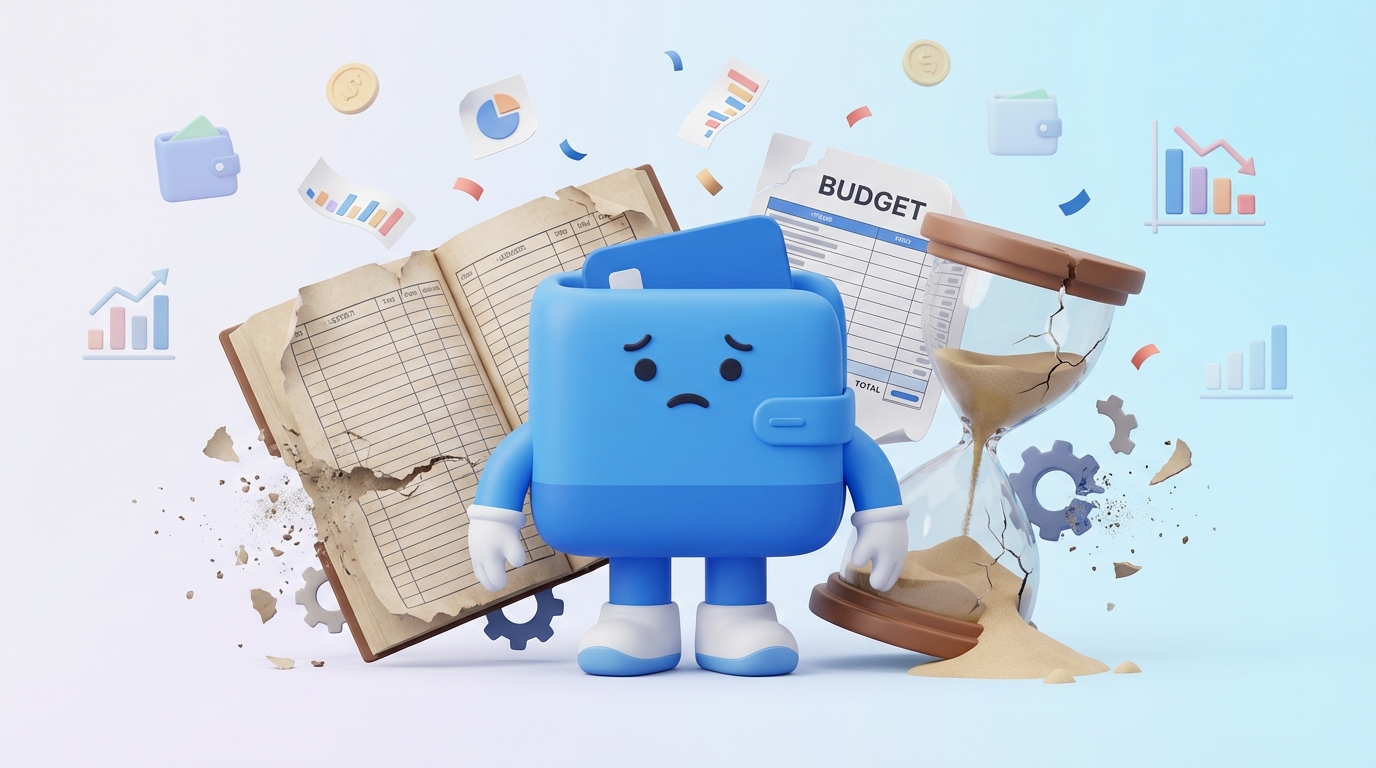
In today's hyper-competitive and rapidly evolving business landscape, relying on static, outdated financial data for budgeting is akin to navigating a modern highway with an ancient map. This traditional approach, once a cornerstone of financial planning, is increasingly proving ineffective, leading to inaccurate forecasts, missed opportunities, and ultimately, failed strategies. Understanding why budgeting without real-time data simply doesn't work is crucial for any organization aiming for financial agility and sustained growth.
Traditional budgeting, often an annual exercise, typically involves setting financial goals and allocating resources based on historical data and future assumptions made at a specific point in time. While this method has served businesses for decades, its inherent limitations are becoming glaringly apparent in the 21st century. The fundamental flaw lies in its static nature; a budget crafted in Q4 for the upcoming fiscal year assumes a level of predictability that simply no longer exists. This foundation, once considered robust, is now proving to be built on shifting sands, susceptible to the slightest tremor in market conditions, technological advancements, or geopolitical events.
The illusion that a financial plan can remain relevant for an entire year without continuous adjustment is a dangerous myth. Businesses operate within complex ecosystems where variables are constantly in flux. From supply chain disruptions and sudden shifts in consumer demand to emerging competitors and regulatory changes, the operational environment is anything but static. When a budget remains rigid despite these external pressures, it quickly loses its utility as a guiding tool, transforming instead into an irrelevant artifact that hinders rather than helps strategic decision-making.
Traditional budgeting methodologies are often characterized by their reliance on historical performance and a top-down approach. Departments submit their requests, which are then consolidated and approved, typically with little room for mid-year adjustments. This process is time-consuming, resource-intensive, and inherently backward-looking. It prioritizes control over responsiveness and assumes that past trends are reliable indicators of future performance, a perilous assumption in volatile markets.
Moreover, traditional budgets frequently foster a "use-it-or-lose-it" mentality, encouraging departments to spend their allocated funds by year-end regardless of actual need, simply to ensure similar or increased allocations in the next cycle. This behavior leads to wasteful spending and distorts genuine financial requirements. The lack of dynamic feedback loops means that by the time discrepancies are identified, significant resources may have already been misallocated, and opportunities may have vanished.
The disconnect between the rapid pace of modern business and the slow, annual cycle of traditional budgeting is perhaps its most critical vulnerability. Today's business environment demands immediate insights and rapid adjustments. Market trends can shift quarterly, competitor strategies can evolve monthly, and technological innovations can emerge weekly. An annual budget, often outdated just months after its creation, cannot keep pace with this velocity.
Consider the impact of a sudden economic downturn, a global pandemic, or a disruptive technological breakthrough. An annual budget, meticulously crafted before these events, becomes obsolete almost overnight. Businesses operating with such a rigid framework are slow to react, unable to pivot, and often find themselves lagging behind more agile competitors. The inability to dynamically reallocate funds, adjust spending priorities, or capitalize on unforeseen opportunities due to an inflexible budget severely hampers an organization's ability to thrive, or even survive, in a fast-changing world.
The absence of real-time data creates a cascade of problems that undermine the very purpose of budgeting. Without up-to-the-minute information, financial planning becomes a speculative exercise, prone to error and disconnected from operational realities. This section delves into the fundamental reasons why a budget built on anything less than real-time insights is fundamentally flawed.
One of the primary functions of a budget is to provide a reliable forecast of future financial performance. However, when the underlying data is outdated, these forecasts are inevitably inaccurate. Traditional budgeting often relies on historical data that might be weeks or months old by the time the budget is finalized. Any significant change in sales volumes, production costs, marketing spend effectiveness, or operational efficiencies since that data was collected renders the forecast immediately suspect.
For example, if raw material prices suddenly spike due to supply chain issues, but the budget was set using older, lower prices, the cost of goods sold will be underestimated, leading to an overestimation of gross profit. Similarly, if a new competitor enters the market, impacting sales volumes, a static budget won't reflect this new reality, resulting in an overly optimistic revenue projection. These inaccuracies ripple through the entire financial model, making profit targets unrealistic and resource allocations misinformed.
Without real-time data, businesses are essentially driving blindfolded. They cannot identify emerging trends, capitalize on fleeting opportunities, or proactively mitigate risks. Instead, decision-making becomes reactive, based on lagging indicators rather than leading insights. By the time quarterly or monthly reports are compiled and analyzed, the opportunity might have passed, or the problem might have escalated significantly.
Imagine a scenario where a sudden surge in demand for a particular product category occurs. A business with real-time sales and inventory data could quickly identify this trend, adjust production schedules, reallocate marketing spend, and capture a larger market share. Conversely, a business relying on monthly reports might only discover the trend weeks later, by which point competitors have already capitalized, and the peak demand has subsided. This inability to make timely, informed decisions is a significant competitive disadvantage.
Modern markets are characterized by volatility, uncertainty, complexity, and ambiguity (VUCA). Agility and flexibility are paramount for survival and growth. Budgeting without real-time data inherently lacks these qualities. A static budget locks an organization into a predefined plan, making it difficult to pivot quickly in response to unforeseen events or new information.
When an unexpected economic downturn hits, or a new government regulation impacts operational costs, a rigid annual budget prevents immediate adaptation. Departments might be constrained by their initial allocations, unable to shift resources to more critical areas or cut back on less essential spending. This rigidity can lead to financial strain, missed compliance deadlines, or even business continuity issues, as the organization struggles to align its financial plan with its evolving operational reality.
One of the most direct consequences of budgeting without real-time data is inefficient resource allocation and increased waste. When budgets are based on outdated assumptions, funds are often allocated to projects or departments that no longer offer the best return on investment, while other, more promising areas might be underfunded.
For instance, a marketing campaign might be allocated a substantial budget based on historical performance, but real-time analytics could show that its effectiveness has significantly diminished. Without this immediate feedback, the budget continues to be spent on an underperforming initiative. Similarly, departments might hoard resources or overspend on non-essential items if their actual needs are not being continuously monitored against their budgeted amounts. This lack of granular visibility prevents timely adjustments, leading to suboptimal utilization of capital and human resources.
Effective accountability and performance tracking are impossible without accurate, up-to-date data. When budget vs. actuals reports are delayed or based on incomplete information, it becomes challenging to pinpoint where performance is deviating and why. Managers cannot be held truly accountable for their spending if the metrics they are judged against are not current or reflective of the true operational environment.
This creates a disconnect between financial targets and operational performance. If a sales team is consistently missing revenue targets, but the budget was based on an inflated forecast, it's difficult to determine if the problem is execution, market conditions, or an unrealistic initial budget. Real-time data provides the clarity needed to identify performance gaps promptly, understand their root causes, and implement corrective actions, thereby improving accountability across the organization.
Ultimately, budgeting without real-time data significantly increases an organization's exposure to financial risk and operational uncertainty. Without a clear, current picture of financial health, businesses are more vulnerable to cash flow crises, liquidity problems, and unforeseen liabilities. Decisions made in the dark are inherently riskier, whether they involve new investments, expansion plans, or cost-cutting measures.
The inability to quickly identify and respond to adverse financial trends means that minor issues can snowball into major crises. A sudden drop in accounts receivable, an unexpected rise in debt service, or a significant deviation in projected costs can go unnoticed until it's too late to implement effective countermeasures. This heightened risk not only impacts the bottom line but can also threaten the long-term viability of the business, as stakeholders lose confidence in the organization's financial stewardship.
The limitations of static budgeting extend far beyond just financial inaccuracies; they create a ripple effect that impacts various aspects of business operations, undermining strategic goals and organizational health. The consequences are systemic, affecting everything from day-to-day cash management to long-term competitive positioning.
Effective cash flow management is the lifeblood of any business. Static budgeting, with its reliance on periodic updates, severely hampers an organization's ability to maintain healthy cash flow. Without real-time visibility into incoming revenue and outgoing expenses, businesses struggle to accurately predict their cash position. This can lead to unexpected shortfalls, forcing organizations to take on expensive short-term debt or delay critical payments to suppliers, damaging vendor relationships and credit scores.
Conversely, a lack of real-time insight might lead to excess cash sitting idle, missing opportunities for investment or debt reduction. The inability to dynamically adjust spending based on actual cash inflows and outflows means that organizations are constantly reacting rather than proactively managing their liquidity, putting them in a precarious financial position, especially during periods of economic uncertainty.
A budget is meant to be a financial expression of an organization's strategic plan. When the budget becomes outdated or irrelevant, it leads to a strategic drift, where day-to-day operations and resource allocation diverge from long-term objectives. If the market shifts, but the budget doesn't, departments may continue to pursue initiatives that no longer align with the company's updated strategic priorities.
For example, if a company's strategy shifts towards digital transformation, but the existing budget doesn't reflect increased investment in technology and digital talent, departments will be constrained in their ability to execute this new direction. This misalignment wastes resources on outdated priorities, creates internal frustration, and ultimately slows down or derails the achievement of strategic goals, making the entire organization less effective and coordinated.
In competitive markets, the ability to respond quickly to changes, innovate, and optimize operations is crucial for maintaining an edge. Static budgeting directly undermines this. When competitors are leveraging real-time data to make swift, data-driven decisions – whether it's adjusting pricing, launching new products, or optimizing supply chains – businesses stuck with outdated budgets are inherently slower and less responsive.
This slowness can lead to missed market opportunities, loss of market share, and an inability to adapt to new customer demands or technological disruptions. Over time, this cumulative disadvantage erodes the company's competitive standing, making it harder to attract and retain customers, talent, and investors. The cost of not being agile in financial planning is ultimately the cost of losing ground to more dynamic rivals.
The impact of static budgeting isn't just financial; it also affects employee morale and engagement. When budgets are rigid and unrealistic, employees in various departments often feel frustrated and constrained. They might be asked to achieve ambitious targets with insufficient resources, or they might see vital projects stalled due to a lack of allocated funds, even if the funds are available elsewhere in the organization but inaccessible due to budget silos.
This can lead to a sense of disillusionment, as employees perceive a disconnect between leadership's strategic aspirations and the financial tools provided to achieve them. It can also foster a culture of "sandbagging" where departments inflate budget requests to create a buffer, further distorting financial planning. High turnover, decreased productivity, and a lack of innovation can all be indirect consequences of a budgeting process that fails to support and empower the workforce.
Without real-time data, problems fester. Financial discrepancies, operational inefficiencies, or market shifts might go unnoticed for weeks or even months until the next budget review cycle or periodic report. By the time these issues are identified, they may have grown significantly in scope and severity, making them much harder and more expensive to resolve.
For example, an unexpected increase in returns or warranty claims might indicate a product quality issue, but if sales data and cost of goods sold are only reviewed monthly, the problem could persist, damaging brand reputation and incurring significant costs before it's addressed. Real-time monitoring allows for immediate anomaly detection and rapid root cause analysis, enabling proactive problem-solving before they escalate into major crises, saving both time and money.
Recognizing the inherent flaws of static budgeting is the first step; the next is to embrace a modern, dynamic approach that leverages real-time data. This paradigm shift transforms budgeting from a rigid annual chore into a continuous, agile process that truly supports strategic decision-making and operational excellence.
Real-time budgeting, often part of a broader continuous planning or rolling forecast methodology, is an approach where financial data is constantly collected, processed, and analyzed as events occur. Instead of relying on historical snapshots, it provides an up-to-the-minute view of financial performance against planned targets. This means that revenue, expenses, cash flow, and other key financial metrics are continuously updated, allowing for immediate comparisons to the budget and rapid adjustments.
It moves away from the traditional "set it and forget it" model towards a dynamic process where forecasts are regularly revised based on the latest available information. This doesn't necessarily mean rewriting the entire budget every day, but rather having the capability to see current performance, understand variances instantly, and make informed micro-adjustments or trigger larger reforecasting cycles as needed. It's about having a living financial plan that adapts to the business environment rather than being dictated by it.
The advantages of integrating real-time data into the budgeting process are transformative, impacting every facet of financial management and strategic execution:
The shift to real-time budgeting is heavily enabled by modern technology. Several types of tools and platforms facilitate this dynamic approach:
These technologies empower organizations to automate data flows, reduce manual errors, accelerate reporting cycles, and provide stakeholders with immediate, accurate financial information, thereby making real-time budgeting not just an aspiration but a tangible reality.
Transitioning to a real-time budgeting model requires more than just adopting new software; it involves a fundamental shift in processes, culture, and skills. Successful implementation demands a strategic approach, focusing on data infrastructure, governance, and people.
The foundation of real-time budgeting is robust data. The first critical step is to ensure that all relevant financial and operational data sources are integrated and centralized. This often involves connecting disparate systems such as ERPs, CRM (Customer Relationship Management), HRIS (Human Resources Information System), marketing automation platforms, and even external market data feeds.
Creating a single source of truth, perhaps through a data warehouse or data lake, is paramount. This eliminates data silos, ensures consistency, and provides a holistic view of the organization's performance. ETL (Extract, Transform, Load) processes or API integrations must be established to continuously pull, cleanse, and load data into the central system, making it readily available for analysis and budgeting tools. Without seamless data flow, "real-time" becomes an aspiration rather than a reality.
With increased data integration comes the critical need for strong data governance. This involves defining policies, procedures, and roles for managing the availability, usability, integrity, and security of financial data. Key aspects include:
Effective data governance ensures that the real-time data being used for budgeting is reliable, trustworthy, and compliant with regulatory requirements, building confidence in the insights derived.
Technology alone cannot drive successful real-time budgeting; it requires a cultural shift towards data-driven decision-making. Leadership must champion this change, emphasizing the importance of data in every financial discussion. This involves:
A data-driven culture ensures that the insights gleaned from real-time data are not only available but actively used to inform strategic and operational choices, embedding the new budgeting philosophy into the organization's DNA.
Real-time budgeting is by definition a continuous process. It's not about setting a budget and then forgetting it; it's about constant vigilance and dynamic adjustment. Best practices include:
This continuous cycle of monitoring, analysis, and adjustment ensures that the budget remains a living document, always aligned with the current reality and future possibilities.
The transition to real-time budgeting necessitates new skills and competencies within the finance team and across the organization. Employees who were accustomed to annual budgeting cycles will need training in:
Investing in comprehensive training and ongoing skill development is crucial to empower teams to fully leverage the power of real-time data, ensuring a smooth and successful transition to a more agile and effective budgeting process.
The theoretical benefits of real-time budgeting are powerfully illustrated through practical examples and success stories. Conversely, the pitfalls of static budgeting become starkly clear when observing businesses that failed to adapt.
Consider a hypothetical e-commerce company, "GlobalGadget," which traditionally used an annual budget. GlobalGadget struggled with inventory management and marketing ROI. Their annual budget often led to overstocking of slow-moving items and understocking of popular ones, resulting in lost sales and increased carrying costs. Marketing spend was allocated based on historical averages, often missing seasonal surges or declining campaign effectiveness.
After implementing an FP&A solution integrated with their ERP and marketing analytics, GlobalGadget transitioned to real-time budgeting. They now monitor inventory levels, sales velocity, and marketing campaign performance on an hourly basis. When a specific product line shows an unexpected surge in demand, their system automatically flags it, allowing the procurement team to adjust orders within hours, preventing stockouts. Similarly, if a digital ad campaign's ROI dips below a threshold, the marketing team receives an immediate alert, enabling them to reallocate budget to better-performing channels or adjust ad creatives in real-time. This agility led to a 15% reduction in inventory holding costs, a 20% increase in marketing efficiency, and a significant boost in customer satisfaction due to improved product availability. Their rolling forecasts, updated monthly, allowed them to accurately predict cash flow and confidently invest in new product development, rather than waiting for an annual budget review.
Another example is a manufacturing firm, "PrecisionParts," operating with tight margins and complex supply chains. Static budgeting meant they often reacted slowly to fluctuating raw material prices or unexpected equipment breakdowns. By implementing a system that provides real-time data on production costs, machine efficiency, and supply chain disruptions, PrecisionParts gained a significant advantage. If a specific raw material price increased, the finance team could immediately model the impact on profitability and explore alternative suppliers or adjust product pricing. Real-time sensor data from their machinery allowed them to predict maintenance needs, reducing unplanned downtime and associated costs. This dynamic approach enabled them to maintain profitability despite market volatility, optimize production schedules, and ensure on-time delivery, reinforcing their reputation as a reliable supplier.
In contrast, consider "Brick & Mortar Books," a traditional bookstore chain that clung to annual budgeting. Despite early warnings from market analysts about the rise of e-books and online retail, Brick & Mortar Books maintained an annual budget that heavily invested in physical store expansion and traditional print advertising. Their budget, set months in advance, didn't allow for quick reallocation of funds to develop an e-commerce platform or invest in digital marketing when the shift in consumer behavior became undeniable.
By the time their quarterly reports showed significant drops in foot traffic and physical book sales, the allocated funds for the year were already spent or committed to long-term leases for new stores. They missed the critical window to pivot. The inability to dynamically adjust their marketing budget, invest in digital infrastructure, or downsize underperforming physical locations quickly led to severe cash flow problems. Their static budget trapped them in a failing strategy, ultimately leading to significant store closures and eventual bankruptcy. The lesson is clear: a budget that fails to reflect real-world changes becomes a liability, not an asset, leading to strategic paralysis and ultimately, business failure.
Another common failure seen in businesses with static budgets is the "year-end spending spree." Departments, fearing budget cuts in the next cycle, would rush to spend any remaining funds on non-essential items or unnecessary equipment at year-end. This behavior, observed at a mid-sized IT services company "Legacy Systems Inc.," led to wasteful expenditures, inflated subsequent budget requests, and a general lack of financial discipline. Without real-time visibility into project profitability and actual resource utilization, management couldn't intervene effectively. This systemic waste, fueled by a static budgeting mindset, continuously eroded the company's profit margins and stifled its ability to invest in genuinely innovative projects, ultimately hindering its growth and competitive standing against more agile competitors.
The traditional approach to budgeting, reliant on static data and annual cycles, is fundamentally incompatible with the demands of today's dynamic business environment. As we have explored, budgeting without real-time data inevitably leads to inaccurate forecasts, missed opportunities, inefficient resource allocation, and a heightened risk profile. The ripple effects of this critical flaw are profound, impacting everything from cash flow management and strategic alignment to competitive advantage and employee morale. Businesses that cling to outdated methodologies find themselves constantly reacting to events rather than proactively shaping their future, often with dire consequences.
The path forward is clear: embracing real-time budgeting. This modern approach, powered by integrated technology and a data-driven culture, transforms financial planning into a continuous, agile, and highly responsive process. It provides organizations with the immediate insights needed to make informed decisions, optimize resource deployment, and adapt swiftly to market changes. By fostering continuous monitoring, promoting transparency, and investing in the right tools and training, businesses can move beyond the limitations of historical data and build a financial framework that truly supports strategic agility and sustained growth. The future of financial planning is not just about numbers; it's about speed, accuracy, and the ability to navigate an ever-changing landscape with confidence and precision. Real-time data is not merely a nice-to-have; it is an absolute necessity for any organization aiming to thrive in the modern era.
Written by
Founder & CEO
Sharing knowledge on personal finance, budget management, and investment strategies to help you achieve financial freedom.