
13 min read
'%3e%3cg%20clip-path='url(%23b6dc094121)'%3e%3cpath%20fill='%230066cc'%20d='M%2012.707031%205.710938%20L%2012.707031%2035.761719%20L%2037.007812%2035.761719%20L%2037.007812%205.710938%20Z%20M%2012.707031%205.710938%20'%20fill-opacity='1'%20fill-rule='nonzero'/%3e%3c/g%3e%3c/g%3e%3cg%20clip-path='url(%23cd2e57bbdf)'%3e%3cg%20clip-path='url(%23cc31bb2a50)'%3e%3cpath%20fill='%230066cc'%20d='M%2026.734375%201.035156%20L%2026.734375%2035.761719%20L%2036.882812%2035.761719%20L%2036.882812%201.035156%20Z%20M%2026.734375%201.035156%20'%20fill-opacity='1'%20fill-rule='nonzero'/%3e%3c/g%3e%3c/g%3e%3cg%20clip-path='url(%23ab469c456a)'%3e%3cg%20clip-path='url(%23fb318aa8dc)'%3e%3cpath%20fill='%230066cc'%20d='M%200.0546875%201.035156%20L%200.0546875%2035.761719%20L%2010.203125%2035.761719%20L%2010.203125%201.035156%20Z%20M%200.0546875%201.035156%20'%20fill-opacity='1'%20fill-rule='nonzero'/%3e%3c/g%3e%3c/g%3e%3cg%20clip-path='url(%238fe1ac7b9f)'%3e%3cg%20clip-path='url(%23f68e7172d0)'%3e%3cpath%20fill='%230066cc'%20d='M%200%205.710938%20L%200%2035.761719%20L%2024.269531%2035.761719%20L%2024.269531%205.710938%20Z%20M%200%205.710938%20'%20fill-opacity='1'%20fill-rule='nonzero'/%3e%3c/g%3e%3c/g%3e%3c/svg%3e)
Many people wonder about the safety of connecting their credit cards to expense tracker apps. The good news is that with the right app and diligent practices, it can be a highly secure and beneficial way to manage your finances. This comprehensive guide will explore how these apps protect your data,

Yağız Gürbüz
Founder & CEO


🎧 En iyi deneyim için kulaklık kullanmanızı öneririz
Many people wonder about the safety of connecting their credit cards to expense tracker apps. The good news is that with the right app and diligent practices, it can be a highly secure and beneficial way to manage your finances. This comprehensive guide will explore how these apps protect your data, what potential risks exist, and crucial steps you can take to ensure maximum security for your financial information.
The foundation of secure financial management in the digital age relies heavily on understanding how technology safeguards your sensitive information. Expense tracker apps have evolved significantly, moving beyond simple spreadsheets to sophisticated platforms that prioritize user data protection. When you link your credit card to an expense tracker app, you're engaging with a complex ecosystem designed with multiple layers of security.
Modern expense tracker apps rarely store your bank or credit card login credentials directly. Instead, they utilize secure Application Programming Interfaces (APIs) provided by third-party aggregators like Plaid or Yodlee. These aggregators act as secure intermediaries between your financial institution and the expense tracking app. When you grant permission, these services establish an encrypted connection to your bank, fetch your transaction data, and then pass it securely to the expense tracker app. Crucially, your sensitive login information is typically tokenized and never directly shared with the expense app itself. This architecture minimizes the risk, as the app only receives transaction data, not your actual banking credentials, offering a significant layer of abstraction and security.
When evaluating an expense tracker app, several key security features should be non-negotiable. First and foremost is data encryption. This means your data is scrambled into an unreadable format, both while it's moving across the internet (in transit, typically using TLS/SSL protocols) and when it's stored on the app's servers (at rest, often using AES-256 encryption). Another critical feature is tokenization, where your actual credit card number is replaced with a unique, randomly generated token, rendering the original data useless if intercepted. Multi-Factor Authentication (MFA) is also vital; this requires more than just a password to log in, often involving a code sent to your phone or a biometric scan, significantly reducing the risk of unauthorized access. Finally, inquire about the app's physical server security. Reputable apps use secure data centers with robust physical access controls, surveillance, and environmental safeguards to protect the hardware where your data resides.
A truly secure expense tracker app will adhere to stringent industry standards and regulatory compliance frameworks. For instance, the Payment Card Industry Data Security Standard (PCI DSS) is a global standard for organizations that handle branded credit cards. Compliance ensures the app follows strict guidelines for protecting cardholder data throughout its lifecycle. Similarly, for users in Europe, compliance with the General Data Protection Regulation (GDPR) is essential, dictating how personal data is collected, processed, and stored, granting individuals significant rights over their data. In the United States, regulations like the California Consumer Privacy Act (CCPA) also impose strict rules on data handling. Apps that publicly declare and demonstrate adherence to these and other relevant financial regulations (like those from the Consumer Financial Protection Bureau or the Federal Trade Commission) signal a strong commitment to data protection and user privacy. Always look for indications of these certifications and standards on the app's website or in its terms of service.
 Walletlify AI tarafından üretildi
Beyond the security considerations, the primary motivation for linking your credit card to an expense tracker app is the immense convenience and efficiency it brings to personal finance management. These tools transform a tedious, manual process into an automated, insightful experience, providing unparalleled visibility into your spending habits and financial health.
One of the most significant advantages is the immediate and accurate recording of every transaction. Once linked, every purchase made with your credit card automatically appears in your expense tracker app, often within minutes. This eliminates the need for manual data entry, which is prone to errors and can be incredibly time-consuming. Furthermore, many apps use sophisticated algorithms, sometimes powered by AI, to automatically categorize transactions (e.g., groceries, dining, transportation). This not only saves you effort but also ensures consistency in your financial records, making it easier to analyze your spending patterns without the subjective bias that manual categorization can introduce.
Linked credit cards empower expense trackers to provide real-time updates on your budget. As soon as a transaction clears, it's reflected in your spending reports, allowing you to see exactly how much you've spent against your allocated budget categories. This immediate feedback loop is invaluable for proactive financial management. You can identify potential overspending before it becomes a problem, adjust your habits mid-month, and gain deep insights into where your money is truly going. Visual charts and graphs within the apps make complex financial data easily digestible, helping you understand your spending at a glance and make informed decisions about your financial future.
For individuals, families, and even small businesses, expense tracker apps simplify a multitude of financial tasks. Instead of sifting through multiple bank statements and credit card bills, all your transactions are consolidated in one central location. This makes it incredibly easy to track spending across different accounts, reconcile statements, and prepare for tax season. Many apps offer robust reporting features, allowing you to generate custom reports on spending by category, merchant, or date range. This streamlined approach saves countless hours, reduces stress, and provides a comprehensive, holistic view of your financial landscape that is difficult to achieve with manual methods.
While banks have their own fraud detection systems, expense tracker apps can often provide an additional layer of security and vigilance. Because these apps aggregate all your transactions in one place and often monitor spending patterns, they can be configured to send instant alerts for unusual or unexpected activity. This might include transactions from unfamiliar merchants, purchases in unusual locations, or spending that deviates significantly from your typical behavior. Receiving real-time notifications directly to your phone can enable you to detect and report suspicious activity much faster than if you were relying solely on monthly statements or sporadic checks of your bank's online portal. This early detection capability can be crucial in mitigating the damage from potential fraud.
 Walletlify AI tarafından üretildi
While the benefits of linking your credit card to an expense tracker are substantial, it's equally important to be aware of the potential risks. No digital system is entirely impenetrable, and a comprehensive understanding of these vulnerabilities empowers you to take proactive steps to protect your financial information.
The most significant concern for any online service handling sensitive data is the threat of data breaches. Even with the most robust security measures, well-funded and sophisticated cybercriminals can sometimes find vulnerabilities. A data breach at an expense tracker app or one of its third-party aggregators could potentially expose your transaction history, account balances, and in some worst-case scenarios, even personal identifiers. While direct credit card numbers are often tokenized, other personal information linked to your financial profile could still be at risk. This unauthorized access could lead to identity theft, financial fraud, or other malicious activities. It underscores the importance of choosing apps with a proven track record in security and incident response.
Beyond external hacking, users themselves can be targets of cunning social engineering scams. Phishing attacks often involve fake emails or websites disguised as your expense tracker app or financial institution, tricking you into divulging your login credentials. Once cybercriminals have your username and password, they can gain unauthorized access to your expense tracker account, and potentially, through that, glean enough information to attempt further fraud or identity theft. These scams often play on urgency or fear, prompting users to click malicious links or download infected attachments. Vigilance and skepticism towards unsolicited communications are paramount to protecting yourself from such tactics.
A less direct but equally important concern is how expense tracker apps handle and potentially share your data with third parties. While reputable apps will explicitly state they do not sell your personally identifiable financial data, many utilize aggregated and anonymized data for market research, trend analysis, or to improve their services. The distinction between anonymized data and personally identifiable information is crucial. However, even anonymized data, if not handled carefully, can sometimes be de-anonymized. It is vital to meticulously read and understand an app's privacy policy to know exactly what data they collect, how it's used, with whom it's shared (if at all), and for what purposes. Transparency in these practices is a strong indicator of a trustworthy app.
Every piece of software, including expense tracker apps, can have bugs or coding errors that create security vulnerabilities. These could be flaws in how the app handles authentication, processes data, or interacts with other systems. While responsible developers regularly patch and update their software, new vulnerabilities can emerge. If an app is not diligently maintained or has a history of unaddressed security issues, it could become a target for exploitation. Keeping your app updated is critical, but the underlying security posture of the app developer is also a major factor. This highlights the importance of choosing apps from reputable companies with dedicated security teams and a commitment to continuous improvement in their security infrastructure.
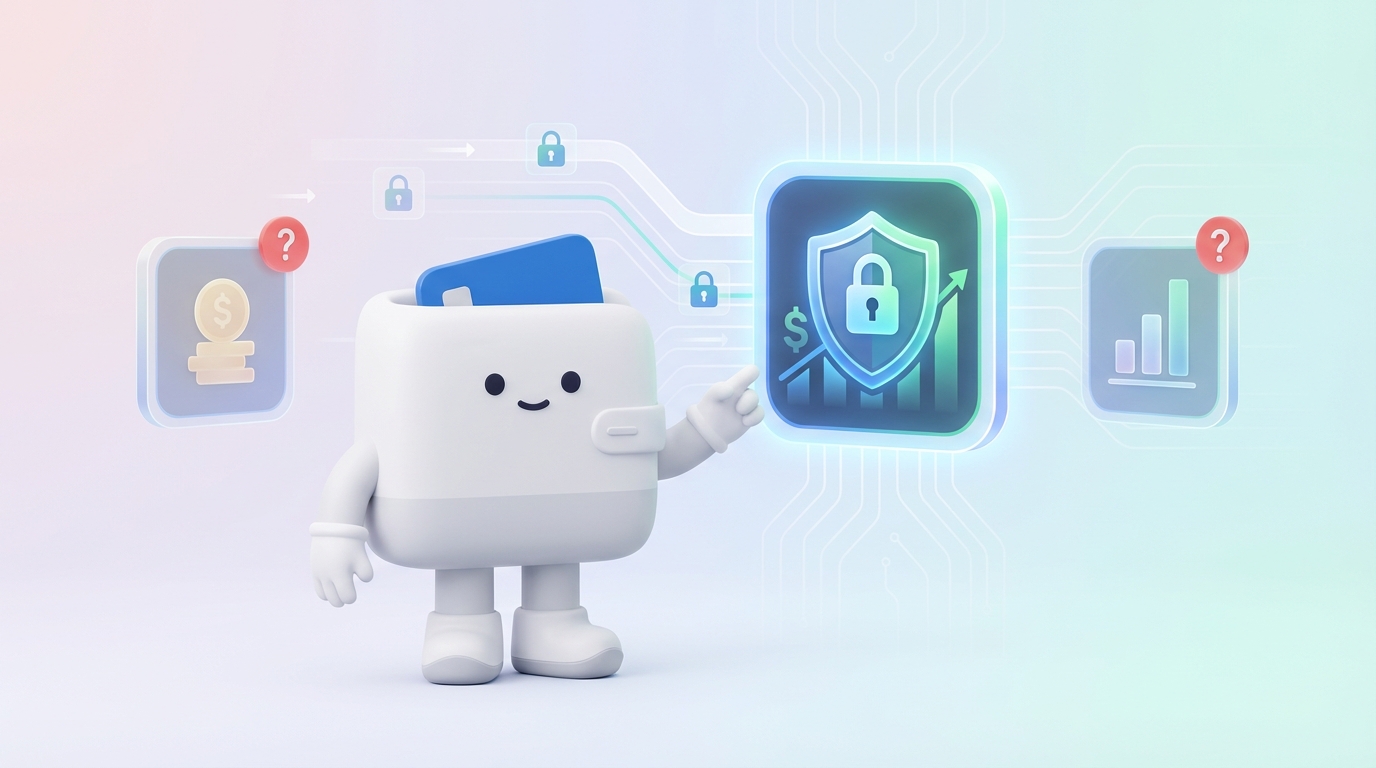 Walletlify AI tarafından üretildi
Selecting the right expense tracker app is not just about features and user interface; it's fundamentally about trust and security. Given the sensitive nature of the financial data involved, a thorough vetting process is essential to ensure your chosen app adheres to the highest standards of data protection.
Before committing to any expense tracker, invest time in comprehensive research. Start by checking prominent tech and financial publications for reviews and recommendations. Look for mentions of security practices, data breach history (or lack thereof), and how the company has handled past incidents. User reviews on app stores can offer anecdotal insights, but also look for feedback on reliability, customer service, and any recurring security concerns. A consistent pattern of positive reviews regarding security and stability, especially from long-term users, is a good sign. Be wary of apps with a sparse review history or those that have faced multiple public security criticisms.
The most credible assurance of an app's security comes from third-party certifications and independent security audits. Look for apps that publicly display compliance with standards like SOC 2 Type 2 (Service Organization Control 2, Type 2), which indicates that an independent auditor has verified the app's internal controls over security, availability, processing integrity, confidentiality, and privacy. Other relevant certifications include ISO 27001, an international standard for information security management. These certifications are not easily obtained and signify a significant investment in robust security infrastructure and ongoing monitoring. If an app highlights these certifications, it demonstrates a proactive and serious approach to data protection.
This step cannot be overstressed. The privacy policy is where an app explicitly details its data collection, usage, storage, and sharing practices. While often lengthy and filled with legal jargon, it's crucial to understand key sections: What types of data are collected (e.g., transaction details, personal identifiers)? How is this data used (e.g., for service improvement, aggregated analysis)? Is any data shared with third parties, and if so, under what conditions and for what purposes? Does the policy clearly state that your personally identifiable financial data will not be sold? A transparent, easily accessible, and clearly worded privacy policy is a hallmark of a trustworthy app. If the policy is vague, difficult to find, or raises red flags, consider looking elsewhere.
Even with the best security, incidents can happen. How an app developer prepares for and responds to such events is critical. Investigate their customer support channels – are they responsive and knowledgeable? More importantly, try to find information about their incident response plan. Do they have clear procedures for notifying users in the event of a breach? What steps do they take to mitigate damage and restore security? An app that is transparent about its security protocols, provides easily accessible support, and has a clear plan for addressing security incidents demonstrates a higher level of responsibility and commitment to user safety. A company's track record in handling past security issues, if any, can be particularly telling.
 Walletlify AI tarafından üretildi
While choosing a secure app is crucial, your role in maintaining the security of your financial data is equally important. By adopting a few key best practices, you can significantly reduce your risk exposure and ensure a safer experience with expense tracker apps.
This is arguably the single most effective step you can take to protect your accounts. Wherever 2FA (also known as multi-factor authentication or MFA) is offered, enable it. This typically involves using a password combined with a second verification method, such as a code sent to your phone via SMS, a code from an authenticator app (like Google Authenticator or Authy), or a biometric scan (fingerprint or face ID). Even if a malicious actor obtains your password, they won't be able to access your account without this second factor, providing a robust layer of defense.
Password hygiene is foundational to online security. Create long, complex passwords that combine uppercase and lowercase letters, numbers, and symbols. Crucially, use a unique password for your expense tracker app and every other online account. Never reuse passwords. If one service is compromised, a unique password prevents criminals from using those credentials to access your other accounts. A reputable password manager can help you generate, store, and manage these strong, unique passwords effortlessly.
Even with automated tracking, active monitoring remains essential. Periodically log into your actual bank and credit card accounts (not just the expense tracker app) to review statements and compare them against the data within your app. Look for any discrepancies, unauthorized transactions, or suspicious activity. The sooner you identify and report fraudulent activity to your financial institution, the better your chances of resolving it and limiting potential losses. Don't rely solely on the app's alerts; proactive manual checks add another layer of security.
Software updates aren't just about new features; they often include critical security patches that fix newly discovered vulnerabilities. Ensure that your expense tracker app is always running the latest version. Similarly, keep your smartphone or tablet's operating system (iOS, Android) updated. Outdated software can create entry points for malware and exploits that could compromise your device and, by extension, your financial apps.
Public Wi-Fi networks (e.g., in coffee shops, airports) are inherently less secure than your private home network. They are often unencrypted, making it easier for malicious actors to intercept data transmitted over the network. Avoid accessing your expense tracker app or performing any financial transactions when connected to public Wi-Fi. If you must, use a reputable Virtual Private Network (VPN) to encrypt your connection and add a layer of security, but ideally, save financial activities for secure, private networks.
If you decide to stop using an expense tracker app, simply deleting the app from your device often does not remove your data from the company's servers. Familiarize yourself with the app's data deletion policy and the explicit steps required to formally close your account and request data removal. Reputable apps will have a clear process for this, ensuring your financial history is not retained indefinitely against your wishes after you cease using their service. This is a critical aspect of managing your digital footprint.
On your mobile device, apps often request various permissions (e.g., access to contacts, location, camera). While an expense tracker app needs access to your financial data, it generally doesn't require extensive device permissions. Periodically review the permissions granted to your expense tracker app in your device settings. If any permission seems unnecessary or overly intrusive, revoke it. Limiting an app's access to only what's absolutely essential reduces potential avenues for data exploitation, even in the event of a compromise.
Despite increased awareness, several myths and misunderstandings persist regarding the security of financial applications. Dispelling these can help users make more informed decisions and adopt appropriate security behaviors.
This is a dangerous misconception. The security infrastructure, commitment to compliance, and incident response capabilities vary significantly between different financial apps, even those that seem to offer similar services. While established banks and well-known fintech companies typically invest heavily in robust security, smaller or newer apps might not have the same resources or expertise. Factors like the type of encryption used, adherence to PCI DSS, the presence of third-party security audits, and even the company's track record in addressing vulnerabilities can differ wildly. Always perform due diligence and choose apps that explicitly prioritize and demonstrate strong security measures, rather than assuming all apps are created equal.
While banks have a significant responsibility to protect your financial data and often offer fraud protection, their liability typically extends to their own systems and direct transactions. If an expense tracker app, which is a third-party service, suffers a data breach, the responsibility can become more complex. Your bank will likely still work with you to resolve fraudulent charges that result from the breach, especially if you report them promptly. However, the bank is generally not liable for the app's security failures or for the exposure of non-financial personal data that might have been stored by the app. The terms of service for both your bank and the expense tracker app will outline the specific responsibilities. This shared responsibility emphasizes why users must be diligent in choosing secure apps and practicing good security habits themselves.
Many users mistakenly believe that uninstalling an app from their phone is synonymous with deleting their account and all associated data. This is almost never the case. When you delete an app, you are merely removing the software from your device; your account and all the financial data you linked or entered into it typically remain stored on the app provider's servers. To truly delete your data and close your account, you usually need to go through a specific account deletion process within the app's settings or by contacting their customer support. Always consult the app's terms of service or privacy policy for precise instructions on how to permanently remove your data and close your account if you decide to stop using the service.
For individuals who remain hesitant about directly linking their credit cards to third-party expense tracker apps, or simply prefer a more hands-on approach, several secure alternatives exist. These methods offer varying degrees of convenience but prioritize user control and minimize direct data sharing.
The most straightforward and entirely secure alternative is to manually enter and categorize your transactions. This can be done using a simple spreadsheet (like Google Sheets or Microsoft Excel), a basic budgeting app that doesn't require bank linking, or even a physical ledger. While this method is the most time-consuming and prone to human error, it offers complete control over your data. No third party ever has access to your financial information, and you decide exactly what details are recorded and how they are categorized. This option is ideal for those who prioritize absolute privacy and are disciplined enough to maintain consistent records.
Many banks and credit card companies allow you to export your transaction history in various formats, such as CSV (Comma Separated Values), QIF (Quicken Interchange Format), or OFX (Open Financial Exchange). You can download these statements from your bank's secure online portal and then import them into a budgeting software on your personal computer (e.g., Quicken, YNAB desktop version) or a spreadsheet program. This method provides a good balance between automation and security. Your credentials are only entered directly into your bank's secure site, and the financial data is then processed offline or within a trusted software on your own device. It's less real-time than direct linking but offers greater peace of mind for some users.
While not a direct alternative to expense tracking, virtual cards offer an enhanced security measure for online spending that can indirectly impact your overall financial security posture. Many credit card issuers and some fintech companies offer virtual card numbers. These are temporary, disposable, or merchant-specific card numbers linked to your primary credit card but with a different number and expiration date. When using a virtual card for an online purchase, your actual credit card number is never exposed. If the merchant's system is breached, only the virtual card number is compromised, which can often be instantly canceled or limited without affecting your primary card. This reduces the risk of your main credit card details being exposed, even if you do link your primary card to an expense tracker for other transactions.
The landscape of financial app security is continuously evolving, driven by advancements in technology and the ever-present need to combat sophisticated cyber threats. The future promises even more robust protection mechanisms, leveraging cutting-edge innovations to safeguard user data.
Artificial Intelligence (AI) and Machine Learning (ML) are already playing a significant role in fraud detection, and their capabilities are set to expand dramatically. AI algorithms can analyze vast datasets of transaction histories, spending patterns, and behavioral biometrics to identify anomalies and suspicious activities with unprecedented speed and accuracy. These systems can learn from new fraud tactics, adapt in real-time, and flag potential fraud before it even occurs, moving beyond rule-based detection to more predictive and intelligent security. This will lead to fewer false positives and more effective prevention of financial crimes within expense trackers and banking apps.
Blockchain, the distributed ledger technology underlying cryptocurrencies, holds immense potential for enhancing financial security and transparency. While its widespread adoption in mainstream banking is still evolving, blockchain could offer immutable and tamper-proof records of transactions. Each transaction on a blockchain is encrypted and linked to the previous one, making it extremely difficult to alter or falsify. This could revolutionize how transactions are verified and secured, potentially reducing the risk of data manipulation and increasing trust in financial systems, including the underlying data feeds that expense trackers rely upon.
Biometric authentication methods like fingerprint scanners (Touch ID) and facial recognition (Face ID) are becoming standard, but the future will see more advanced and multi-modal biometrics. This could include iris scans, voice recognition, and even behavioral biometrics that analyze unique user patterns like typing rhythm or mouse movements. These methods offer superior security compared to passwords, as they are unique to an individual and much harder to replicate. Integrating more sophisticated and layered biometric verification into financial apps will significantly strengthen the authentication process, making unauthorized access exceedingly difficult and enhancing the overall user experience by simplifying secure logins.
Linking your credit card to an expense tracker app can be a powerful tool for financial management, offering unparalleled convenience, real-time insights, and enhanced fraud detection. However, leveraging these benefits securely requires a combination of choosing a reputable app, understanding its security protocols, and diligently adhering to personal best practices. By staying informed about potential risks and embracing emerging security technologies, you can confidently navigate the digital financial landscape, ensuring your data remains protected while you gain full control over your financial health.
Written by
Founder & CEO
Sharing knowledge on personal finance, budget management, and investment strategies to help you achieve financial freedom.