13 min read
'%3e%3cg%20clip-path='url(%23b6dc094121)'%3e%3cpath%20fill='%230066cc'%20d='M%2012.707031%205.710938%20L%2012.707031%2035.761719%20L%2037.007812%2035.761719%20L%2037.007812%205.710938%20Z%20M%2012.707031%205.710938%20'%20fill-opacity='1'%20fill-rule='nonzero'/%3e%3c/g%3e%3c/g%3e%3cg%20clip-path='url(%23cd2e57bbdf)'%3e%3cg%20clip-path='url(%23cc31bb2a50)'%3e%3cpath%20fill='%230066cc'%20d='M%2026.734375%201.035156%20L%2026.734375%2035.761719%20L%2036.882812%2035.761719%20L%2036.882812%201.035156%20Z%20M%2026.734375%201.035156%20'%20fill-opacity='1'%20fill-rule='nonzero'/%3e%3c/g%3e%3c/g%3e%3cg%20clip-path='url(%23ab469c456a)'%3e%3cg%20clip-path='url(%23fb318aa8dc)'%3e%3cpath%20fill='%230066cc'%20d='M%200.0546875%201.035156%20L%200.0546875%2035.761719%20L%2010.203125%2035.761719%20L%2010.203125%201.035156%20Z%20M%200.0546875%201.035156%20'%20fill-opacity='1'%20fill-rule='nonzero'/%3e%3c/g%3e%3c/g%3e%3cg%20clip-path='url(%238fe1ac7b9f)'%3e%3cg%20clip-path='url(%23f68e7172d0)'%3e%3cpath%20fill='%230066cc'%20d='M%200%205.710938%20L%200%2035.761719%20L%2024.269531%2035.761719%20L%2024.269531%205.710938%20Z%20M%200%205.710938%20'%20fill-opacity='1'%20fill-rule='nonzero'/%3e%3c/g%3e%3c/g%3e%3c/svg%3e)
Automate Your Income Tracking is no longer a luxury but a necessity for modern businesses aiming for efficiency and accuracy. In an increasingly digital world, relying on manual spreadsheets or outdated desktop software for managing your finances can lead to errors, wasted time, and missed opportuni

Yağız Gürbüz
Founder & CEO

🎧 En iyi deneyim için kulaklık kullanmanızı öneririz
Automate Your Income Tracking is no longer a luxury but a necessity for modern businesses aiming for efficiency and accuracy. In an increasingly digital world, relying on manual spreadsheets or outdated desktop software for managing your finances can lead to errors, wasted time, and missed opportunities. Cloud-based income tracking software offers a powerful solution, transforming how businesses monitor their revenue streams, reconcile accounts, and gain critical financial insights. This comprehensive guide delves into the world of automated income tracking through cloud software, exploring its benefits, features, implementation, and how it can revolutionize your financial management practices.
Automated income tracking represents a significant leap forward from traditional bookkeeping methods. Historically, businesses relied on paper ledgers, then simple spreadsheets, to record their income. While these methods served their purpose, they were prone to human error, time-consuming, and lacked the real-time capabilities essential for agile decision-making. The advent of automated systems, particularly those hosted in the cloud, has transformed this landscape.
At its core, automated income tracking involves using software to automatically record, categorize, and report all incoming revenue. This includes sales revenue, service fees, interest income, and any other financial inflows. Instead of manually entering each transaction, the software integrates with bank accounts, payment gateways, and other financial tools to pull data directly, ensuring accuracy and timeliness. This automation not only saves countless hours but also provides a more complete and error-free picture of a business's financial health, enabling better forecasting and strategic planning.
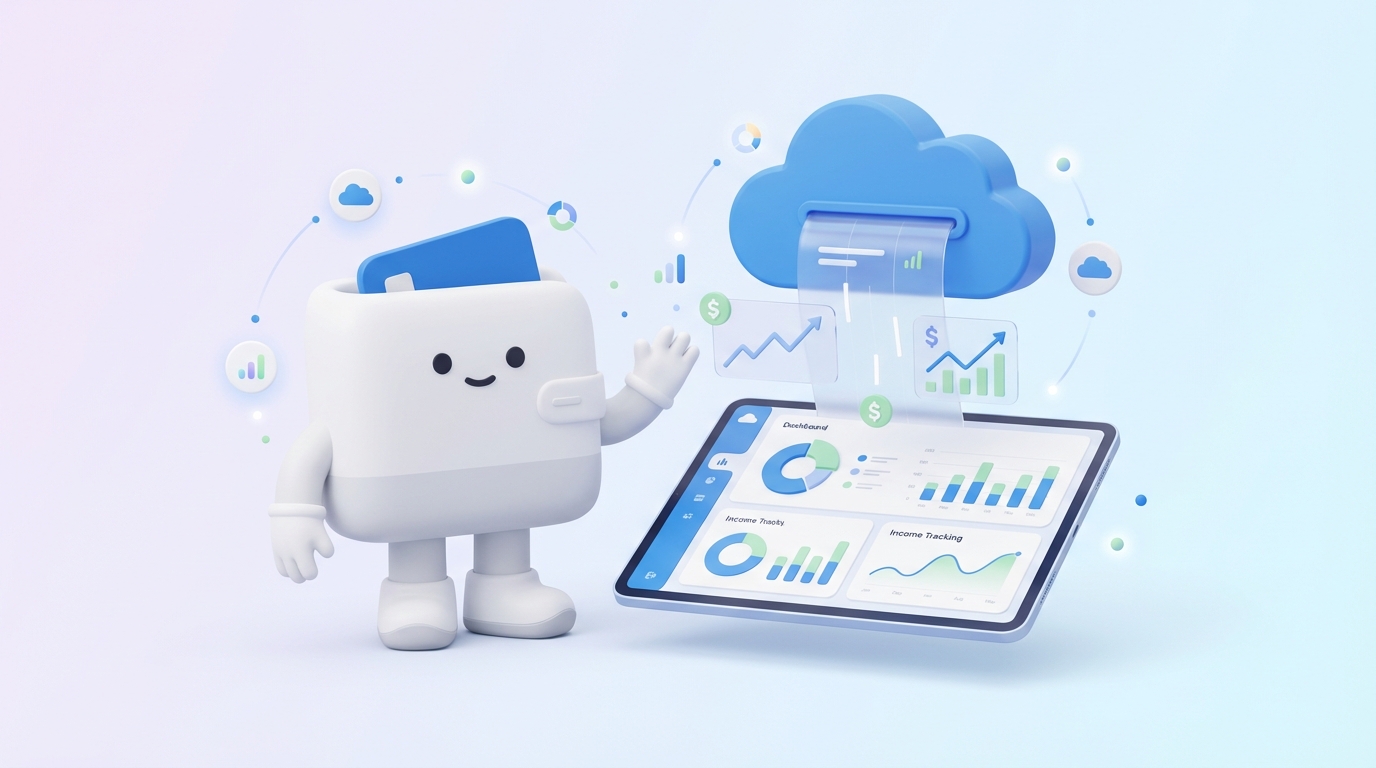
Cloud-based software, often referred to as Software-as-a-Service (SaaS), operates over the internet rather than being installed directly on a user's computer. For income tracking, this means that your financial data and the application itself reside on remote servers managed by the software provider. This fundamental difference offers several distinct advantages over traditional on-premise solutions.
One of the most significant benefits of cloud-based income tracking software is its unparalleled accessibility. Users can log in and access their financial data from anywhere, at any time, using any internet-connected device – be it a desktop, laptop, tablet, or smartphone. This flexibility is invaluable for business owners who travel, remote teams, or even just for checking financials outside of office hours. It ensures that critical financial information is always at your fingertips, fostering responsiveness and informed decision-making regardless of your physical location.
Cloud platforms provide real-time updates on your financial status. As transactions occur and are processed, the software instantly reflects these changes. This eliminates the lag often associated with manual systems, where data might only be updated weekly or monthly. Furthermore, cloud-based solutions facilitate seamless collaboration. Multiple users, such as business owners, accountants, and bookkeepers, can access the same data simultaneously, make entries, and review reports, all while ensuring data consistency and reducing version control issues. This collaborative environment streamlines financial workflows and enhances team productivity.
Cloud software is inherently scalable, meaning it can easily adapt to your business's growth. As your transaction volume increases or your team expands, the cloud platform can accommodate these changes without requiring significant hardware upgrades or complex installations. Most cloud-based income tracking solutions operate on a subscription model, which typically includes software updates, maintenance, and support. This eliminates the need for large upfront capital expenditures on software licenses and infrastructure, making it a more cost-effective solution, especially for small and medium-sized businesses.
To truly automate and optimize income tracking, cloud software needs a robust set of features. These features go beyond simple transaction recording, offering tools for deeper analysis, streamlined processes, and enhanced financial control.
The cornerstone of any automated income tracking system is its ability to automatically import transactions. This typically involves secure integrations with:
Once imported, the software uses intelligent rules and machine learning to automatically categorize these transactions. For example, recurring payments from a specific client can be automatically tagged as "Service Income," while transfers from a payment gateway might be categorized as "Online Sales." Users can often set up custom rules to refine categorization further, significantly reducing manual data entry and ensuring consistency.
Effective income tracking starts at the source: invoicing. Cloud software often includes comprehensive invoice management features:
Integration with payment processing allows clients to pay directly from the invoice, further streamlining the payment collection process.
Beyond simply recording income, advanced software provides powerful reporting and analytics tools to transform raw data into actionable insights. Key reports include:
These reports often feature customizable dashboards and visual graphs, making complex financial data easy to understand and facilitating quick decision-making.
The true power of cloud software lies in its ecosystem. Leading income tracking solutions integrate seamlessly with a variety of other business applications, creating a unified operational platform:
These integrations eliminate data silos, reduce duplicate entry, and provide a holistic view of business operations, from lead generation to payment collection.

Selecting the ideal software for your business requires careful consideration of several factors. There isn't a one-size-fits-all solution, so understanding your specific needs is crucial.
Start by evaluating your business's current stage, industry, and complexity. A freelancer might need simpler software than a growing e-commerce business or a service-based company with multiple employees. Consider:
Defining these parameters will help narrow down the options to those that are truly relevant.
Even the most powerful software is ineffective if it's too complex to use. Look for an intuitive, user-friendly interface that doesn't require extensive training. A clean dashboard, clear navigation, and easy-to-understand reporting are vital for daily operations.
Financial data is sensitive. Ensure the software provider employs robust security measures, including:
Always review the provider's security policies and reputation.
As mentioned, integration is key. List all the other software your business currently uses (CRM, e-commerce, payroll, project management, etc.) and ensure the income tracking solution can integrate with them, either directly or via third-party connectors like Zapier.
Even with user-friendly software, you'll likely have questions or encounter issues. Evaluate the quality and availability of customer support:
Reliable support can save significant time and frustration.
Compare the pricing structures of different providers. Most offer tiered plans based on features, number of users, or transaction volume. Choose a plan that fits your current budget but also allows for future growth without exorbitant cost increases. Understand what's included in each tier (e.g., number of invoices, reporting options, support level).

Once you've chosen your software, successful implementation and ongoing optimization are crucial to maximize its benefits.
The first step is to set up your account and configure the software to match your business's specific needs.
Take your time with this initial setup to ensure accuracy from the outset.
To get the most out of your automated system, adhere to these best practices:
While automated systems are powerful, you might encounter minor issues:
Most cloud software has extensive knowledge bases and responsive customer support to help resolve these issues quickly.
Automated income tracking through cloud software delivers benefits that extend far beyond simply knowing how much money you've made. It provides strategic advantages that can significantly impact your business's growth and stability.
With real-time income data and automated invoice reminders, businesses can significantly improve their cash flow. You'll have a clearer picture of incoming funds, allowing for better planning of expenses and investments. Reduced overdue invoices mean money comes in faster, bolstering liquidity.
Automation drastically reduces the risk of human error associated with manual data entry. This leads to more accurate financial records, which are crucial for making sound business decisions and for tax compliance. Many systems also help with sales tax calculations and reporting, simplifying a complex aspect of financial management.
The time saved from manual data entry, categorization, and reconciliation can be redirected to more strategic tasks, such as business development, customer service, or product innovation. This increased productivity across the financial management spectrum contributes directly to business growth.
Access to detailed, real-time reports and analytics empowers business owners to make more informed decisions. You can quickly identify profitable services, understand seasonal income fluctuations, recognize your most valuable clients, and adjust strategies to maximize revenue. This data-driven approach is invaluable for sustainable growth.
As your business expands, its financial complexities will grow. Cloud-based software is designed to scale with you, accommodating increased transaction volumes, new income streams, and additional users without requiring a complete overhaul of your financial system. This ensures that your income tracking remains robust and efficient no matter how large your business becomes.
Automate Your Income Tracking with cloud-based software is a transformative step for any business looking to modernize its financial management. From providing real-time data and enhancing accuracy to offering powerful analytics and fostering collaboration, these solutions offer a myriad of benefits that extend far beyond traditional methods. By carefully selecting the right software, implementing it thoughtfully, and committing to best practices for ongoing management, businesses can unlock significant efficiencies, gain unparalleled financial insights, and position themselves for sustainable growth. Embracing cloud-based income tracking isn't just about tracking money; it's about empowering your business with the financial clarity and agility needed to thrive in today's competitive landscape, ensuring every dollar earned is meticulously accounted for and strategically leveraged for future success.
Written by
Founder & CEO
Sharing knowledge on personal finance, budget management, and investment strategies to help you achieve financial freedom.